

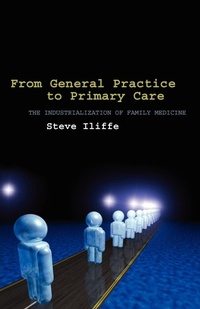
From General Practice to Primary Care
The industrialization of family medicine
Published on 14. February 2008
Book
Paperback/Softback
248 pages
978-0-19-921450-1 (ISBN)
Description
Anxiety about medicine becoming impersonal and mechanised permeates the NHS. In addition, the popular media is full of stories about the health service and its unhappy staff, focusing on the belief that professionals and patients are being turned into assembly-line workers and objects. This is particularly prevalent in general practice, as plans for massive policlinics are revealed and payment systems shift seemingly inexorably towards incentives and targets. The ethos of family medicine, which places so much stress on continuity of care, psychosocial understanding of illness, and the careful management of doubt, is challenged by guidelines, governance, quality frameworks, and patient satisfaction surveys. General practice is being industrialized into primary care, or so it can seem.
This book explores the many dimensions of industrialization as it has occurred to others in the past, and analyses the origins of the current wave of reform in general practice. It analyses why industrialization is being pursued as a government strategy, and explores its benefits and dangers. It concludes that the medical profession has reasons for being perturbed by industrialization, but that it has advantages as well as disadvantages for the NHS and the public. Its conclusions may not please either policy makers or practitioners, but they offer ways for professionals working in the community to customise current changes in potentially beneficial ways.
This book explores the many dimensions of industrialization as it has occurred to others in the past, and analyses the origins of the current wave of reform in general practice. It analyses why industrialization is being pursued as a government strategy, and explores its benefits and dangers. It concludes that the medical profession has reasons for being perturbed by industrialization, but that it has advantages as well as disadvantages for the NHS and the public. Its conclusions may not please either policy makers or practitioners, but they offer ways for professionals working in the community to customise current changes in potentially beneficial ways.
Reviews / Votes
An excellent interpretation of where we have come from, where we might end up...and what we can do to achieve a degree of self determination in the face of recent reforms. * Primary Care Research Network, Greater London, Issue 8 * Interesting, topical, and clear. The arguments are presented logically and in balanced way. An important - original - book. * Medical Book Awards * Dr Iliffe convincingly describes the process of industrialisation of family medicine through a highly researched book littered with interesting quotes and references. I recommend this book to both new and experienced members of primary care who wish to understand more about this process of industrialisation and how we can best optimise the changes that it brings. * Primary Health Care Research and Development * Professor Illife has presented a view of what is happening to general practice that is both immensely simple and profoundly complex. The changes that have afflicted general practice in the UK in the last 20 years are all part of a single process: industrialisation...he pursues his case in compelling historical and theoretical detail...this makes the book a challenging read...a thorough, impressive, and persuasive book. * London Journal of Primary Care *More details
Language
English
Place of publication
Oxford
United Kingdom
Target group
Professional and scholarly
Illustrations
5 line illustrations
Dimensions
Height: 216 mm
Width: 140 mm
Thickness: 15 mm
Weight
350 gr
ISBN-13
978-0-19-921450-1 (9780199214501)
Copyright in bibliographic data and cover images is held by Nielsen Book Services Limited or by the publishers or by their respective licensors: all rights reserved.
Schweitzer Classification
Person
From 1978 to 2007 Steve Iliffe worked in an inner-city general practice, helping build a large multi-disciplinary team of doctors, nurses, psychologists and counsellors that achieved Beacon status for patient services. He leads a research team that works on service development and evaluation, innovative approaches to professional education and the provision of services. His research interests are in health promotion in later life, the recognition of and response to dementia syndromes, hospital at home services, and exercise as therapy for older people, and he is on the editorial board for numerous journals on these subjects. He is an Associate Director of the national co-ordinating centre for Dementias and Neurodegenerative Diseases networks (DeNDRoN) with a responsibility for primary care and patient and public involvement, and was a member of the NICE/SCIE dementia guidelines development group. In 2006 he won the inaugural William Farr medal for contribution to health care for older people.
Content
1. Industrialization ; 2. Management ; 3. Forward integration ; 4. Mass production ; 5. Evidence based medicine ; 6. Clinical governance ; 7. Consumerism and producerism ; 8. What are the alternatives? ; Bibliography