

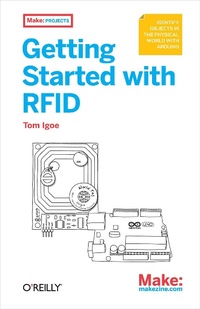
Getting Started with RFID
Identify Objects in the Physical World with Arduino
1st Edition
Published on 17. April 2012
Book
40 pages
978-1-4493-2418-6 (ISBN)
Description
If you want to experiment with radio frequency identification (RFID), this book is the perfect place to start. All you need is some experience with Arduino and Processing, the ability to connect basic circuits on a breadboard with jumper wire-and you're good to go. You'll be guided through three hands-on projects that let you experience RFID in action.
RFID is used in various applications, such as identifying store items or accessing a toll road with an EZPass system. After you build each of the book's projects in succession, you'll have the knowledge to pursue RFID applications of your own.
* Use Processing to get a sense of how RFID readers behave
* Connect Arduino to an RFID reader and discover how to use RFID tags as keys
* Automate your office or home, using RFID to turn on systems when you're present, and turn them off when you leave
* Get a complete list of materials you need, along with code samples and helpful illustrations
* Tackle each project with easy-to-follow explanations of how the code works
More details
Other editions
Additional editions

E-Book
03/2012
1st Edition
Maker Media, Inc
€3.99
Available for download
Person
Tom Igoe teaches courses in physical computing and networking, exploring ways to allow digital technologies to sense and respond to a wider range of human physical expression. He has a background in theatre, and his work centers on physical interaction related to live performance and public space. He is a co-author of the book Physical Computing: Sensing and Controlling the Physical World with Computers, which has been adopted by numerous digital art and design programs around the world. Projects include a series of networked banquet table centerpieces and musical instruments; an email clock; and a series of interactive dioramas, created in collaboration with M.R. Petit. He has consulted for The American Museum of the Moving Image, EAR Studio, Diller + Scofidio Architects, Eos Orchestra, and others.