


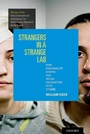
Strangers in a Strange Lab
How Personality Shapes Our Initial Encounters with Others
Published on 29. October 2009
Book
Hardback
232 pages
978-0-19-537295-3 (ISBN)
Description
Can we predict how well--or how poorly--two strangers will get along? According to social psychologist William Ickes, the answer is yes. Drawing upon relevant research findings from his 30-year career, Ickes explains how initial interactions are shaped by gender, race, birth order, physical attractiveness, androgyny, the Big Five dimensions, shyness, and self-monitoring.
Ickes's work offers unprecedented insights on the links between personality and social behavior that have not previously been compiled in a single source: how sibling relationships during childhood affect our interactions with opposite-sex strangers years later; why Latinos have a social advantage in initial interactions; how men react to the physical attractiveness of a female stranger in a relatively direct and obvious way while women react to the attractiveness of a male stranger in a more indirect and subtle way; and how personality similarity is related to satisfaction in married couples.
This relatively short, highly accessible work serves as an ideal supplementary text for undergraduate and graduate-level courses in personality and social psychology. It will also appeal to scholars working in the fields of personality and social psychology and to laypersons who are interested in learning what researchers have discovered about the links between personality and social behavior.
Ickes's work offers unprecedented insights on the links between personality and social behavior that have not previously been compiled in a single source: how sibling relationships during childhood affect our interactions with opposite-sex strangers years later; why Latinos have a social advantage in initial interactions; how men react to the physical attractiveness of a female stranger in a relatively direct and obvious way while women react to the attractiveness of a male stranger in a more indirect and subtle way; and how personality similarity is related to satisfaction in married couples.
This relatively short, highly accessible work serves as an ideal supplementary text for undergraduate and graduate-level courses in personality and social psychology. It will also appeal to scholars working in the fields of personality and social psychology and to laypersons who are interested in learning what researchers have discovered about the links between personality and social behavior.
Reviews / Votes
"As well as being a joy to read, this book provides an exceptionally well-structured, coherent and compelling account , not just of the outcomes of Ickes' research, but importantly, of the research process itself...Each chapter is comprehensive referenced and ends with a list of recommended readings for further study...By the end of the book, I felt the author had become both a mentor and a friend...Overall, the book is an outstanding example of 'sciencewriting' at its best..." --Relationship Research News
"Strangers in a Strange Lab summarizes over 30 years of empirical study by Bill Ickes, one of social psychology's most insightful and innovative scientists... Ickes adopts the role of a tour guide, intent on leading us on a unique journey over often challenging terrain, exploring the interpersonal dynamics in first meetings between strangers. Along the way, he draws our attention to the important roles that personality and other individual differences
play in such interactions." -- Review in Journal of Social Psychology
The author's provocative and engaging accounts of research and life undoubtedly provoke the same sort of ironic pleasure as do the observations of daily life presented by comedians such as Larry David, Woody Allen, and George Carlin.Strangers in a Strange Lab provides a neat balance of research and popular psychology; it ends up being highly accessible and appealing to a wide audience. Ickes holds the reader's hand through the various methods and
techniques, ensuring that even the most inexperienced readers will clearly comprehend the slightest details of the process. As such, Strangers in a Strange Lab could easily find a home in an undergraduate seminar in
personality psychology, providing a lighthearted change of pace to the more traditional tools of instruction. Students should appreciate both the novel insights and their ease of mental digestion... A collection of interesting, fun facts about social interaction." -- Review in PsycCRITIQUES
More details
Language
English
Place of publication
New York
United States
Target group
College/higher education
Illustrations
numerous figures
Dimensions
Height: 240 mm
Width: 161 mm
Thickness: 17 mm
Weight
514 gr
ISBN-13
978-0-19-537295-3 (9780195372953)
Copyright in bibliographic data and cover images is held by Nielsen Book Services Limited or by the publishers or by their respective licensors: all rights reserved.
Schweitzer Classification
Other editions
Additional editions

Book
01/2013
Oxford University Press Inc
€52.70
Shipment within 15-20 days
E-Book
08/2009
OUP eBook
€27.49
Available for download

E-Book
08/2009
1st Edition
OUP eBook
€27.49
Available for download
Person
William Ickes is Distinguished Professor of Psychology at the University of Texas at Arlington. His 20-year program of research on empathic accuracy, which resulted in three international research awards, is summarized in his 2003 book Everyday Mind Reading. His 30-year program of research on personality influences on initial interactions is the topic of the present book. His nearly 150 publications include books, book chapters, journal articles, commentaries and reviews.
Content
1. Some People, Other People ; 2. Strangers in a Strange Lab ; 3. Sex ; 4. Race/Ethnicity ; 5. Birth Order ; 6. Physical Attractiveness ; 7. The Taijitu of Androgyny ; 8. The Big Five ; 9. Shyness and Self-Consciousness ; 10. Self-Monitoring ; 11. How It All Adds Up: An Integration