


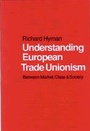
Understanding European Trade Unionism
Between Market, Class and Society
1st Edition
Published on 9. May 2001
Book
Hardback
208 pages
978-0-7619-5220-6 (ISBN)
Description
`As one would expect, this is a well-crafted, literate and absorbing account of European trade union development. Established scholars and advanced students will enjoy the discussion of theory and cases' - The Journal of Industrial Relations
`[A] detailed and fascinating history of trade unions in the three countries [Britain, Germany, Italy]... considers how the unions could recover from the intense disarray of recent years' - Labour Research
`Everyone concerned over the construction of a truly social Europe will learn much from this thoughtful and probing study' - Professor Colin Crouch, Istituto Universitario Europeo
In this comprehensive overview of trade unionism in Europe and beyond, Richard Hyman offers a fresh perspective on trade union identity, ideology and strategy. He shows how the varied forms and impact of different national movements reflect historical choices on whether to emphasize a role as market bargainers, mobilizers of class opposition or partners in social integration. The book demonstrates how these inherited traditions can serve as both resources and constraints in responding to the challenges which confront trade unions in today's working world.
`[A] detailed and fascinating history of trade unions in the three countries [Britain, Germany, Italy]... considers how the unions could recover from the intense disarray of recent years' - Labour Research
`Everyone concerned over the construction of a truly social Europe will learn much from this thoughtful and probing study' - Professor Colin Crouch, Istituto Universitario Europeo
In this comprehensive overview of trade unionism in Europe and beyond, Richard Hyman offers a fresh perspective on trade union identity, ideology and strategy. He shows how the varied forms and impact of different national movements reflect historical choices on whether to emphasize a role as market bargainers, mobilizers of class opposition or partners in social integration. The book demonstrates how these inherited traditions can serve as both resources and constraints in responding to the challenges which confront trade unions in today's working world.
Reviews / Votes
`Engaging and essential reading for those interested in the historical and recent evolution of trade union movements in Europe' - Construction Labour Research`The book combines theoretical analyses of trade unionism with short histories... is clearly written, well argued and largely jargon free' - Labour History Review
`[A] detailed and fascinating history of trade unions in the three countries [Britain, German, Italy] and lastly, considers how the unions could recover from the intense disarray of recent years' - Labour Research
`From a deeply reflective reconstruction of well over a century of national trade union experiences, Richard Hyman emerges with incisive questions for the European future. Can there be a co-ordinated diversity of trade union practice? How can a European trade unionism be built from below, rather than through top-down bureaucracies? Everyone concerned over the construction of a truly social Europe will learn much from this thoughtful and probing study' - Professor Colin Crouch, Istituto Universitario Europeo
`Well written and jargon free, this highly original book makes an important theoretical contribution that broadens our perspectives
on Industrial Relations' - George Strauss, Professor Emeritus, Institute of Industrial Relations, University of California, Berkeley
`This book provides a timely insight into organized labour in an increasingly capitalist world. Whether one agrees with Richard Hyman on a role for unions in post-modern societies is unimportant. This book asks all the pertinent questions that need to be asked by anyone curious about the future of trade unions in the twenty-first century. It provides a scholarly insight that begs reading by policy makers in labour, business and the government' - Professor Anil Verma, Rotman School of Management and Centre for Industrial Relations, University of Toronto; Past-President, Canadian Industrial Relations Association.
`A very innovative study of trade unionism, whose overall development is powerfully portrayed while offering at the same time a brilliant analysis of distinct types to be found within Europe' - Marino Regini, Facolta di Scienze Politiche, Universita degli Studi di Milano
From a deeply reflective reconstruction of well over a century of national trade union experiences, Richard Hyman emerges with incisive questions for the European future. Can there be a co-ordinated diversity of trade union practice? How can a European trade unionism be built from below, rather than through top-down bureaucracies? Everyone concerned over the construction of a truly social Europe will learn much from this thoughtful and probing study." - Professor Colin Crouch, Istituto Universitario Europeo
More details
Edition
First Edition
Language
English
Place of publication
Thousand Oaks
United States
Target group
College/higher education
Professional and scholarly
Dimensions
Height: 240 mm
Width: 161 mm
Thickness: 16 mm
Weight
485 gr
ISBN-13
978-0-7619-5220-6 (9780761952206)
Copyright in bibliographic data and cover images is held by Nielsen Book Services Limited or by the publishers or by their respective licensors: all rights reserved.
Schweitzer Classification
Other editions
Additional editions
E-Book
05/2001
1st Edition
SAGE Publications Inc
€109.99
Available for download

Book
05/2001
1st Edition
SAGE Publications Inc
€118.80
Shipment within 15-20 days
Content
The Strategic Orientations of Trade Unionism
A Stylized Introduction
Trade Unions as Economic Actors
Regulating the Labour Market
Trade Unions and Class Struggle
Contesting the System
Trade Unions in Civil Society
Pursuing Social Dialogue
British Trade Unionism
Between Market and Class
German Trade Unionism
Between Society and Market
Italian Trade Unionism
Between Class and Society
Challenges and Changes
The Variable Geometry of Trade Unionism
A Stylized Introduction
Trade Unions as Economic Actors
Regulating the Labour Market
Trade Unions and Class Struggle
Contesting the System
Trade Unions in Civil Society
Pursuing Social Dialogue
British Trade Unionism
Between Market and Class
German Trade Unionism
Between Society and Market
Italian Trade Unionism
Between Class and Society
Challenges and Changes
The Variable Geometry of Trade Unionism