

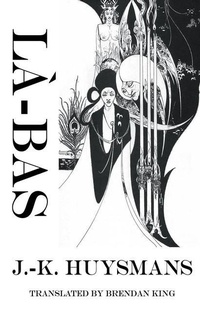
La-Bas
A Journey Into the Self
2nd Edition
Published on 29. May 2020
Book
Paperback/Softback
329 pages
978-1-912868-41-4 (ISBN)
Description
'Literally translated as "down there", là-bas is here used by Huysmans in its other sense: Hell. This novel is one of the key texts of the Decadent movement of the 1890s and writhes with satanists, occultists, incubi (male demons), succubi (female demons) and intellectuals.
Durtal is a disaffected, middle-aged writer living in Paris, not unlike Huysmans himself. Working on a biography of Gilles de Rais, a 15th-century nobleman and mass murderer widely thought to be the model for Bluebeard, Durtal researches Rais's obsession with alchemy. Through this, he becomes drawn into the underworld of 19th-century satanic worship.
This sounds racy, and some areas of the novel do not disappoint: several setpieces - the description of a crucifixion, Rais's murderous rampage and the climactic debauched satanic mass - are described in vivid and barbaric prose.
The rest follows the conversations of Durtal's friends over elaborate dinners in a gothic bell tower: peppered with references to historical figures and demonology, the obsessive detail at times verges on the comic. Durtal's friend des Hermies reports in the tones of a gossiping housewife that one devil-worshipping priest "fattens fish on consecrated wafers and toxic substances ... fortified by sacrilegious rites ... [then] leaves them to putrefy and extracts their essential oils".
A precursor to the horror fiction of HP Lovecraft and the nihilism of Michel Houellebecq, Huysman's fascination with evil and gore, history and the gothic is clear, although one can be left with the impression of gutter press themes cloaked in a literary veil. As the first, and the darkest, in a tetralogy about conversion to Catholicism there is at least the hope of redemption to follow.'
Sophia Martelli in The Observer
Durtal is a disaffected, middle-aged writer living in Paris, not unlike Huysmans himself. Working on a biography of Gilles de Rais, a 15th-century nobleman and mass murderer widely thought to be the model for Bluebeard, Durtal researches Rais's obsession with alchemy. Through this, he becomes drawn into the underworld of 19th-century satanic worship.
This sounds racy, and some areas of the novel do not disappoint: several setpieces - the description of a crucifixion, Rais's murderous rampage and the climactic debauched satanic mass - are described in vivid and barbaric prose.
The rest follows the conversations of Durtal's friends over elaborate dinners in a gothic bell tower: peppered with references to historical figures and demonology, the obsessive detail at times verges on the comic. Durtal's friend des Hermies reports in the tones of a gossiping housewife that one devil-worshipping priest "fattens fish on consecrated wafers and toxic substances ... fortified by sacrilegious rites ... [then] leaves them to putrefy and extracts their essential oils".
A precursor to the horror fiction of HP Lovecraft and the nihilism of Michel Houellebecq, Huysman's fascination with evil and gore, history and the gothic is clear, although one can be left with the impression of gutter press themes cloaked in a literary veil. As the first, and the darkest, in a tetralogy about conversion to Catholicism there is at least the hope of redemption to follow.'
Sophia Martelli in The Observer
More details
Series
Edition
2nd Revised edition
Language
English
Place of publication
Cambs
United Kingdom
Edition type
Revised edition
Product notice
Paperback (trade)
Unsewn / adhesive bound
Dimensions
Height: 196 mm
Width: 127 mm
Thickness: 28 mm
Weight
295 gr
ISBN-13
978-1-912868-41-4 (9781912868414)
Copyright in bibliographic data and cover images is held by Nielsen Book Services Limited or by the publishers or by their respective licensors: all rights reserved.
Schweitzer Classification
Other editions
Previous edition
Book
04/2009
Dedalus Ltd
€32.39
Article exhausted; check for reprint
Persons
J.-K. Huysmans (1847-1907) changed from being an obscure author and art critic to one of the most famous authors of his day with the publication of A Rebours (Against Nature) in 1884. A Rebours is a ground-breaking novel which captures the decadent spirit of the day and marks his final break with Zola and naturalism. Dedalus have published 11 books by J.-K. Huysmans, 9 in new translations by Brendan King; Marthe, Parisian Sketches, The Vatard Sisters, Stranded (En Rade), Drifting, Against Nature, Las Bas, Modern Art and The Cathedral. In addition to En Route and The Oblate of St Benedict.