

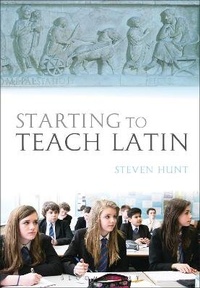
Starting to Teach Latin
Published on 11. February 2016
Book
Paperback/Softback
208 pages
978-1-4725-3791-1 (ISBN)
Description
This handbook for teachers provides both practical, up-to-date guidance and a theoretical overview on a number of key topics in Latin teaching. Using a wealth of interviews, observations and pupil transcripts, Steven Hunt title utilizes case-study evidence of excellent practice in teaching and learning from a wide variety of institutions: from outreach programmes, community schools and academies in the UK, to New York Charter Schools, KIP schools and schools in Eastern Seaboard states in the USA.
Offering practical advice on topics such as essay writing, teaching controversial topics including women, slavery, ethnicity and social hierarchy, making use of primary sources and using ICT to advance language skills, the book also engages with broader questions of approach and theory. These include a survey of the three main approaches to Latin teaching: grammar-translation, communicative and reading approaches; explanation of cognitive and social approaches to learning; and analysis of the differences between intrinsic and extrinsic motivation. Moreover, traditional arguments about the value and purpose of learning Latin at school level are re-examined in the light of current educational thinking and government policy-making.
This book is invaluable for trainees, newly qualified teachers and more experienced practitioners looking for practical ideas and strategies to motivate and engage learners of Latin. A companion website www.startingtoteachlatin.org is under construction and will contain a range of resources and information for teachers.
Offering practical advice on topics such as essay writing, teaching controversial topics including women, slavery, ethnicity and social hierarchy, making use of primary sources and using ICT to advance language skills, the book also engages with broader questions of approach and theory. These include a survey of the three main approaches to Latin teaching: grammar-translation, communicative and reading approaches; explanation of cognitive and social approaches to learning; and analysis of the differences between intrinsic and extrinsic motivation. Moreover, traditional arguments about the value and purpose of learning Latin at school level are re-examined in the light of current educational thinking and government policy-making.
This book is invaluable for trainees, newly qualified teachers and more experienced practitioners looking for practical ideas and strategies to motivate and engage learners of Latin. A companion website www.startingtoteachlatin.org is under construction and will contain a range of resources and information for teachers.
Reviews / Votes
This is a valuable, indeed invaluable book. Replete with the assured wisdom of a creative, insightful and reflective teacher, it is to be treasured not only by those who are starting out on the journey but by everyone at every stage of a teaching career ... [Hunt] is splendidly placed to ensure that his counsel will be well worth heeding ... [and] the strategies he advocates will result in enjoyable, stimulating and at the same time demanding lessons ... [An] excellent book. * Classics for All Reviews * This book is therefore remarkable in its design, particularly for trainees but also newly qualified and more experienced teachers and practitioners looking for practical ideas and strategies to motivate and mobilize Latin learners. * Euroclassica (Bloomsbury Translation) * This is a book that should interest all our colleagues who teach Latin, language, literature and civilization at all levels. * Anabases (Bloomsbury Translation) * This is a terrific book. Steven Hunt is thoroughly familiar with the different methods, approaches, and resources used both in the UK and the US, and the book is brimful of all his experience as teacher-trainer and as gifted teacher himself. Especially illuminating are the case-studies, often involving transcripts of real lessons, giving examples of good practice and also of well-intentioned attempts that go slightly wrong: he analyses these with sympathy, deftness, and insight. It all made me wish I was fifteen again, and taught by Hunt or one of his trainees. Every early-career Latin teacher will treasure this book - and many not-so-early-career ones too. -- Christopher Pelling is Regius Professor Emeritus of Greek at Oxford University, UK. Starting to teach Latin is unique in bringing together a variety of aspects of Latin teaching not brought together elsewhere. It not only provides important background information on the place of Latin in schools today but also presents thought-provoking discussions of practical pedagogy. Coming at a time of increasing interest in Latin and Classics in schools, this book will offer significant food for thought for prospective and experienced teachers alike. -- Aisha Khan-Evans is Classics PGCE Subject Director at King's College London, UK.More details
Language
English
Place of publication
London
United Kingdom
Publishing group
Bloomsbury Publishing PLC
Target group
College/higher education
Dimensions
Height: 244 mm
Width: 169 mm
Weight
360 gr
ISBN-13
978-1-4725-3791-1 (9781472537911)
DOI
CBID181627
Copyright in bibliographic data and cover images is held by Nielsen Book Services Limited or by the publishers or by their respective licensors: all rights reserved.
Schweitzer Classification
Other editions
Additional editions
Steven Hunt
Starting to Teach Latin
E-Book
02/2016
1st Edition
Bloomsbury Academic
€30.99
Available for download
Steven Hunt
Starting to Teach Latin
E-Book
02/2016
1st Edition
Bloomsbury Academic
€30.99
Available for download
Person
Steven Hunt is course leader of the PGCE in classics at Cambridge, UK, having previously taught classics for twenty years in comprehensive schools. He currently maintains a teacher training website for classics, with funding from the DCSF. Steve contributes to CPD events at national and regional level, and has undertaken consultancy work for such organisations as QCDA, OCR and the Cambridge Schools' Classics project. He is also currently developing CPD resources for non-specialist Latin teachers with a grant from the charity Classics for All.
Content
Acknowledgements
Glossary
1 Starting to Teach Latin
Starting to teach Latin
What is the study of Latin all about?
Who is this book for?
Challenges in teacher training
Latin in the curriculum today: opportunities and challenges
Latin for the few or for everyone?
Crisis? What crisis?
A reawakening of interest in the teaching of Latin in schools
The US experience
Teaching approaches
Latin in diverse communities of students
2 Teaching Language, Civilization and Literature
Schemes of work
Lesson planning
Teaching Latin through stories
The importance of cognitive styles
Latin aloud
Teaching not testing
Clues about how students comprehend a Latin story
Latin round the class
Dialogic teaching and Latin
Motivating students to read
Reading for a purpose: learning about language and socio-cultural content
Addressing gender issues through the story
Using information and communication technology to teach Latin
Latin vocabulary acquisition and learning
Teaching literature in the original
Revision
Assessment
3 Resources
Latin course books
Books about teaching Classics
Journals and journal articles about Latin teaching and learning
General books on language teaching approaches
Organizations for Latin teachers
Spoken Latin
Assessment
Teacher training
Communication and persuasion
Epilogue
Bibliography
Index
Glossary
1 Starting to Teach Latin
Starting to teach Latin
What is the study of Latin all about?
Who is this book for?
Challenges in teacher training
Latin in the curriculum today: opportunities and challenges
Latin for the few or for everyone?
Crisis? What crisis?
A reawakening of interest in the teaching of Latin in schools
The US experience
Teaching approaches
Latin in diverse communities of students
2 Teaching Language, Civilization and Literature
Schemes of work
Lesson planning
Teaching Latin through stories
The importance of cognitive styles
Latin aloud
Teaching not testing
Clues about how students comprehend a Latin story
Latin round the class
Dialogic teaching and Latin
Motivating students to read
Reading for a purpose: learning about language and socio-cultural content
Addressing gender issues through the story
Using information and communication technology to teach Latin
Latin vocabulary acquisition and learning
Teaching literature in the original
Revision
Assessment
3 Resources
Latin course books
Books about teaching Classics
Journals and journal articles about Latin teaching and learning
General books on language teaching approaches
Organizations for Latin teachers
Spoken Latin
Assessment
Teacher training
Communication and persuasion
Epilogue
Bibliography
Index