

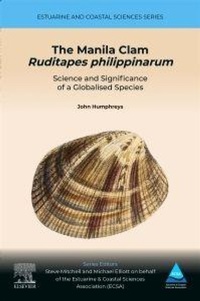
The Manila Clam Ruditapes philippinarum
Science and Significance of a Globalised Species
Will be published approx. on 1. August 2026
Book
Paperback/Softback
370 pages
978-0-443-36704-5 (ISBN)
Description
The Manila Clam Ruditapes philippinarum: Science and Significance of a Globalised Species is an indispensable volume offering the only comprehensive account of the species. From a native range centred on China, Japan and Korea, the species is now found in the USA, Canada, in western Europe from Portugal to Sweden with all countries between, and in the Mediterranean from France to Turkeyi. A general survey of the science and global spread of this successful species provides the basis for an examination of broader issues of biological globalization, food security and the exploitation of nature, posing significant questions and challenges for conservation policy and sustainable development in the anthropocene. Drawing on a multidisciplinary range of literature, this book provides essential information for those in the fields of marine biology, aquaculture and fisheries, marine conservation and malacology.
More details
Series
Language
English
Place of publication
Philadelphia
United States
Target group
Professional and scholarly
College/higher education
Product notice
Paperback (trade)
Unsewn / adhesive bound
Dimensions
Height: 235 mm
Width: 191 mm
Weight
450 gr
ISBN-13
978-0-443-36704-5 (9780443367045)
Copyright in bibliographic data and cover images is held by Nielsen Book Services Limited or by the publishers or by their respective licensors: all rights reserved.
Schweitzer Classification
Person
After ten years as Pro Vice-Chancellor at the University of Greenwich, London, for whom his work in Africa won a Queen's award, John Humphreys moved to the south coast of England where he has served as non-executive director of a port and harbour authority and as chair of a UK inshore fisheries and conservation authority. He is currently visiting professor at the University of Portsmouth's Institute of Marine Sciences and President of the Estuarine and Coastal Sciences Association. His other books for Elsevier include Marine Protected Areas: Science Policy and Management.
Content
Part A. Origins and Arrivals
1. Origins
2. Indigenous distribution and the Philippines revision
3. Globalisation: process and sequence
Part B. Biology and Ecology
4. Phylogeny and the genome
5. Shell morphology and colour
6. Soft tissue anatomy and burrowing
7. Feeding, food sources and assimilation
8. Respiration, physiological rates and energetics
9. Circulation, regulation and immunity
10. Reproduction, larval dispersal and settlement
11. Physicochemical tolerances and distribution
12. Biological constraints on distribution and abundance
13. Pathogens and parasites
14. Population dynamics and mortality episodes
15. Aspects of the ecological niche
Part C. Aquaculture and Fisheries
16. Production and socio-economics
17. From hatchery to market
18. Environmental performance
19. Fishery management and regulation
Part D. Naturalisation and Invasion
20. Naturalisation and dispersal
21. Consequences of naturalisation
22. Invasion and the Manila clam
23. Climate change: effects and implications
24. The politics of invasion: "alien monster" to climate adaptation
Part E. Preadaptation for Pre-eminence
25. Explaining the ascent of the Manila clam
26. Alternative futures
Appendix. Notes on Identification
1. Origins
2. Indigenous distribution and the Philippines revision
3. Globalisation: process and sequence
Part B. Biology and Ecology
4. Phylogeny and the genome
5. Shell morphology and colour
6. Soft tissue anatomy and burrowing
7. Feeding, food sources and assimilation
8. Respiration, physiological rates and energetics
9. Circulation, regulation and immunity
10. Reproduction, larval dispersal and settlement
11. Physicochemical tolerances and distribution
12. Biological constraints on distribution and abundance
13. Pathogens and parasites
14. Population dynamics and mortality episodes
15. Aspects of the ecological niche
Part C. Aquaculture and Fisheries
16. Production and socio-economics
17. From hatchery to market
18. Environmental performance
19. Fishery management and regulation
Part D. Naturalisation and Invasion
20. Naturalisation and dispersal
21. Consequences of naturalisation
22. Invasion and the Manila clam
23. Climate change: effects and implications
24. The politics of invasion: "alien monster" to climate adaptation
Part E. Preadaptation for Pre-eminence
25. Explaining the ascent of the Manila clam
26. Alternative futures
Appendix. Notes on Identification