

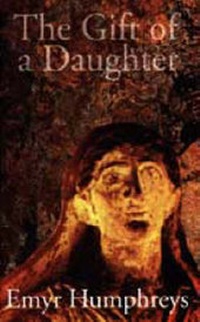
The Gift of a Daughter
Will be published approx. on 18. September 1997
Book
Paperback/Softback
300 pages
978-1-85411-222-4 (ISBN)
Description
This is a novel of delusion and self-knowledge, tradition and change, loss and identity in which the pace, plotting, characterization, and dialogue are as faultless as we expect from Humphreys. Aled Morgan and his wife flee to Tuscany to escape a family tragedy. Yet, even immersed in Etruscan culture, he finds that friendships aren't all they seem, and even his wife has become distant. He isn't even sure he knows himself any more. When he returns home, he is sadder and more experienced but in many ways no wiser.
More details
Language
English
Place of publication
Bridgend
United Kingdom
Publishing group
Poetry Wales Press
Weight
420 gr
ISBN-13
978-1-85411-222-4 (9781854112224)
Copyright in bibliographic data and cover images is held by Nielsen Book Services Limited or by the publishers or by their respective licensors: all rights reserved.
Schweitzer Classification
Person
Emyr Humphreys, born in 1919 in Prestatyn, north Wales, is one of the foremost Welsh novelists writing in English. He is the author of over twenty novels, of short story volumes, verse and non-fiction work, and was described by the poet R.S. Thomas as 'the supreme interpreter of Welsh life'. In the early 40's, as a conscientious objector, and whilst studying history at the University of Wales, Aberystwyth, he was sent to work on the land during the Second World War. He subsequently went as a war relief worker to the Middle East and then to Italy. In the mid-fifties, he joined BBC Wales as a drama producer, before taking a lectureship in Drama at the University of Wales, Bangor. In 1972, after remarkable success as a young novelist, winning the Somerset Maugham Award for Hear and Forgive (1952) and the Hawthornden Prize for A Toy Epic (1958), his most famous novel, written in both Welsh and English, he embarked on a career as a full-time writer. His work, which has remained true throughout his career to the realist novel, is concerned with goodness, with social and political conscience. Mass culture is an opiate, which the necessarily singular voice of the fiction writer must (in however beleaguered a manner) continue to oppose.' In his volume of short stories, Old People are a Problem (Seren, 2003), he explores a variety of situations in which the young and the old are obliged to live together at the beginning of the 21st century. His most recent work is The Woman at the Window (Seren, 2009).