

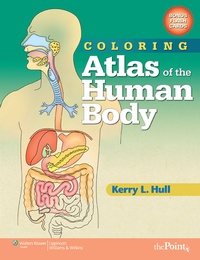
Coloring Atlas of the Human Body
Published on 11. March 2009
Book
Paperback/Softback
248 pages
978-0-7817-6530-5 (ISBN)
Description
Coloring Atlas of the Human Body provides a comprehensive overview of human anatomy and physiology for visually-oriented and kinesthetic learners. By coloring a series of specially designed diagrams and the accompanying flashcards, students will learn and remember concepts much more effectively than with traditional textbooks alone. The completed coloring exercises and flashcards can also serve as tools to review and prepare for examinations.
Reviews / Votes
-- Reviewers were very positive about the text's organization ? both the body systems approach (which matches that of traditional A&P textbooks) and the progression from simpler to more complex. -- Another major strength is that the text includes clearly-explained physiology concepts (not just anatomy); other texts contain physiology concepts, but often they are presented in a confusing or overwhelming manner. -- Other positives are the summary tables (e.g., bone markings), the flashcards, and the inclusion of a little microbiology coverage.More details
Language
English
Place of publication
Sudbury
United States
Target group
College/higher education
Product notice
Paperback (trade)
Dimensions
Height: 276 mm
Width: 213 mm
Weight
635 gr
ISBN-13
978-0-7817-6530-5 (9780781765305)
Copyright in bibliographic data and cover images is held by Nielsen Book Services Limited or by the publishers or by their respective licensors: all rights reserved.
Schweitzer Classification
Other editions
New editions
Kerry L. Hull
Coloring Atlas of the Human Body
Book
06/2020
Jones and Bartlett Publishers, Inc
€63.00
Article not available at the moment
Content
Preface and Introduction
Ch 1 Fundamentals of Anatomy and Physiology Coloring Exercises:
1-1 Organ Systems and Levels of Organization
1-2 Directional Terms and Planes of Division
1-3 Body Cavities and Abdominal Regions
1-4 Cell Structure
1-5 The Plasma Membrane and Chromosomes
1-6 Membrane Transport
1-7 Tissues 1: Epithelial Tissues
1-8 Tissues 2: Connective Tissues
Chapter 2. The Skin Coloring Exercises:
2-1 Skin Structure and Function
2-2 Skin Disorders
Ch 3. The Skeletal System Coloring Exercises:
3-1 The Skeletal System: An Overview
3-2 Long Bone Structure and Fractures
3-3 Compact Bone Tissue
3-4 Joints: Classification
3-5 Synovial Joints: Structure and Disease
3-6 The Skull
3-7 The Vertebral Column
3-8 The Thorax and Shoulder Girdle
Ch 4. The Muscular System Coloring Exercises:
4-1 Muscle Tissue and Skeletal Muscle Anatomy
4-2 The Neuromuscular Junction
4-3 Muscle Contraction
4-4 Energy for Working Muscles: ATP
4-5 Muscles in Action
4-6 Muscles of the Head
4-7 Muscles of the Torso
4-8 Muscles that Move the Upper Limb
4-9 Muscles that Move the Lower Limb
4-10 Skeletal Muscles Review (Part 1)
4-11 Skeletal Muscles Review (Part 2)
Ch 5 The Nervous System Coloring Exercises:
5-1 Organization of the Nervous System
5-2 Nervous Tissue
5-3 The Action Potential
5-4 Transmission of Nerve Impulses
5-5 The Spinal Cord and Spinal Reflexes
5-6 The Spinal Nerves
5-7 The Brain
5-8 The Cerebral Cortex and the Meninges
5-9 The Ventricles and Cerebrospinal Fluid
5-10 The Cranial Nerves
5-11 the Autonomic Nervous System
Ch 6. The Sensory System Coloring Exercises:
6-1 Touch and Pain
6-2 The Eye
6-3 Muscles of the Eye
6-4 Vision and Vision Abnormalities
6-5 Anatomy of the Ear
6-6 Physiology of the Ear: Hearing
6-7 Physiology of the Ear: Equilibrium
6-8 The Chemical Senses: Smell and Taste
Ch 7. The Endocrine System: Glands and Hormones Coloring Exercises:
7-1 The Endocrine System and the Endocrine Glands
7-2 The Parathyroid Glands and Calcium Metabolism
7-3 The Pancreas and Glucose Metabolism
7-4 The Pituitary Gland: Posterior Lobe
7-5 The Pituitary Gland: Anterior Lobe
7-6 Thyroid Hormones
Ch 8 The Cardiovascular System Coloring Exercises:
8-1 The Cardiovascular System: An Overview
8-2 The Pulmonary and Systemic Circulations
Ch 9: The Lymphatic System and Immunity
9-1 The Lymphatic and Cardiovascular Systems
9-2 Lymphatic Vessels
Ch 10. The Respiratory System Coloring Exercises:
10-1. The Respiratory System
10-2. Phases of Respiration
Ch 11. The Digestive System Coloring Exercises:
11-1 Anatomy of the Digestive System
11-2 The Digestive Tract Wall
Ch 12: The Urinary System and Water Balance
12-1 Water Balance
12-2 The Urinary System
12-3 The Nephron and its Blood Supply
Ch 13. Reproduction and Heredity Coloring Exercises:
13-1 The Male Reproductive System
13-2 The Testis & Spermatogenesis
13-3.The Female Reproductive System
Appx I: Answers to Coloring Exercises
Appx II: Pull-Out and Color Flashcards
abbrev contents
Ch 1 Fundamentals of Anatomy and Physiology Coloring Exercises:
1-1 Organ Systems and Levels of Organization
1-2 Directional Terms and Planes of Division
1-3 Body Cavities and Abdominal Regions
1-4 Cell Structure
1-5 The Plasma Membrane and Chromosomes
1-6 Membrane Transport
1-7 Tissues 1: Epithelial Tissues
1-8 Tissues 2: Connective Tissues
Chapter 2. The Skin Coloring Exercises:
2-1 Skin Structure and Function
2-2 Skin Disorders
Ch 3. The Skeletal System Coloring Exercises:
3-1 The Skeletal System: An Overview
3-2 Long Bone Structure and Fractures
3-3 Compact Bone Tissue
3-4 Joints: Classification
3-5 Synovial Joints: Structure and Disease
3-6 The Skull
3-7 The Vertebral Column
3-8 The Thorax and Shoulder Girdle
Ch 4. The Muscular System Coloring Exercises:
4-1 Muscle Tissue and Skeletal Muscle Anatomy
4-2 The Neuromuscular Junction
4-3 Muscle Contraction
4-4 Energy for Working Muscles: ATP
4-5 Muscles in Action
4-6 Muscles of the Head
4-7 Muscles of the Torso
4-8 Muscles that Move the Upper Limb
4-9 Muscles that Move the Lower Limb
4-10 Skeletal Muscles Review (Part 1)
4-11 Skeletal Muscles Review (Part 2)
Ch 5 The Nervous System Coloring Exercises:
5-1 Organization of the Nervous System
5-2 Nervous Tissue
5-3 The Action Potential
5-4 Transmission of Nerve Impulses
5-5 The Spinal Cord and Spinal Reflexes
5-6 The Spinal Nerves
5-7 The Brain
5-8 The Cerebral Cortex and the Meninges
5-9 The Ventricles and Cerebrospinal Fluid
5-10 The Cranial Nerves
5-11 the Autonomic Nervous System
Ch 6. The Sensory System Coloring Exercises:
6-1 Touch and Pain
6-2 The Eye
6-3 Muscles of the Eye
6-4 Vision and Vision Abnormalities
6-5 Anatomy of the Ear
6-6 Physiology of the Ear: Hearing
6-7 Physiology of the Ear: Equilibrium
6-8 The Chemical Senses: Smell and Taste
Ch 7. The Endocrine System: Glands and Hormones Coloring Exercises:
7-1 The Endocrine System and the Endocrine Glands
7-2 The Parathyroid Glands and Calcium Metabolism
7-3 The Pancreas and Glucose Metabolism
7-4 The Pituitary Gland: Posterior Lobe
7-5 The Pituitary Gland: Anterior Lobe
7-6 Thyroid Hormones
Ch 8 The Cardiovascular System Coloring Exercises:
8-1 The Cardiovascular System: An Overview
8-2 The Pulmonary and Systemic Circulations
Ch 9: The Lymphatic System and Immunity
9-1 The Lymphatic and Cardiovascular Systems
9-2 Lymphatic Vessels
Ch 10. The Respiratory System Coloring Exercises:
10-1. The Respiratory System
10-2. Phases of Respiration
Ch 11. The Digestive System Coloring Exercises:
11-1 Anatomy of the Digestive System
11-2 The Digestive Tract Wall
Ch 12: The Urinary System and Water Balance
12-1 Water Balance
12-2 The Urinary System
12-3 The Nephron and its Blood Supply
Ch 13. Reproduction and Heredity Coloring Exercises:
13-1 The Male Reproductive System
13-2 The Testis & Spermatogenesis
13-3.The Female Reproductive System
Appx I: Answers to Coloring Exercises
Appx II: Pull-Out and Color Flashcards
abbrev contents