

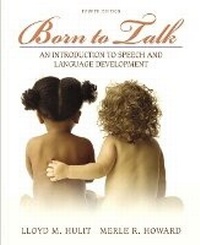
Born to Talk
An Introduction to Speech and Language Development
4th Edition
Published on 7. November 2005
Book
Mixed media product
504 pages
978-0-205-45331-3 (ISBN)
Description
Now in its Fourth Edition, Born to Talk: An Introduction to Speech and Language Development traces development through real time with attention to how the various components of language are integrated in a single child's journey to adult language.
Suitable for majors and non-majors, undergraduate and graduate students alike, this text provides a comprehensive view of speech and language development written in a reader-friendly manner. In addition to a real-time presentation of speech and language development, the book contains information on theories of language development, cognitive development, the anatomy and physiology of speech, language diversity, and communication disorders. It also includes revised sections on African American English, Hispanic English, cultural diversity in the public schools, adolescent and adult language, and a much expanded section on fluency disorders.
The Fourth Edition features a new and unique chapter on bilingualism. It has been updated throughout with to reflect current research and topics, such as Asian English. To improve the organization, Ch 10 is condensed and information on anatomy and physiology has been moved to the Appendix. Four new tables are added to visually supplement the text.
Suitable for majors and non-majors, undergraduate and graduate students alike, this text provides a comprehensive view of speech and language development written in a reader-friendly manner. In addition to a real-time presentation of speech and language development, the book contains information on theories of language development, cognitive development, the anatomy and physiology of speech, language diversity, and communication disorders. It also includes revised sections on African American English, Hispanic English, cultural diversity in the public schools, adolescent and adult language, and a much expanded section on fluency disorders.
The Fourth Edition features a new and unique chapter on bilingualism. It has been updated throughout with to reflect current research and topics, such as Asian English. To improve the organization, Ch 10 is condensed and information on anatomy and physiology has been moved to the Appendix. Four new tables are added to visually supplement the text.
More details
Edition
4th edition
Language
English
Place of publication
United States
Publishing group
Pearson Education (US)
Target group
Professional and scholarly
Dimensions
Height: 235 mm
Width: 191 mm
Weight
1000 gr
ISBN-13
978-0-205-45331-3 (9780205453313)
Copyright in bibliographic data and cover images is held by Nielsen Book Services Limited or by the publishers or by their respective licensors: all rights reserved.
Schweitzer Classification
Other editions
New editions
Lloyd M. Hulit | Merle R. Howard | Kathleen R. Fahey
Born to Talk
An Introduction to Speech and Language Development
Book
05/2010
5th Edition
Pearson
€153.00
Article exhausted; check for reprint
Previous edition
Lloyd M. Hulit | Merle R. Howard
Born to Talk
An Introduction to Speech and Language Development with Audio CD
Book
03/2002
3rd Edition
Pearson
€74.46
Article exhausted; check for reprint
Content
All Chapters end with "Review Questions and " "References and Suggested Readings."
1. A Connection of Brains.
Separate but Related Processes.
The Unique Characteristics of Human Speech.
Speech: The Tale of Two Brains.
2. Language Acquisition: A Theoretical Journey.
Choosing Sides.
The Behaviorist Interpretation.
The Nativist Interpretation.
The Generative Semantics Interpretation.
The Cognitive Interpretation.
The Information processing Interpretation.
The Pragmatics Revolution.
The Social Interactionist Interpretation.
And the Evolution Continues.
3. Cognitive Development-Building a Foundation for Language.
Piaget's Theory of Cognitive Development Vygotsky's Theory of Cognitive.
Development: A Sociocultural Perspective.
The Perceptual Groundwork for Communication.
4. In the Beginning-Communication Development from Birth to Two Years.
From the Beginning ...The Infant Communicates.
Beyond Infancy: The Emergence of Language.
Stage One: From Words to Combinations of Words.
Comprehension and Production: A Critical and Evolving Relationship.
The Role of the Caregiver in the Acquisition of Early Language.
Stage One: A Brief Look Back and a Glimpse Forward.
5. The Saga Continues-Language Development Through the Preschool Years.
Stage Two: Elaborating Structure and Refining Meaning.
Stage Three: Producing Longer, More Adult-Like Sentences.
Stage Four: Elaboration by Embedding.
Stage Five: Polishing the Act.
Understanding Language: Cognition, Comprehension, and Production.
6. Taking Language to School and Into Adulthood.
Bringing My Stuff to School: Pencils, Crayons, and Language.
Language Development During the School Years: An Overview.
Semantics: Vocabulary and Cognition Still Growing Together.
Syntax and Morphology: Still Expanding and Acquiring.
Pragmatic Development: Conversational Skills Continue to Improve Metalinguistic. Development During the School Years.
Reading and Writing: New Applications of Language.
Adult Language.
And the Beat Goes On...
7. The Building Blocks of Speech.
Describing Speech Sounds.
Co-Articulation: The Mix of Sounds in the Making of Speech.
The Landmarks of Phonological Development.
Theories of Phonological Development.
8. Language Diversity-Regional, Social/Cultural, and Gender Differences.
What is a Dialect?
What is an Accent?
Regional Dialects.
Social/Cultural Dialects.
Gender Differences in Language.
9. One Tongue-Two or More Languages.
The Changing Face of America.
What Does it Mean to be Bilingual?
Bilingual Development-Different Views, Different Terminology.
Cognition and Language Development in Bilingualism.
Learning a Second Language-The Optimal Age.
A Closer Look at Simultaneous Bilingualism.
A Closer Look at Successive or Sequential Bilingualism.
Stages of Language Development in Bilingual Children.
Bilingualism-Good, Bad, or Inevitable?
10. Speech and Language Disorders.
Falling Short of Normal Communication.
Phonological Disorders.
Language Impairments.
Voice Disorders.
Fluency Disorders.
Final Thoughts.
Appendix: The Anatomical and Physiological Bases of Speech, Language, and Hearing.
Speech as the Product of Borrowed Structures.
The Four Processes of Speech.
Respiration.
Phonation.
Resonation.
Articulation.
The Four Processes in review.
The Brain: The Computer Center for Speech and Language.
The Ear: An Energy Transformer.
The Complete Speech and Language Machine.
Name Index.
Subject Index.
1. A Connection of Brains.
Separate but Related Processes.
The Unique Characteristics of Human Speech.
Speech: The Tale of Two Brains.
2. Language Acquisition: A Theoretical Journey.
Choosing Sides.
The Behaviorist Interpretation.
The Nativist Interpretation.
The Generative Semantics Interpretation.
The Cognitive Interpretation.
The Information processing Interpretation.
The Pragmatics Revolution.
The Social Interactionist Interpretation.
And the Evolution Continues.
3. Cognitive Development-Building a Foundation for Language.
Piaget's Theory of Cognitive Development Vygotsky's Theory of Cognitive.
Development: A Sociocultural Perspective.
The Perceptual Groundwork for Communication.
4. In the Beginning-Communication Development from Birth to Two Years.
From the Beginning ...The Infant Communicates.
Beyond Infancy: The Emergence of Language.
Stage One: From Words to Combinations of Words.
Comprehension and Production: A Critical and Evolving Relationship.
The Role of the Caregiver in the Acquisition of Early Language.
Stage One: A Brief Look Back and a Glimpse Forward.
5. The Saga Continues-Language Development Through the Preschool Years.
Stage Two: Elaborating Structure and Refining Meaning.
Stage Three: Producing Longer, More Adult-Like Sentences.
Stage Four: Elaboration by Embedding.
Stage Five: Polishing the Act.
Understanding Language: Cognition, Comprehension, and Production.
6. Taking Language to School and Into Adulthood.
Bringing My Stuff to School: Pencils, Crayons, and Language.
Language Development During the School Years: An Overview.
Semantics: Vocabulary and Cognition Still Growing Together.
Syntax and Morphology: Still Expanding and Acquiring.
Pragmatic Development: Conversational Skills Continue to Improve Metalinguistic. Development During the School Years.
Reading and Writing: New Applications of Language.
Adult Language.
And the Beat Goes On...
7. The Building Blocks of Speech.
Describing Speech Sounds.
Co-Articulation: The Mix of Sounds in the Making of Speech.
The Landmarks of Phonological Development.
Theories of Phonological Development.
8. Language Diversity-Regional, Social/Cultural, and Gender Differences.
What is a Dialect?
What is an Accent?
Regional Dialects.
Social/Cultural Dialects.
Gender Differences in Language.
9. One Tongue-Two or More Languages.
The Changing Face of America.
What Does it Mean to be Bilingual?
Bilingual Development-Different Views, Different Terminology.
Cognition and Language Development in Bilingualism.
Learning a Second Language-The Optimal Age.
A Closer Look at Simultaneous Bilingualism.
A Closer Look at Successive or Sequential Bilingualism.
Stages of Language Development in Bilingual Children.
Bilingualism-Good, Bad, or Inevitable?
10. Speech and Language Disorders.
Falling Short of Normal Communication.
Phonological Disorders.
Language Impairments.
Voice Disorders.
Fluency Disorders.
Final Thoughts.
Appendix: The Anatomical and Physiological Bases of Speech, Language, and Hearing.
Speech as the Product of Borrowed Structures.
The Four Processes of Speech.
Respiration.
Phonation.
Resonation.
Articulation.
The Four Processes in review.
The Brain: The Computer Center for Speech and Language.
The Ear: An Energy Transformer.
The Complete Speech and Language Machine.
Name Index.
Subject Index.