

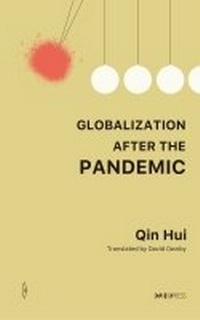
Globalization After the Pandemic
Published on 30. April 2022
Book
Hardback
132 pages
978-988-237-231-3 (ISBN)
Description
The coronavirus pandemic that broke out in 2019 has finally calmed down in China, after the bungling occasioned by the iron hand of lockdown. But beginning in March 2020, the disaster spread abroad, and at present there is no end in sight. In this work, Qin Hui offers a bracing examination of the impact of coronavirus pandemic on political institutions in both China and the West. Deliberating on the contradiction between "human rights" and "human survival," he contends that China has achieved success in imposing coercive lockdowns to control the virus, but it will be a challenge to prevent the normalization of emergency measures from worsening human right conditions. The West, in contrast, must learn how democracies can efficiently enter a state of emergency and put an end to these measures at the proper time.
Reviews / Votes
Qin Hui is one of the most original thinkers and commentators active in China today. In this wide?ranging and meticulously researched book he argues that the COVID?19 pandemic reveals decisive weaknesses inboth the Chinese and European/American political systems. While not everyone will agree with Qin's conclusions, the rigor of his arguments, the broad historical and geographical range of his examples, and his commitment to defending human dignity around the world make for a compelling read and challenge all forms of pandemic complacency."- Sebastian Veg, School of Advanced Studies in the Social Sciences (EHESS), ParisMore details
Series
Language
English
Place of publication
Hong Kong
Hong Kong
Target group
Professional and scholarly
Dimensions
Height: 203 mm
Width: 127 mm
Thickness: 17 mm
Weight
333 gr
ISBN-13
978-988-237-231-3 (9789882372313)
Copyright in bibliographic data and cover images is held by Nielsen Book Services Limited or by the publishers or by their respective licensors: all rights reserved.
Schweitzer Classification
Other editions
Additional editions
E-Book
10/2021
The Chinese University of Hong Kong Press
€21.49
Available for download
Persons
Qin Hui is Retired Professor in Department of History at Tsinghua University, Adjunct Professor in the Department of Government and Public Administration at The Chinese University of Hong Kong, and aleading historian and public intellectual in China. His research focus includes economic and agrarian history of China.
David Ownby is Professor of History at the Universite de Montreal. His research focus is intellectual life in contemporary China, and his recent publications include Rethinking China's Rise by Xu Jilin (as editor and translator), Voices from the Chinese Century (co?edited with Timothy Cheek and Joshua A. Fogel), and The Transcendental and the Mundane by Choyun Hsu (as translator). His online project, "Reading the China Dream," is available at readingthechinadream.com.
David Ownby is Professor of History at the Universite de Montreal. His research focus is intellectual life in contemporary China, and his recent publications include Rethinking China's Rise by Xu Jilin (as editor and translator), Voices from the Chinese Century (co?edited with Timothy Cheek and Joshua A. Fogel), and The Transcendental and the Mundane by Choyun Hsu (as translator). His online project, "Reading the China Dream," is available at readingthechinadream.com.
Content
Foreword by David Ownby
Chapter One: What if "Human Rights" Means "No Humans Left"?
Chapter Two: "Human Rights Derogations" during States of Emergency, and the Definition of Human Rights
Chapter Three: States of Emergency and Political Institutions
Notes
Bibliography
Chapter One: What if "Human Rights" Means "No Humans Left"?
Chapter Two: "Human Rights Derogations" during States of Emergency, and the Definition of Human Rights
Chapter Three: States of Emergency and Political Institutions
Notes
Bibliography