

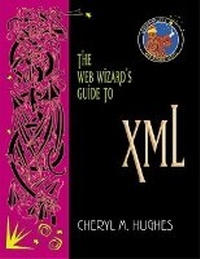
The Web Wizard's Guide to XML
Published on 10. October 2002
Book
Paperback/Softback
192 pages
978-0-201-76990-6 (ISBN)
Description
The Web Wizard's Guide to XML teaches readers how to create their own markup languages using XML. From writing XML code to building XML applications, this concise and easy-to-understand introduction shows readers how to create well-structured XML documents and applications for use on the Web and beyond.
The Web Wizard Series from Addison-Wesley is a series of brief, introductory books on Internet and Web programming topics of interest to anyone who wants to create Web pages. Each book includes an easy-to-read, full-color design, and is written in a concise and practical manner to get readers quickly using the technologies.
The Web Wizard Series from Addison-Wesley is a series of brief, introductory books on Internet and Web programming topics of interest to anyone who wants to create Web pages. Each book includes an easy-to-read, full-color design, and is written in a concise and practical manner to get readers quickly using the technologies.
More details
Language
English
Place of publication
United States
Publishing group
Pearson Education (US)
Target group
Professional and scholarly
Dimensions
Width: 229 mm
Thickness: 10 mm
Weight
383 gr
ISBN-13
978-0-201-76990-6 (9780201769906)
Copyright in bibliographic data and cover images is held by Nielsen Book Services Limited or by the publishers or by their respective licensors: all rights reserved.
Schweitzer Classification
Content
1. An Overview of XML.
What is XML?
The Fundamentals of Markup Languages.
The Entrance of XML.
Differences between XML and HTML.
XHTML - The Best of Both Worlds.
Creating our First XML Document.
2. A Closer Look at XML Documents.
XML Syntax.
Components of an XML Document.
Well-formed Documents.
XML Parsers.
3. Describing XML Documents with DTD's and XML Schemas.
What are DTD's and Schemas?
Validating Parsers.
Overview of DTD's.
Types of DTD's.
Overview of XML Schemas.
4. All about Style - XML Presentation.
Creating the Presentation.
Using Cascading Style Sheets (CSS).
The Pros and Cons of CSS.
Overview of the Extensible Stylesheet Language (XSL).
5. Namespaces in XML.
What is a Namespace?
Why are Namespaces needed in XML?
XML Namespace Syntax.
How to Determine the Scope of a Namespace.
Using Namespaces in XML Documents.
6. Links in XML.
What is a Link?
Overview of Links in HTML.
Links in XML.
Simple Links.
Extended Links.
7. Extending XML - Processing and Programming.
Programming.
Multimedia and the Scalar Vector Graphics (SVG) Specification.
XML and Java.
XHTML.
XQL - XML Database Query Language.
8. Building and Using XML Applications.
XML Web Applications.
Some Examples of How XML is Being Used.
Integrating XML with Existing Systems.
Pros and Cons of Using XML.
The Future of XML.
Appendix A. XML Tools and Resources.
What is XML?
The Fundamentals of Markup Languages.
The Entrance of XML.
Differences between XML and HTML.
XHTML - The Best of Both Worlds.
Creating our First XML Document.
2. A Closer Look at XML Documents.
XML Syntax.
Components of an XML Document.
Well-formed Documents.
XML Parsers.
3. Describing XML Documents with DTD's and XML Schemas.
What are DTD's and Schemas?
Validating Parsers.
Overview of DTD's.
Types of DTD's.
Overview of XML Schemas.
4. All about Style - XML Presentation.
Creating the Presentation.
Using Cascading Style Sheets (CSS).
The Pros and Cons of CSS.
Overview of the Extensible Stylesheet Language (XSL).
5. Namespaces in XML.
What is a Namespace?
Why are Namespaces needed in XML?
XML Namespace Syntax.
How to Determine the Scope of a Namespace.
Using Namespaces in XML Documents.
6. Links in XML.
What is a Link?
Overview of Links in HTML.
Links in XML.
Simple Links.
Extended Links.
7. Extending XML - Processing and Programming.
Programming.
Multimedia and the Scalar Vector Graphics (SVG) Specification.
XML and Java.
XHTML.
XQL - XML Database Query Language.
8. Building and Using XML Applications.
XML Web Applications.
Some Examples of How XML is Being Used.
Integrating XML with Existing Systems.
Pros and Cons of Using XML.
The Future of XML.
Appendix A. XML Tools and Resources.