

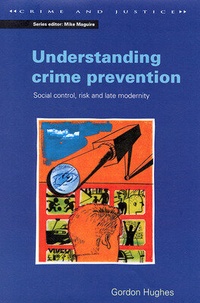
UNDERSTANDING CRIME PREVENTION
Published on 16. October 1998
Book
Paperback/Softback
192 pages
978-0-335-19940-2 (ISBN)
Description
* How can criminological, sociological and historical perspectives illuminate the elusive concept of crime prevention?
* Are we witnessing a new governance of crime control?
* What are the futures of crime prevention in late modernity?
This book offers a comprehensive overview of current and historical debates about crime prevention in particular and social control more generally. It moves beyond the traditional boundaries of criminology and offers an original re-framing of the field of crime prevention based on a synthesis of exciting new thinking in social theory. In particular, recent theorising around late modernity, risk society, communitarianism and globalization are put forward as important ways of linking trends in crime prevention to wider social transformations.
This innovative text looks at the contested history of crime prevention in the modern era and considers present and future trends in social control in late modernity. Hughes focuses on the question of the "managerialization" of crime prevention in recent decades, the extent to which crime control may become dominated by privatized security and insurance against risks, and the attractions and pitfalls of informal community-based approaches. Understanding Crime Prevention will be essential reading for students and researchers in the field as well as many professional and lay people interested in crime prevention and community safety.
* Are we witnessing a new governance of crime control?
* What are the futures of crime prevention in late modernity?
This book offers a comprehensive overview of current and historical debates about crime prevention in particular and social control more generally. It moves beyond the traditional boundaries of criminology and offers an original re-framing of the field of crime prevention based on a synthesis of exciting new thinking in social theory. In particular, recent theorising around late modernity, risk society, communitarianism and globalization are put forward as important ways of linking trends in crime prevention to wider social transformations.
This innovative text looks at the contested history of crime prevention in the modern era and considers present and future trends in social control in late modernity. Hughes focuses on the question of the "managerialization" of crime prevention in recent decades, the extent to which crime control may become dominated by privatized security and insurance against risks, and the attractions and pitfalls of informal community-based approaches. Understanding Crime Prevention will be essential reading for students and researchers in the field as well as many professional and lay people interested in crime prevention and community safety.
Reviews / Votes
"...this is as good and as readily understandable on the subject of crime statistics as you are ever likely to find." -New Law JournalMore details
Other editions
Additional editions

Gordon Hughes
Understanding Crime Prevention
E-Book
10/1998
1st Edition
McGraw-Hill Education
€69.39
Available for download
Person
Gordon Hughes is a lecturer in Social Policy at the Open University. He has taught Sociology, Criminology and Social Policy at undergraduate and postgraduate level for over twenty years. He has researched and written widely in the fields of multi-agency crime prevention, social welfare, regulation and accountability of public services and communitarianism. His recent publications include Imagining Welfare Futures (1998) which he edited and Unsettling Welfare (1998), which he co-edited with Gail Lewis.
Content
Series editor's foreword
Acknowledgements
Introduction
Mapping the terrain of crime prevention
Classicism and the deterrent presences of the modern state
Positivism and the cure of 'criminal man'
Situational crime prevention
the pragmatics of crime control
Multi-agency partnerships
managing corporate crime prevention
Communitarianism
bringing 'the social' back into crime prevention?
The futures of crime control in late modernity
Postscript
beyond crime prevention?
Glossary
References
Index.
Acknowledgements
Introduction
Mapping the terrain of crime prevention
Classicism and the deterrent presences of the modern state
Positivism and the cure of 'criminal man'
Situational crime prevention
the pragmatics of crime control
Multi-agency partnerships
managing corporate crime prevention
Communitarianism
bringing 'the social' back into crime prevention?
The futures of crime control in late modernity
Postscript
beyond crime prevention?
Glossary
References
Index.