

Return of Simple
Published on 1. August 1995
Book
Paperback/Softback
218 pages
978-0-8090-1582-5 (ISBN)
Description
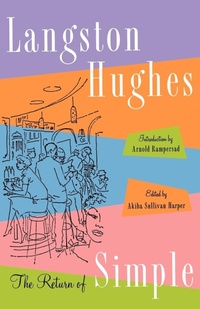
Jesse B. Simple, Simple to his fans, made weekly appearances beginning in 1943 in Langston Hughes' column in the Chicago Defender. Simple may have shared his readers feelings of loss and dispossession, but he also cheered them on with his wonderful wit and passion for life.
More details
Language
English
Place of publication
United States
Dimensions
Height: 216 mm
Width: 140 mm
Thickness: 15 mm
Weight
350 gr
ISBN-13
978-0-8090-1582-5 (9780809015825)
Copyright in bibliographic data and cover images is held by Nielsen Book Services Limited or by the publishers or by their respective licensors: all rights reserved.
Schweitzer Classification
Person
James Mercer Langston Hughes (February 1, 1901[1] - May 22, 1967) was an American poet, social activist, novelist, playwright, and columnist from Joplin, Missouri. He moved to New York City as a young man, where he made his career. One of the earliest innovators of the then-new literary art form called jazz poetry, Hughes is best known as a leader of the Harlem Renaissance. He famously wrote about the period that "the negro was in vogue", which was later paraphrased as "when Harlem was in vogue."[2]
Growing up in a series of Midwestern towns, Hughes became a prolific writer at an early age. He graduated from high school in Cleveland, Ohio and soon began studies at Columbia University in New York City. Although he dropped out, he gained notice from New York publishers, first in The Crisis magazine, and then from book publishers and became known in the creative community in Harlem. He eventually graduated from Lincoln University. In addition to poetry, Hughes wrote plays, and short stories. He also published several non-fiction works. From 1942 to 1962, as the civil rights movement was gaining traction, he wrote an in-depth weekly column in a leading black newspaper, The Chicago Defender.
First published in 1921 in The Crisis - official magazine of the National Association for the Advancement of Colored People (NAACP) - "The Negro Speaks of Rivers", which became Hughes's signature poem, was collected in his first book of poetry The Weary Blues (1926).[47] Hughes's first and last published poems appeared in The Crisis; more of his poems were published in The Crisis than in any other journal.[48] Hughes' life and work were enormously influential during the Harlem Renaissance of the 1920s, alongside those of his contemporaries, Zora Neale Hurston,[49] Wallace Thurman, Claude McKay, Countee Cullen, Richard Bruce Nugent, and Aaron Douglas. Except for McKay, they worked together also to create the short-lived magazine Fire!! Devoted to Younger Negro Artists.
Growing up in a series of Midwestern towns, Hughes became a prolific writer at an early age. He graduated from high school in Cleveland, Ohio and soon began studies at Columbia University in New York City. Although he dropped out, he gained notice from New York publishers, first in The Crisis magazine, and then from book publishers and became known in the creative community in Harlem. He eventually graduated from Lincoln University. In addition to poetry, Hughes wrote plays, and short stories. He also published several non-fiction works. From 1942 to 1962, as the civil rights movement was gaining traction, he wrote an in-depth weekly column in a leading black newspaper, The Chicago Defender.
First published in 1921 in The Crisis - official magazine of the National Association for the Advancement of Colored People (NAACP) - "The Negro Speaks of Rivers", which became Hughes's signature poem, was collected in his first book of poetry The Weary Blues (1926).[47] Hughes's first and last published poems appeared in The Crisis; more of his poems were published in The Crisis than in any other journal.[48] Hughes' life and work were enormously influential during the Harlem Renaissance of the 1920s, alongside those of his contemporaries, Zora Neale Hurston,[49] Wallace Thurman, Claude McKay, Countee Cullen, Richard Bruce Nugent, and Aaron Douglas. Except for McKay, they worked together also to create the short-lived magazine Fire!! Devoted to Younger Negro Artists.