

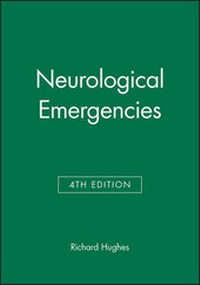
Neurological Emergencies
4th Edition
Will be published approx. on 20. August 2003
Book
Paperback/Softback
480 pages
978-0-7279-1774-4 (ISBN)
Description
The 4th edition of Neurological emergencies edited by Professor Richard Hughes presents an up to date guide to the pathogenesis and management of common emergencies in neurology (acute stroke, tonic-clonic status epilepticus), neurosurgery (traumatic brain injury, raised intracranial pressure, subarachnoid haemorrhage, acute spinal cord compression) and related specialties such as medicine (medical coma), intensive care (acute neuromuscular respiratory paralysis, brain stem death), infectious diseases (cerebral infection), ophthalmology (acute visual loss) and psychiatry (delirium, acute behaviour disturbance). The volume complements a small series of related titles from the same publishers on epidemiology, investigation and management of neurological disorders.
Each of the 13 chapters authored by experts in the respective fields is clearly and consistently structured, providing a detailed outline of pathogenesis as a rational basis for recommended investigations and management of specific conditions. Pathophysiological considerations are comprehensive and incorporate recent advances such as the increased understanding of the neurochemical basis of secondary brain injury and the association between specific apolipoprotein E genotypes and an increased risk of Alzheimer's disease following head trauma. Recommended diagnostic strategies are clearly outlined and advantages and limitations of specific investigations are discussed in the context of each clinical scenario. Numerous tables throughout the text (for example on investigation of stroke, delirium and neuromuscular disorders associated with respiratory paralysis) allow for easily accessible and concise reference.
Each of the 13 chapters authored by experts in the respective fields is clearly and consistently structured, providing a detailed outline of pathogenesis as a rational basis for recommended investigations and management of specific conditions. Pathophysiological considerations are comprehensive and incorporate recent advances such as the increased understanding of the neurochemical basis of secondary brain injury and the association between specific apolipoprotein E genotypes and an increased risk of Alzheimer's disease following head trauma. Recommended diagnostic strategies are clearly outlined and advantages and limitations of specific investigations are discussed in the context of each clinical scenario. Numerous tables throughout the text (for example on investigation of stroke, delirium and neuromuscular disorders associated with respiratory paralysis) allow for easily accessible and concise reference.
Reviews / Votes
This is a highly informative textbook which will benefit every doctor dealing with neurological emergencies in neurology and related specialties, as an introduction for those in training and as an update for the more experienced reader.Neuromuscular Disorders
"Should be read by those who decide initial management of neurologist emergencies." -- Postgraduate Medical Journal
More details
Edition
4th edition
Language
English
Place of publication
United States
Publishing group
John Wiley & Sons Inc
Target group
Professional and scholarly
Dimensions
Height: 213 mm
Width: 137 mm
Thickness: 25 mm
Weight
612 gr
ISBN-13
978-0-7279-1774-4 (9780727917744)
Copyright in bibliographic data and cover images is held by Nielsen Book Services Limited or by the publishers or by their respective licensors: all rights reserved.
Schweitzer Classification
Person
Professor Richard Hughes studied medicine at Cambridge University and then at Guy's Hospital Medical School. He was appointed Consultant Neurologist at Guy's Hospital in 1975 and in 1987 Professor of Neurology at what is now the King's College London School of Medicine. His main research interest is the pathogenesis and treatment of Guillain-Barre syndrome and related neuropathies. In 1998, Professor Hughes founded the Cochrane Neuromuscular Review Group of which he remains the Co-ordinating Editor. From 2001 until 2005 Professor Hughes was Vice-President of the European Federation of Neurological Societies and Chair of its Scientific Committee. He is currently President of the international Peripheral Nerve Society.
Content
Contributors. Preface.
Medical coma.
Traumatic brain injury.
Acute stroke.
Delirium.
Acute behaviour disturbances and their management.
Tonic-clonic status epilepticus.
Raised intracranial pressure.
Management of subarachnoid haemorrhage.
Cerebral infection.
Acute spinal cord compression.
Acute neuromuscular respiratory paralysis.
Acute visual loss.
Criteria for diagnosing brainstem death.
Index
Medical coma.
Traumatic brain injury.
Acute stroke.
Delirium.
Acute behaviour disturbances and their management.
Tonic-clonic status epilepticus.
Raised intracranial pressure.
Management of subarachnoid haemorrhage.
Cerebral infection.
Acute spinal cord compression.
Acute neuromuscular respiratory paralysis.
Acute visual loss.
Criteria for diagnosing brainstem death.
Index