

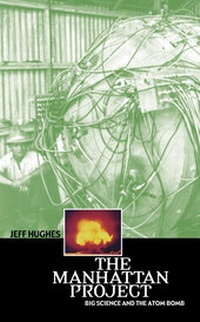
The Manhattan Project
Big Science and the Atom Bomb
Published on 8. October 2003
Book
Hardback
200 pages
978-0-231-13152-0 (ISBN)
Description
Launched in 1942, the Manhattan Project was a well-funded, secret effort by the United States, the United Kingdom, and Canada to develop an atomic bomb before the Nazis. The results-the bombs named "Little Boy" and "Fat Man"-were dropped on Hiroshima and Nagasaki in August of 1945. A vast state within a state, the Manhattan Project employed 130,000 people and cost the United States and its allies 2 billion dollars, but its contribution to science as a prestigious investment was invaluable. After the bombs were dropped, states began allocating unprecedented funds for scientific research, leading to the establishment of many of twentieth century's major research institutions. Yet the union of science, industry, and the military did not start with the development of the atomic bomb; World War II only deepened the relationship. This absorbing history revisits the interactions among science, the national interest, and public and private funding that was initiated in World War I and flourished in WWII.
It then follows the Manhattan Project from inception to dissolution, describing the primary influences that helped execute the world's first successful plan for nuclear research and tracing the lineages of modern national nuclear agencies back to their source.
It then follows the Manhattan Project from inception to dissolution, describing the primary influences that helped execute the world's first successful plan for nuclear research and tracing the lineages of modern national nuclear agencies back to their source.
Reviews / Votes
Hughes develops his thesis in interesting fashion. His essay is free of technical jargon but will be most accessible to readers familiar with the bomb's history and with huge, expansive installations such as CERN or Fermilab. Booklist Pacy and concise. The Times (London) Engrossing and information-packed. -- Marjorie C. Malley ISISMore details
Series
Language
English
Place of publication
New York
United States
Target group
Professional and scholarly
Product notice
Trade binding
Illustrations
15 illustrations
Dimensions
Height: 178 mm
Width: 114 mm
Weight
227 gr
ISBN-13
978-0-231-13152-0 (9780231131520)
Copyright in bibliographic data and cover images is held by Nielsen Book Services Limited or by the publishers or by their respective licensors: all rights reserved.
Schweitzer Classification
Other editions
Additional editions
Book
06/2016
Columbia University Press
€17.33
Article exhausted; check different version
Person
Jeff Hughes is a senior lecturer in the history of science and technology at the University of Manchester. His research concerns the social history of the physical and chemical sciences in the nineteenth and twentieth centuries and the institutional history of twentieth-century British science.
Content
List of Illustrations Acknowledgements Introduction: Big Science and the Bomb Long Before the Bomb: The Origins of Big Science Science, the Military and Industry: The Great War and After From Fission to Mission: The Origins of the Manhattan Project Los Alamos: Little Science on a Big Scale? Thin Man Becomes Fat Man: The Plutonium Implosion Programme From Trinity to Victory: Making and Using the First Nuclear Weapons After the Bomb: Big Science and National Security From Big Science to Megascience: The Age of the Accelerators The Invention of 'Big Science': Large-Scale Science as Pathological Science Death in Texas: The End of Megascience? Conclusions: The Myths of Big Science Further Reading