


Foucault's Strange Eros
Published on 16. June 2020
Book
Paperback/Softback
280 pages
978-0-231-19715-1 (ISBN)
Description
What is the strange eros that haunts Foucault's writing? In this deeply original consideration of Foucault's erotic ethics, Lynne Huffer provocatively rewrites Foucault as a Sapphic poet. She uncovers eros as a mode of thought that erodes the interiority of the thinking subject. Focusing on the ethical implications of this mode of thought, Huffer shows how Foucault's poetic archival method offers a way to counter the disciplining of speech.
At the heart of this method is a conception of the archive as Sapphic: the past's remains are, like Sappho's verses, hole-ridden, scattered, and dissolved by time. Listening for eros across fragmented texts, Huffer stages a series of encounters within an archive of literary and theoretical readings: the eroticization of violence in works by Freud and Eve Kosofsky Sedgwick, the historicity of madness in the Foucault-Derrida debate, the afterlives of Foucault's antiprison activism, and Monique Wittig's Sapphic materialism. Through these encounters, Foucault's Strange Eros conceives of ethics as experiments in living that work poetically to make the present strange. Crafting fragments that dissolve into Sapphic brackets, Huffer performs the ethics she describes in her own practice of experimental writing. Foucault's Strange Eros hints at the self-hollowing speech of an eros that opens a space for the strange.
At the heart of this method is a conception of the archive as Sapphic: the past's remains are, like Sappho's verses, hole-ridden, scattered, and dissolved by time. Listening for eros across fragmented texts, Huffer stages a series of encounters within an archive of literary and theoretical readings: the eroticization of violence in works by Freud and Eve Kosofsky Sedgwick, the historicity of madness in the Foucault-Derrida debate, the afterlives of Foucault's antiprison activism, and Monique Wittig's Sapphic materialism. Through these encounters, Foucault's Strange Eros conceives of ethics as experiments in living that work poetically to make the present strange. Crafting fragments that dissolve into Sapphic brackets, Huffer performs the ethics she describes in her own practice of experimental writing. Foucault's Strange Eros hints at the self-hollowing speech of an eros that opens a space for the strange.
Reviews / Votes
In a provocative take on eros as a verb-as erosion of the thinking subject bound by grids of intelligibility that define her identity-Huffer offers the splendid final installment of her Foucault trilogy. Forcefully written with a capacious imagination, this book exemplifies the enviable rewards of a sustained in-depth engagement with Foucault as an ethopoietic thinker. -- Rey Chow, author of <i>Not Like a Native Speaker: On Languaging as a Postcolonial Experience</i> In this innovative and intimate work, Huffer recuperates from the work of Michel Foucault a philosophy of eros with the potential to replace the unduly dominant orders of sexuality. Eros would always be murmuring and calling for various forms of release, including the release of 'self from self.' The consequences of eros' broad scope and elusiveness, are shown to encompasses the full range of Foucault's work, and to challenging our understanding of freedom, intimacy, passion, ethics, and selfhood. -- Penelope Deutscher, author of <i>Foucault's Futures: A Critique of Reproductive Reason</i> Foucault's Strange Eros challenges its readers to describe aptly, to touch delicately their seeking, mortal, embodied selves. The book elicits and sustains their interest. It rejoices on some pages to weep on others, but it is animated throughout by generous reading and creative responding. -- Mark Jordan, author of <i>Convulsing Bodies: Religion and Resistance in Foucault</i> Bowing, bending down, and keeping watch over Foucault's work, Lynne Huffer listens for Foucault's Strange Eros and its ethical call. Huffer reads Foucault as a poet, allowing us to hear the discontinuous Sapphic murmur beneath philosophy's Platonic ground. This is an inspired work of love and a tour de force. -- Sverre Raffnsoe, editor in chief of <i>Foucault Studies</i> and author of <i>Michel Foucault: A Research Companion</i> Foucault's Strange Eros is a haunting and beautiful book. In this final book in her Foucault trilogy, Lynne Huffer once again returns to the theme of Foucault's erotic ethics. Drawing on Anne Carson's new translations and writings on Sappho, she identifies a queer feminist erotic, a non-phallic creative capacity for new relational forms. In this light, Foucault's genealogies are revealed as rooted in a poignant ethical sensibility-that of a loving and vigilant guardian of the lost 'little ones' in the archives, one who uncovers traces of unnecessary and intolerable suffering, and events that did not take place. This is what is meant by thought of the outside-impossible thought, or thoughts and experiences erased and rendered impossible within present conditions of possibility. Thus, Huffer deepens our appreciation of genealogy as an ethical practice of freedom, of eros-a practice that might loosen our attachments to present understandings of self and world-to ways of living that create unnecessary suffering and violence. -- Jana Sawicki, Williams CollegeMore details
Language
English
Place of publication
New York
United States
Target group
Professional and scholarly
Product notice
Paperback (trade)
Dimensions
Height: 216 mm
Width: 140 mm
ISBN-13
978-0-231-19715-1 (9780231197151)
Copyright in bibliographic data and cover images is held by Nielsen Book Services Limited or by the publishers or by their respective licensors: all rights reserved.
Schweitzer Classification
Other editions
Additional editions
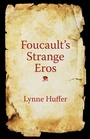
Lynne Huffer
Foucault's Strange Eros
E-Book
08/2020
1st Edition
Columbia University Press
€29.49
Available for download
Person
Lynne Huffer is Samuel Candler Dobbs Professor of Women's, Gender, and Sexuality Studies at Emory University. She is the author of five books, including Mad for Foucault: Rethinking the Foundations of Queer Theory (Columbia, 2009) and Are the Lips a Grave?: A Queer Feminist on the Ethics of Sex (Columbia, 2013).
Content
Preface: Prowling
Introduction: Foucault's Strange Eros
1. Eros Is Strange: Foucault, the Outside, and the Historical A Priori (Fragments)
2. Ars Erotica: Poetic Cuts in the Archives of Infamy
3. Erotic Time: Unreason, Eros, and Foucault's Evil Genius
4. Prowling Eros: Carriers of Light in the Panopticon
5. Now Again (?????): Foucault, Wittig, Sappho
Coda: Sapphic
Acknowledgments
Notes
References
Index
Introduction: Foucault's Strange Eros
1. Eros Is Strange: Foucault, the Outside, and the Historical A Priori (Fragments)
2. Ars Erotica: Poetic Cuts in the Archives of Infamy
3. Erotic Time: Unreason, Eros, and Foucault's Evil Genius
4. Prowling Eros: Carriers of Light in the Panopticon
5. Now Again (?????): Foucault, Wittig, Sappho
Coda: Sapphic
Acknowledgments
Notes
References
Index