

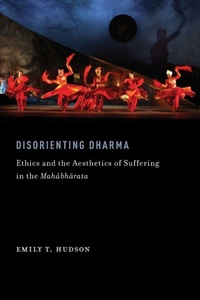
Disorienting Dharma
Ethics and the Aesthetics of Suffering in the Mahabharata
Published on 31. January 2013
Book
Paperback/Softback
276 pages
978-0-19-986078-4 (ISBN)
Description
This book explores the relationship between ethics, aesthetics, and religion in classical Indian literature and literary theory by focusing on one of the most celebrated and enigmatic texts to emerge from the Sanskrit epic tradition, the Mahabharata. This text, which is widely acknowledged to be one of the most important sources for the study of South Asian religious, social, and political thought, is a foundational text of the Hindu tradition(s) and considered to be a major transmitter of dharma (moral, social, and religious duty), perhaps the single most important concept in the history of Indian religions. However, in spite of two centuries of Euro-American scholarship on the epic, basic questions concerning precisely how the epic is communicating its ideas about dharma and precisely what it is saying about it are still being explored. Disorienting Dharma brings to bear a variety of interpretive lenses (Sanskrit literary theory, reader-response theory, and narrative ethics) to examine these issues. One of the first book-length studies to explore the subject from the lens of Indian aesthetics, it argues that such a perspective yields startling new insights into the nature of the depiction of dharma in the epic through bringing to light one of the principle narrative tensions of the epic: the vexed relationship between dharma and suffering. In addition, it seeks to make the Mahabharata interesting and accessible to a wider audience by demonstrating how reading the Mahabharata, perhaps the most harrowing story in world literature, is a fascinating, disorienting, and ultimately transformative experience.
Reviews / Votes
This is a very rich book in many respects and provides an approach to the study of the MBh and its individual characters that could profitably be taken up by others. ... this book is very well worth reading and its central thesis about the dissonance created by the disconnect between dharma and duhkha offers new lines of research into both great Sanskrit epics. * Greg Bailey, Bulletin of the School of Oriental and African Studies *More details
Series
Language
English
Place of publication
New York
United States
Target group
College/higher education
Dimensions
Height: 234 mm
Width: 156 mm
Thickness: 16 mm
Weight
478 gr
ISBN-13
978-0-19-986078-4 (9780199860784)
Copyright in bibliographic data and cover images is held by Nielsen Book Services Limited or by the publishers or by their respective licensors: all rights reserved.
Schweitzer Classification
Other editions
Additional editions
E-Book
11/2012
1st Edition
Oxford University Press, USA
€63.69
Available for download
Person
Before joining the Religion Department at Boston University in 2010, Emily Hudson taught at Harvard University as a lecturer in the history and literature program. Situating herself methodologically at the crossroads of religion and literature, the history of religions, and religious ethics, Hudson's teaching and research interests focus on South Asian literature and literary theory and comparative religious ethics.
Content
Introduction: The Aesthetics of Suffering in the Mahabharata ; Chapter One: The Implicit Literary Theory of the Mahabharata ; Chapter Two: Dharma and Rupture in the Game of Dice ; Chapter Three: The Eyesight of Insight: Dhrtarastra and Moral Blindness ; Chapter Four: Time that Ripens and Rots All Creatures ; Chapter Five: Heaven's Riddles or the Hell Trick: Theodicy and Narrative Strategies ; Conclusion: Dharma and Suffering ; Appendix: Glossary of Characters