

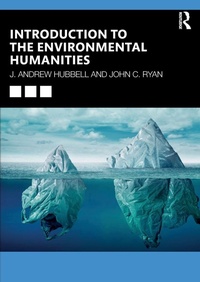
Introduction to the Environmental Humanities
1st Edition
Published on 15. September 2021
Book
Paperback/Softback
302 pages
978-0-8153-9193-7 (ISBN)
Description
In an era of climate change, deforestation, melting ice caps, poisoned environments, and species loss, many people are turning to the power of the arts and humanities for sustainable solutions to global ecological problems. Introduction to the Environmental Humanities offers a practical and accessible guide to this dynamic and interdisciplinary field.
This book provides an overview of the Environmental Humanities' evolution from the activist movements of the early and mid-twentieth century to more recent debates over climate change, sustainability, energy policy, and habitat degradation in the Anthropocene era. The text introduces readers to seminal writings, artworks, campaigns, and movements while demystifying important terms such as the Anthropocene, environmental justice, nature, ecosystem, ecology, posthuman, and non-human. Emerging theoretical areas such as critical animal and plant studies, gender and queer studies, Indigenous studies, and energy studies are also presented. Organized by discipline, the book explores the role that the arts and humanities play in the future of the planet.
Including case studies, discussion questions, annotated bibliographies, and links to online resources, this book offers a comprehensive and engaging overview of the Environmental Humanities for introductory readers. For more advanced readers, it serves as a foundation for future study, projects, or professional development.
This book provides an overview of the Environmental Humanities' evolution from the activist movements of the early and mid-twentieth century to more recent debates over climate change, sustainability, energy policy, and habitat degradation in the Anthropocene era. The text introduces readers to seminal writings, artworks, campaigns, and movements while demystifying important terms such as the Anthropocene, environmental justice, nature, ecosystem, ecology, posthuman, and non-human. Emerging theoretical areas such as critical animal and plant studies, gender and queer studies, Indigenous studies, and energy studies are also presented. Organized by discipline, the book explores the role that the arts and humanities play in the future of the planet.
Including case studies, discussion questions, annotated bibliographies, and links to online resources, this book offers a comprehensive and engaging overview of the Environmental Humanities for introductory readers. For more advanced readers, it serves as a foundation for future study, projects, or professional development.
Reviews / Votes
"J. Andrew Hubbell and John C. Ryan's Introduction to the Environmental Humanities is the best introduction to the fundamentals of the Environmental Humanities as a transdisciplinary field. The book offers unchallenging explanations of the field's key concepts and theories, as well as compelling stories of humans, nonhumans, and environments to induce ecological awareness in the field's storied expanses." - Serpil Oppermann, Professor of Environmental Humanities, Cappadocia UniversityMore details
Language
English
Place of publication
New York
United States
Publishing group
Taylor & Francis Inc
Target group
College/higher education
Postgraduate
Illustrations
81 s/w Abbildungen, 72 s/w Photographien bzw. Rasterbilder, 9 s/w Zeichnungen, 148 s/w Tabellen
148 Tables, black and white; 9 Line drawings, black and white; 72 Halftones, black and white; 81 Illustrations, black and white
Dimensions
Height: 246 mm
Width: 174 mm
Thickness: 16 mm
Weight
545 gr
ISBN-13
978-0-8153-9193-7 (9780815391937)
Copyright in bibliographic data and cover images is held by Nielsen Book Services Limited or by the publishers or by their respective licensors: all rights reserved.
Schweitzer Classification
Other editions
Additional editions
J. Andrew Hubbell | John C. Ryan
Introduction to the Environmental Humanities
Book
09/2021
1st Edition
Routledge
€215.40
Shipment within 15-20 days
J. Andrew Hubbell | John C. Ryan
Introduction to the Environmental Humanities
E-Book
09/2021
1st Edition
Routledge
€51.49
Available for download
J. Andrew Hubbell | John C. Ryan
Introduction to the Environmental Humanities
E-Book
09/2021
1st Edition
Routledge
€51.49
Available for download
Persons
J. Andrew Hubbell is Associate Professor of English at Susquehanna University, USA, and Adjunct Researcher at the University of Western Australia. His interests include nineteenth-century British literature, literary theory, climate narratives, empirical humanities, and new social movements. He is the author of Byron's Nature: A Romantic Vision of Cultural Ecology and The Story of Transition in Western Australia: How Local Communities are Pioneering Sustainable Society.
John C. Ryan is Adjunct Associate Professor at Southern Cross University, Australia, and Adjunct Senior Research Fellow at the Nulungu Institute, Notre Dame University, Australia. His interests include contemporary poetry, Indigenous Australian and Southeast Asian literature, ecomedia studies, and critical plant studies. He is the author of Plants in Contemporary Poetry: Ecocriticism and the Botanical Imagination (Routledge 2018) and co-editor of Australian Wetland Cultures: Swamps and the Environmental Crisis.
John C. Ryan is Adjunct Associate Professor at Southern Cross University, Australia, and Adjunct Senior Research Fellow at the Nulungu Institute, Notre Dame University, Australia. His interests include contemporary poetry, Indigenous Australian and Southeast Asian literature, ecomedia studies, and critical plant studies. He is the author of Plants in Contemporary Poetry: Ecocriticism and the Botanical Imagination (Routledge 2018) and co-editor of Australian Wetland Cultures: Swamps and the Environmental Crisis.
Content
1 Introduction to the Environmental Humanities: History and Theory 2 Climate Change: The Great Disrupter 3 The Anthropocene: A Superhero Species Comes of Age 4 Indigenous Cultures and Nature: Past, Present, and Future 5 Environmental Anthropology, Cultural Geography, and the Geo-Humanities: Space and Place 6Environmental History: The Story of Co-Evolution 7 Environmental Philosophy: Thinking about Nature 8 Ecological Religious Studies: Faith in Nature 9 Environmental Art: Creativity, Activism, and Sustainability 10 Ecological Literary Studies: Imagining Nature 11 Environmental Theater: Performing Nature 12 Environmental Film: Projecting Nature 13 Environmental Journalism: Mediating Ecological Issues 14 Conclusion: Back to the Future Environmental Humanities