

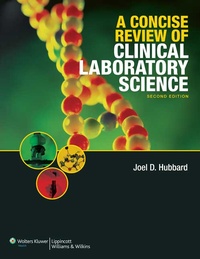
A Concise Review of Clinical Laboratory Science
2nd Edition
Published on 15. February 2009
Book
Paperback/Softback
432 pages
978-0-7817-8202-9 (ISBN)
Description
The Second Edition offers a concise review of all areas of clinical lab science, including the standard areas, such as hematology, chemistry, hemostasis, immunohematology, clinical microbiology, parasitology, urinalysis and more, as well as lab management, lab government regulations, and quality assurance. A companion website offers 35 case studies, an image bank of color images, and a quiz bank with 500 questions in certification format.
More details
Edition
2nd edition
Language
English
Place of publication
Sudbury
United States
Target group
Professional and scholarly
Product notice
Paperback (trade)
Illustrations
135
Dimensions
Height: 276 mm
Width: 213 mm
Weight
794 gr
ISBN-13
978-0-7817-8202-9 (9780781782029)
Copyright in bibliographic data and cover images is held by Nielsen Book Services Limited or by the publishers or by their respective licensors: all rights reserved.
Schweitzer Classification
Other editions
New editions

Joel D. Hubbard
A Concise Review of Clinical Laboratory Science
Book
06/2020
2nd Edition
Jones and Bartlett Publishers, Inc
€97.98
Article is exhausted; no reprint
Previous edition
Joel D. Hubbard | Elizabeth Nieginski
A Concise Review of Clinical Laboratory Science
Book
02/1997
Lippincott Williams and Wilkins
€53.43
Article exhausted; check for reprint
Content
Chapter 1:Clinical Chemistry
I.Clinical Chemistry Basics
II.Special Methods In Clinical Chemistry
III. Basic Anatomy And Physiology
IV.Analytes And Pathophysiology
V.Enzymology
VI.Endocrinology
Chapter 2: Hemostasis and Coagulation
I.Platelet Physiology
II.Platelet Pathophysiology
III. Blood Coagulation And Fibrinolysis
IV. Coagulation Diorders
Chapter 3: Routine Hematology
I.Laboratory Analysis
II.Hematopoietic Tissues
III. Hemoglobin Synthesis, Structure, And Function
Chapter 4: Hematologic Disorders
I. Red Blood Cell Indices And Their Use In The Diagnosis Of Anemia
II. Red Blood Cell Disorders
III. Anemias and Polycythemias Disordersa
IV. Leukocyte Disorders
Chapter 5: Immunology and Serology
I. Introduction
II. Cells And Tissues Of The Immune System
III. Immunity
IV.Immune Response
V.Major Histocompatibility Complex
VI.Hypersensitivity
VII. Autoimmunity
VIII. Immunodeficiencies
IX.Techniques In Immunology And Serology
Chapter 6:Immunohematology
I. Introduction
II. Blood Group Systems
III. Donor Selection And Blood Collection
Chapter 7: Clinical Microbiology
I.Bacteria
II.Bacterial Cell Structure
III. Stains
IV. Normal Flora
V. Pathogensis of infection
VI.Collection And Handling Of Clinical Specimens
VII. Micrococcaceae
VIII. Streptococcus, Enterococcus, And Related Genera
IX.Aerobic Gram-Positive Bacilli
X. Neisseria And Moraxella Catarrhalis
XI. Miscellaneous Gram-Negative Bacilli
XII.Enterobacteriaceae
XIII.Campylobacter, Helicobacter, And Vibrionaceae
XIV. Gram-Negative Nonfermentative Bacilli
XV.Miscellaneous Genera
XVI. Mycoplasma, Ureaplasma, And The Chlamydiaceae
XVII. Spirochetes
XVIII. Mycobacteria
XIX. Anaerobes
XX. Zoonotic and Rickettsial Infections
XXI. Agents Of Bioterrorism
Chapter 8 Clinical Parasitology, Mycology, and Virology
I.Parasitology
II.Mycology
III.Virology
Chapter 9 Urinalysis and Body Fluids
I.The Renal System
II.The Urine Specimen
III. Physical Examination Of Urine
IV.Chemical Examination Of Urine
V.Microscopic Examination Of The Urine
VI.Automation In The Urinalysis Laboratory
VII. Diseases Of The Kidney
VIII. Renal Synthetic Products
IX.Urine Pregnancy Testing
X.Serous Body Fluids
XI.Synovial Fluid
XII. Seminal Fluid Analysis
Chapter 10 Molecular Diagnostics
I.Biology Of The Cell
II.Molecular Diagnostic Methods
III.Inherited Genetic Disease
IV.Molecular Oncology
V.Molecular Infectious Disease
VI.DNA-Based Human Identification
Chapter 11 Current Issues in Laboratory Management
I.Management And Organizational Theory
II.Professionalism
III. Quality Assurance
IV.Laboratory Regulations
V.Financial Management
VI.Laboratory Information Systems (LIS)
VII. Instrument Selection Process
Index
I.Clinical Chemistry Basics
II.Special Methods In Clinical Chemistry
III. Basic Anatomy And Physiology
IV.Analytes And Pathophysiology
V.Enzymology
VI.Endocrinology
Chapter 2: Hemostasis and Coagulation
I.Platelet Physiology
II.Platelet Pathophysiology
III. Blood Coagulation And Fibrinolysis
IV. Coagulation Diorders
Chapter 3: Routine Hematology
I.Laboratory Analysis
II.Hematopoietic Tissues
III. Hemoglobin Synthesis, Structure, And Function
Chapter 4: Hematologic Disorders
I. Red Blood Cell Indices And Their Use In The Diagnosis Of Anemia
II. Red Blood Cell Disorders
III. Anemias and Polycythemias Disordersa
IV. Leukocyte Disorders
Chapter 5: Immunology and Serology
I. Introduction
II. Cells And Tissues Of The Immune System
III. Immunity
IV.Immune Response
V.Major Histocompatibility Complex
VI.Hypersensitivity
VII. Autoimmunity
VIII. Immunodeficiencies
IX.Techniques In Immunology And Serology
Chapter 6:Immunohematology
I. Introduction
II. Blood Group Systems
III. Donor Selection And Blood Collection
Chapter 7: Clinical Microbiology
I.Bacteria
II.Bacterial Cell Structure
III. Stains
IV. Normal Flora
V. Pathogensis of infection
VI.Collection And Handling Of Clinical Specimens
VII. Micrococcaceae
VIII. Streptococcus, Enterococcus, And Related Genera
IX.Aerobic Gram-Positive Bacilli
X. Neisseria And Moraxella Catarrhalis
XI. Miscellaneous Gram-Negative Bacilli
XII.Enterobacteriaceae
XIII.Campylobacter, Helicobacter, And Vibrionaceae
XIV. Gram-Negative Nonfermentative Bacilli
XV.Miscellaneous Genera
XVI. Mycoplasma, Ureaplasma, And The Chlamydiaceae
XVII. Spirochetes
XVIII. Mycobacteria
XIX. Anaerobes
XX. Zoonotic and Rickettsial Infections
XXI. Agents Of Bioterrorism
Chapter 8 Clinical Parasitology, Mycology, and Virology
I.Parasitology
II.Mycology
III.Virology
Chapter 9 Urinalysis and Body Fluids
I.The Renal System
II.The Urine Specimen
III. Physical Examination Of Urine
IV.Chemical Examination Of Urine
V.Microscopic Examination Of The Urine
VI.Automation In The Urinalysis Laboratory
VII. Diseases Of The Kidney
VIII. Renal Synthetic Products
IX.Urine Pregnancy Testing
X.Serous Body Fluids
XI.Synovial Fluid
XII. Seminal Fluid Analysis
Chapter 10 Molecular Diagnostics
I.Biology Of The Cell
II.Molecular Diagnostic Methods
III.Inherited Genetic Disease
IV.Molecular Oncology
V.Molecular Infectious Disease
VI.DNA-Based Human Identification
Chapter 11 Current Issues in Laboratory Management
I.Management And Organizational Theory
II.Professionalism
III. Quality Assurance
IV.Laboratory Regulations
V.Financial Management
VI.Laboratory Information Systems (LIS)
VII. Instrument Selection Process
Index