

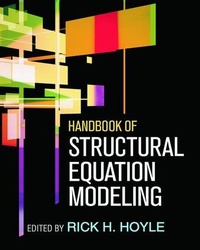
Handbook of Structural Equation Modeling
1st Edition
Published on 18. November 2014
Book
Paperback/Softback
740 pages
978-1-4625-1679-7 (ISBN)
Description
*A one-stop shop for SEM and its uses: the first single resource for graduate students and researchers offering broad and deep coverage.
*Includes access to data and syntax files (run in different SEM software packages) on the companion website.
*Balances conceptual sophistication with accessible writing; moves from the basics through increasingly complex applications.
*Hoyle and his contributing authors are a who's who of SEM experts; chapters were vetted by a distinguished advisory board.
*Lower price in paper will facilitate course use.
*Includes access to data and syntax files (run in different SEM software packages) on the companion website.
*Balances conceptual sophistication with accessible writing; moves from the basics through increasingly complex applications.
*Hoyle and his contributing authors are a who's who of SEM experts; chapters were vetted by a distinguished advisory board.
*Lower price in paper will facilitate course use.
Reviews / Votes
.-In this welcome addition to the personal libraries of quantitative and applied researchers alike, Rick Hoyle brings considerable editorial skill to bear on the 40-chapter Handbook of . The breadth of topics covered in this reference text leaves little doubt that a firm grasp of data analysis with latent variables is essential to the advancement of scholarship in the social and behavioral sciences....An excellent resource for the many conceptual and analytical problems frequently encountered by researchers making use of SEM. About half of the chapters remain true to the Handbook's objective of accessibility to a novice readership (Chapters 1-4, 6-10, 12, 13, 15, 16, 19, 21, 22, 27-29, and 31), and several others are more suitable for readers with a modest background in latent variable modeling (Chapters 11, 14, 18, 20, 23, 25, 32, 34, and 36-40). A small number of chapters are suitable for advanced readers and those actively working in a quantitative discipline (Chapters 5, 30, 33, and 35). As a reference text, it is a strength of the Handbook that chapters vary in extent to which readers are presumed to possess statistical sophistication. As novice readers develop a deeper understanding of SEM fundamentals, the Handbook will continue to serve as a valuable reference for advanced applications....It is an impressive achievement that across 40 self-contained chapters and more than 75 authors there appeared very little unnecessary content overlap and no contradictory recommendations. Readers will find themselves returning to the Handbook again and again as a starting point for their work on virtually any topic currently within the broad reach of SEM.--Structural Equation Modeling, 04/01/2013More details
Language
English
Place of publication
New York
United States
Publishing group
Guilford Publications
Target group
Professional and scholarly
Professional Practice & Development
Dimensions
Height: 235 mm
Width: 187 mm
Weight
1400 gr
ISBN-13
978-1-4625-1679-7 (9781462516797)
Copyright in bibliographic data and cover images is held by Nielsen Book Services Limited or by the publishers or by their respective licensors: all rights reserved.
Schweitzer Classification
Other editions
Additional editions
Rick H. Hoyle | Deborah L. Bandalos | Jeremy C. Biesanz
Handbook of Structural Equation Modeling
Book
07/2012
1st Edition
Guilford Publications
€133.69
Article exhausted; check for reprint
Persons
Rick H. Hoyle is Professor of Psychology and Neuroscience at Duke University, where he serves as Associate Director of the Center for Child and Family Policy and Director of the Methodology and Statistics Core in the Transdisciplinary Prevention Research Center. He is a Fellow of the Association for Psychological Science, the American Psychological Association, and the Society of Experimental Social Psychology. He has written extensively on SEM and other statistical and methodological strategies for the study of complex social and behavioral processes.
Content
I. Background
1. Introduction and Overview, Rick H. Hoyle
2. Key Advances in the History of Structural Equation Modeling, Ross L. Matsueda
3. Graphical Representation of Structural Equation Models Using Path Diagrams, Moon-ho Ringo Ho, Stephen Stark, and Olexander Chernyshenko
4. Latent Variables in Structural Equation Modeling, Kenneth A. Bollen and Rick H. Hoyle
5. The Causal Foundations of Structural Equation Modeling, Judea Pearl
6. Simulation Methods in Structural Equation Modeling, Deborah L. Bandalos and Phillip Gagne
II. Fundamentals
7. Assumptions in Structural Equation Modeling, Rex B. Kline
8. Model Specification in Structural Equation Modeling, Rick H. Hoyle
9. Identification: A Nontechnical Discussion of a Technical Issue, David A. Kenny and Stephanie Milan
10. Estimation in Structural Equation Modeling, Pui-Wa Lei and Qiong Wu
11. Power Analysis for Tests of Structural Equation Models, Taehun Lee, Li Cai, and Robert C. MacCallum
12. Categorical Data in the Structural Equation Modeling Framework, Michael C. Edwards, R. J. Wirth, Carrie R. Houts, and Nuo Xi
13. Model Fit and Model Selection in Structural Equation Modeling, Stephen G. West, Aaron B. Taylor, and Wei Wu
14. Model Modification in Structural Equation Modeling, Chih-Ping Chou and Jimi Huh
15. Equivalent Models: Concepts, Problems, Alternatives, Larry J. Williams
III. Implementation
16. Preparing Data for Structural Equation Modeling: Doing Your Homework, Patrick S. Malone and Jill B. Lubansky
17. Structural Equation Modeling with Missing Data, John W. Graham and Donna L. Coffman
18. Bootstrapping Standard Errors and Data-Model Fit Statistics in Structural Equation Modeling, Gregory R. Hancock and Min Liu
19. Choosing Structural Equation Modeling Computer Software: Snapshots of LISREL, EQS, Amos, and Mplus, Barbara M. Byrne
20. Structural Equation Modeling in R with the sem and OpenMx Packages, John Fox, Jarrett E. Byrnes, Steven Boker, and Michael C. Neale
21. The Structural Equation Modeling Research Report, Anne Boomsma, Rick H. Hoyle, and A. T. Panter
IV. Basic Applications
22. Confirmatory Factor Analysis, Timothy A. Brown and Michael T. Moore
23. Investigating Measurement Invariance Using Confirmatory Factor Analysis, Roger E. Millsap and Margarita Olivera-Aguilar
24. A Flexible Structural Equation Modeling Approach for Analyzing Means, Samuel B. Green and Marilyn S. Thompson
25. Mediation/Indirect Effects in Structural Equation Modeling, JeeWon Cheong and David P. MacKinnon
26. Structural Equation Models of Latent Interaction, Herbert W. Marsh, Zhonglin Wen, Benjamin Nagengast, and Kit-Tai Hau
27. Autoregressive Longitudinal Models, Jeremy C. Biesanz
28. Scale Construction and Development Using Structural Equation Modeling, Tenko Raykov
V. Advanced Applications
29. Measurement Models for Ordered-Categorical Indicators, James A. Bovaird and Natalie A. Koziol
30. Multilevel Structural Equation Modeling, Sophia Rabe-Hesketh, Anders Skrondal, and Xiaohui Zheng
31. An Overview of Growth Mixture Modeling: A Simple Nonlinear Application in OpenMx, Mariya P. Shiyko, Nilam Ram, and Kevin J. Grimm
32. Latent Curve Modeling of Longitudinal Growth Data, John J. McArdle
33. Dynamic Factor Models for Longitudinally Intensive Data: Description and Estimation via Parallel Factor Models of Cholesky Decomposition, Phillip Wood
34. Latent Trait-State Models, David A. Cole
35. Longitudinal Structural Models for Assessing Dynamics in Dyadic Interactions, Emilio Ferrer and Hairong Song
36. Structural Equation Modeling in Genetics, Sanja Franic, Conor V. Dolan, Denny Borsboom, and Dorret I. Boomsma
37. Structural Equation Models of Imaging Data, Anthony R. McIntosh and Andrea B. Protzner
38. Bayesian Structural Equation Modeling, David Kaplan and Sarah Depaoli
39. Spatial Structural Equation Modeling, Melanie M. Wall
40. Automated Structural Equation Modeling Strategies, George A. Marcoulides and Marsha Ing
1. Introduction and Overview, Rick H. Hoyle
2. Key Advances in the History of Structural Equation Modeling, Ross L. Matsueda
3. Graphical Representation of Structural Equation Models Using Path Diagrams, Moon-ho Ringo Ho, Stephen Stark, and Olexander Chernyshenko
4. Latent Variables in Structural Equation Modeling, Kenneth A. Bollen and Rick H. Hoyle
5. The Causal Foundations of Structural Equation Modeling, Judea Pearl
6. Simulation Methods in Structural Equation Modeling, Deborah L. Bandalos and Phillip Gagne
II. Fundamentals
7. Assumptions in Structural Equation Modeling, Rex B. Kline
8. Model Specification in Structural Equation Modeling, Rick H. Hoyle
9. Identification: A Nontechnical Discussion of a Technical Issue, David A. Kenny and Stephanie Milan
10. Estimation in Structural Equation Modeling, Pui-Wa Lei and Qiong Wu
11. Power Analysis for Tests of Structural Equation Models, Taehun Lee, Li Cai, and Robert C. MacCallum
12. Categorical Data in the Structural Equation Modeling Framework, Michael C. Edwards, R. J. Wirth, Carrie R. Houts, and Nuo Xi
13. Model Fit and Model Selection in Structural Equation Modeling, Stephen G. West, Aaron B. Taylor, and Wei Wu
14. Model Modification in Structural Equation Modeling, Chih-Ping Chou and Jimi Huh
15. Equivalent Models: Concepts, Problems, Alternatives, Larry J. Williams
III. Implementation
16. Preparing Data for Structural Equation Modeling: Doing Your Homework, Patrick S. Malone and Jill B. Lubansky
17. Structural Equation Modeling with Missing Data, John W. Graham and Donna L. Coffman
18. Bootstrapping Standard Errors and Data-Model Fit Statistics in Structural Equation Modeling, Gregory R. Hancock and Min Liu
19. Choosing Structural Equation Modeling Computer Software: Snapshots of LISREL, EQS, Amos, and Mplus, Barbara M. Byrne
20. Structural Equation Modeling in R with the sem and OpenMx Packages, John Fox, Jarrett E. Byrnes, Steven Boker, and Michael C. Neale
21. The Structural Equation Modeling Research Report, Anne Boomsma, Rick H. Hoyle, and A. T. Panter
IV. Basic Applications
22. Confirmatory Factor Analysis, Timothy A. Brown and Michael T. Moore
23. Investigating Measurement Invariance Using Confirmatory Factor Analysis, Roger E. Millsap and Margarita Olivera-Aguilar
24. A Flexible Structural Equation Modeling Approach for Analyzing Means, Samuel B. Green and Marilyn S. Thompson
25. Mediation/Indirect Effects in Structural Equation Modeling, JeeWon Cheong and David P. MacKinnon
26. Structural Equation Models of Latent Interaction, Herbert W. Marsh, Zhonglin Wen, Benjamin Nagengast, and Kit-Tai Hau
27. Autoregressive Longitudinal Models, Jeremy C. Biesanz
28. Scale Construction and Development Using Structural Equation Modeling, Tenko Raykov
V. Advanced Applications
29. Measurement Models for Ordered-Categorical Indicators, James A. Bovaird and Natalie A. Koziol
30. Multilevel Structural Equation Modeling, Sophia Rabe-Hesketh, Anders Skrondal, and Xiaohui Zheng
31. An Overview of Growth Mixture Modeling: A Simple Nonlinear Application in OpenMx, Mariya P. Shiyko, Nilam Ram, and Kevin J. Grimm
32. Latent Curve Modeling of Longitudinal Growth Data, John J. McArdle
33. Dynamic Factor Models for Longitudinally Intensive Data: Description and Estimation via Parallel Factor Models of Cholesky Decomposition, Phillip Wood
34. Latent Trait-State Models, David A. Cole
35. Longitudinal Structural Models for Assessing Dynamics in Dyadic Interactions, Emilio Ferrer and Hairong Song
36. Structural Equation Modeling in Genetics, Sanja Franic, Conor V. Dolan, Denny Borsboom, and Dorret I. Boomsma
37. Structural Equation Models of Imaging Data, Anthony R. McIntosh and Andrea B. Protzner
38. Bayesian Structural Equation Modeling, David Kaplan and Sarah Depaoli
39. Spatial Structural Equation Modeling, Melanie M. Wall
40. Automated Structural Equation Modeling Strategies, George A. Marcoulides and Marsha Ing