

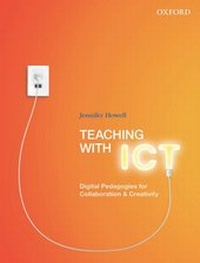
Teaching with ICT
Digital Pedagogies for Collaboration & Creativity
Published on 18. October 2012
Book
Paperback/Softback
332 pages
978-0-19-557843-0 (ISBN)
Description
Teaching with ICT prepares pre-service teachers across the three phases of learning to understand the role technology can play in teaching and learning. The book discusses national and social influences on the availability of technology in different classrooms, allowing the reader to reflect on the various ICT possibilities in their teaching. With practical examples of ICT use in the classroom, this book is a valuable resource for both pre-service teachers
and teachers.
and teachers.
More details
Language
English
Place of publication
Melbourne
Australia
Publishing group
Oxford University Press Australia
Target group
Professional and scholarly
College/higher education
The text has applicability across a wide range of subjects, but the principle market is undergraduate and postgraduate pre-service teachers
Illustrations
40 illustrations
Dimensions
Height: 276 mm
Width: 211 mm
Thickness: 12 mm
Weight
702 gr
ISBN-13
978-0-19-557843-0 (9780195578430)
Copyright in bibliographic data and cover images is held by Nielsen Book Services Limited or by the publishers or by their respective licensors: all rights reserved.
Schweitzer Classification
Person
Dr Jennifer Howell joined ACU in 2010 as Senior Lecturer in Educational Studies. Previously Dr Howell was a lecturer in Information and Communication Technologies (ICTs) and teacher education at Queensland University of Technology. Dr Howell has been teaching for over 16 years, having originally starting out as a Secondary English and History teacher. Her research focuses on online communities, teacher professional development, elearning, mlearning,
Web 2.0 technologies and electronic research methodology.
Web 2.0 technologies and electronic research methodology.
Content
Part 1: Digital Pedagogy 1. What Is a Digital Pedagogy and Why Do We Need One? What is a digital pedagogy?Why do we need a digital pedagogy?How do we develop a digital pedagogy?Why bother? I know how to use a computer!2. Theoretical Underpinnings ConstructivismSocial constructivismDistributed cognitionConstructionismConnectivismComputer-supported collaborative learning (CSCL)Technological pedagogical and content knowledge (TPACK)Community of practice (CoP)3. Policy and Trends: Preparing Lifelong Learners NationalAustraliaRest of the worldResearch organisations and reports4. Digital Expectancy: It's All about Behaviour BackgroundStudents in AustraliaDigital expectancyHow digital expectancy will change teachingThe impact of the internet on digital expectancyPart 2: Creative Technologies and Learning 5. The Role of Technology in Emerging Literacy and NumeracyEmerging literacy and numeracyDefining emerging literacy and numeracyA closer look at literacy A closer look at numeracyThe role of technology in developing literacy and numeracy 6. Creative Technologies and Play What is a 'creative technology'?Technology and playCreative technologies for the early and primary years7. Developing a Digital Pedagogy for Creative Technologies What does digital fluency look like in the early years of schooling?Developing a digital pedagogy for early years teachersA digital pedagogy for creative technologiesCreative activity: The use of creative technologiesExperimental activity: Technology and playPurposeful activity: The use of technology to acquire specific skillsPart 3: Creative, Purposeful and Experimental Learning with Technology 8. The Role of Technology in the Primary and Early Secondary Classroom The primary classroomStarting grade 4: The technology neophyteTechnology in the primary and early secondary classroomDigital content creatorsTechnology innovatorsDigital fluencyTechnology terms9. Developing Digital Fluency in Learners Technology for primary schoolsWord processing (Word)Spreadsheets (Excel)Advanced web-searching skillsAnimation: clay, drawingPodcastingPresentation software (PowerPoint, Keynote, Prezi)BloggingWeb 2.0 (social networking)PublishingMaking a video or movieWeb design10. Developing a Digital Pedagogy for Creative, Purposeful and Experimental Learning with Technology The primary classroomDeveloping your digital pedagogy: Creating digital content creatorsDeveloping your digital pedagogy: Encouraging technological innovationsThe four steps to innovationDeveloping your digital pedagogy: Developing digital fluencyA digital pedagogy for the primary classroomPart 4: Digital Technologies for All Subject Areas 11. The Role of Technology across All Subject Areas The secondary classroomStarting grade 8: The digitally experienced learnerTechnology in the secondary classroom: Across discipline areas An aptitude for emerging technologies12. Scaffolding Digital Fluency in Learners Technology for upper primary and secondary schoolsDigital portfolios (ePortfolios)Virtual worldsFlashMultimedia and mashupsCloud computingA different look at online communitiesGaming consolesPhotoshopJing13. Developing a Digital Pedagogy for Digitally Fluent LearnersThe secondary classroomA digital pedagogy for digitally fluent learnersA digital pedagogy for the secondary classroomA significant differencePutting it all together