

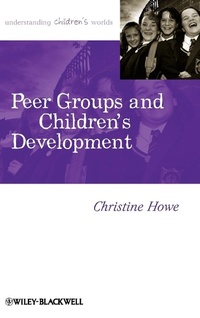
Peer Groups and Children's Development
1st Edition
Published on 22. January 2010
Book
Hardback
248 pages
978-1-4051-7945-4 (ISBN)
Description
Peer Groups and Children's Development considers the experiences of school-aged children with their peer groups and its implications for their social, personal and intellectual development
Focuses on the peer group experiences of children attending school in Western societies, from five years of age through to adolescence
Considers peer groups in classrooms, friendships made within and outside of school, and the groups that children participate in for extra-curricular activities
Includes a final summary which brings together the significant implications for theory, policy and practice
Unique in that no other volume reviews and integrates literature relating to peer groups in both classroom and out-of-class settings
Addresses the research interests of psychologists and educationalists, as well as the practical concerns of teachers, parents, counsellors, and policy makers
Focuses on the peer group experiences of children attending school in Western societies, from five years of age through to adolescence
Considers peer groups in classrooms, friendships made within and outside of school, and the groups that children participate in for extra-curricular activities
Includes a final summary which brings together the significant implications for theory, policy and practice
Unique in that no other volume reviews and integrates literature relating to peer groups in both classroom and out-of-class settings
Addresses the research interests of psychologists and educationalists, as well as the practical concerns of teachers, parents, counsellors, and policy makers
Reviews / Votes
""Both undergraduate and graduate students and researchers in education, childpsychology, developmental psychology, and social psychology would find the book, or
particular chapters, useful as they explore the nature of peer groups in educational settings.
Researchers in psychology will become better aware of the many facets of school and
classroom life that should be considered when studying children in the classroom context". (PsycCritiques, 8 December 2010)
"
"The experiences of schoolchildren with their peer groups and the implications for social, personal and intellectual development are considered here, as Howe reviews and integrates literature relating to classroom and out-of-class settings. The text is intended to address psychologists' and educationalists' research concerns, as well as the practical concerns of teachers, parents, counsellors and policymakers." (Times Higher Education, November 2010)
More details
Series
Language
English
Place of publication
Hoboken
United Kingdom
Publishing group
John Wiley and Sons Ltd
Target group
Professional and scholarly
Product notice
sewn/stitched
Cloth over boards
Dimensions
Height: 235 mm
Width: 157 mm
Thickness: 18 mm
Weight
517 gr
ISBN-13
978-1-4051-7945-4 (9781405179454)
Copyright in bibliographic data and cover images is held by Nielsen Book Services Limited or by the publishers or by their respective licensors: all rights reserved.
Schweitzer Classification
Other editions
Additional editions
Christine Howe
Peer Groups and Children's Development
Book
01/2010
1st Edition
Wiley
€47.00
Shipment within 3-4 weeks
Christine Howe
Peer Groups and Children's Development
E-Book
11/2009
Wiley-Blackwell
€38.99
Available for download
Person
Christine Howe is Professor of Education at the University of Cambridge, and Fellow of Lucy Cavendish College. Previously she was Professor of Psychology at the University of Strathclyde. Her main research interests are peer interaction and conceptual growth, children's reasoning in mathematics and science, and communication and social relations among children. In addition to publishing seven books and over 100 journal articles, Christine was for many years co-editor of the journal Social Development and has served as Chair of the British Psychological Society's Developmental Section.
Content
Series Editor's Preface. Acknowledgments.
1. Peer Groups in a Cultural Context.
Introduction.
Cultural Dependency.
Theoretical Framework.
Peer Groups and Children's Development.
2. Peer Groups and Classroom Structure.
Introduction.
The Peer Group Structure of Classes.
The Structure of Classroom Subgroups.
Summary and Conclusions.
3. Performance and Cooperation in Classrooms.
Introduction.
Whole-Class Interaction and the Performance Mode.
Subgroup Interaction and the Cooperative Mode.
Summary and Conclusions.
4. Cooperative Interaction and Curriculum Mastery.
Introduction.
Piagetian Perspectives on Cooperative Interaction.
Assistance and Cooperative Interaction.
The Social Impact of Classroom Interaction.
5. Friendship, Status, and Centrality.
Introduction.
Children's Friendships.
Peer Status in Formal Groups.
Status in Friendship Groups.
6. Individual Differences in Informal Experiences.
Introduction.
Varying Experiences of Status.
Friendship and Status Compared.
Continuity and Change.
7. Social and Personal Adjustment.
Introduction.
Peer Groups and Antisocial Behavior.
Peer Groups and Personal Adjustment.
Summary and Conclusions.
8. School Performance Revisited.
Introduction.
Peer Groups and Educational Failure.
Diverse Consequences of Friendship.
Classroom Practice and Developmental Outcomes.
9. Implications for Practice and Future Research.
Summary and Introduction.
Remedial Work with Individuals.
Qualified Endorsement of the Cooperative Approach.
Future Research and Theoretical Development.
References.
Index.
1. Peer Groups in a Cultural Context.
Introduction.
Cultural Dependency.
Theoretical Framework.
Peer Groups and Children's Development.
2. Peer Groups and Classroom Structure.
Introduction.
The Peer Group Structure of Classes.
The Structure of Classroom Subgroups.
Summary and Conclusions.
3. Performance and Cooperation in Classrooms.
Introduction.
Whole-Class Interaction and the Performance Mode.
Subgroup Interaction and the Cooperative Mode.
Summary and Conclusions.
4. Cooperative Interaction and Curriculum Mastery.
Introduction.
Piagetian Perspectives on Cooperative Interaction.
Assistance and Cooperative Interaction.
The Social Impact of Classroom Interaction.
5. Friendship, Status, and Centrality.
Introduction.
Children's Friendships.
Peer Status in Formal Groups.
Status in Friendship Groups.
6. Individual Differences in Informal Experiences.
Introduction.
Varying Experiences of Status.
Friendship and Status Compared.
Continuity and Change.
7. Social and Personal Adjustment.
Introduction.
Peer Groups and Antisocial Behavior.
Peer Groups and Personal Adjustment.
Summary and Conclusions.
8. School Performance Revisited.
Introduction.
Peer Groups and Educational Failure.
Diverse Consequences of Friendship.
Classroom Practice and Developmental Outcomes.
9. Implications for Practice and Future Research.
Summary and Introduction.
Remedial Work with Individuals.
Qualified Endorsement of the Cooperative Approach.
Future Research and Theoretical Development.
References.
Index.