

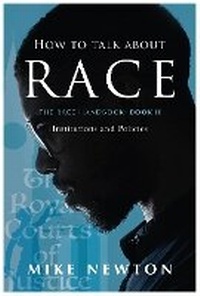
How to talk about Race: Book II: II 2
Institutions and Policies
Brown Dog Books (Publisher)
Published on 31. January 2025
Book
Paperback/Softback
373 pages
978-1-83952-834-7 (ISBN)
Description
The first book gave the reader the opportunity to get to know some of the issues that are involved in the discussions surrounding race. This book covers the broader ramifications of how our understanding of race has impacted upon people of differing races in terms of the way that they are subsequently treated in society.
From the affect that race has had in how people are treated in healthcare systems, to how preconceptions, and stereotypes have shaped the way that children are taught in educational institutions. This book outlines how these factors help to shape the outcomes of black people and POC (People of Colour) in society. From poorer health outcomes to higher mortality rates, when dealing with health professionals and institutions, to being undermarked for work, or being rated as unintelligent at school and higher educational establishments.
The book looks at all of this, and also pulls information together from the criminal justice system, work and employment, music, sports, film and TV, the media and many other areas of society, and shows how in each of these fields black people and POC have not only been negatively impacted, but at times deliberately disadvantaged.
This book offers the first ever in-depth broad spectrum look at race in all of the major areas of public life, showing the way that race plays a significant part in the outcomes of black people and POC. An example of this is illustrated in the section in the criminal justice system, where I outline how interactions at each stage of the system have a disproportionately negative outcome for black people and POC, leading to the criminalisation of individuals shaped mainly upon the basis of their race.
The real life ramifications of this are highlighted by the case studies which are used in one of the later chapters of the book.
The book offers insights as to not only how to understand the way institutions play such a pivotal role in peoples lives, but offers solutions as to how we move forward.
From the affect that race has had in how people are treated in healthcare systems, to how preconceptions, and stereotypes have shaped the way that children are taught in educational institutions. This book outlines how these factors help to shape the outcomes of black people and POC (People of Colour) in society. From poorer health outcomes to higher mortality rates, when dealing with health professionals and institutions, to being undermarked for work, or being rated as unintelligent at school and higher educational establishments.
The book looks at all of this, and also pulls information together from the criminal justice system, work and employment, music, sports, film and TV, the media and many other areas of society, and shows how in each of these fields black people and POC have not only been negatively impacted, but at times deliberately disadvantaged.
This book offers the first ever in-depth broad spectrum look at race in all of the major areas of public life, showing the way that race plays a significant part in the outcomes of black people and POC. An example of this is illustrated in the section in the criminal justice system, where I outline how interactions at each stage of the system have a disproportionately negative outcome for black people and POC, leading to the criminalisation of individuals shaped mainly upon the basis of their race.
The real life ramifications of this are highlighted by the case studies which are used in one of the later chapters of the book.
The book offers insights as to not only how to understand the way institutions play such a pivotal role in peoples lives, but offers solutions as to how we move forward.
Reviews / Votes
N/AMore details
Series
Edition
New edition
Language
English
Place of publication
United Kingdom
Publishing group
The Self-Publishing Partnership Ltd
Edition type
New edition
Illustrations
1 colour
Dimensions
Height: 235 mm
Width: 155 mm
Thickness: 20 mm
Weight
596 gr
ISBN-13
978-1-83952-834-7 (9781839528347)
Copyright in bibliographic data and cover images is held by Nielsen Book Services Limited or by the publishers or by their respective licensors: all rights reserved.
Schweitzer Classification
Person
The author was born and grew up in West London the son of two immigrants from Jamaica, who arrived in the UK as part of the Wind Rush generation.
Growing up in a rich culturally diverse area of West London, helped shape some of the views and ideas that the author developed later on in life.
The author studied Sociology, Psychology, Philosophy and media studies in University, emerging with a Joint hons degree in Sociology and Media studies.
Fascinated by people and culture the author describes himself as always trying to understand how and why society works the way that it does.
Book II, how to talk about race, along with Book I, were done during the time that the author was living in China with his partner Nicola.
Three years of research went into the two books which were originally scheduled to be one single book. But such was the scale of the material gathered that it quickly became clear that the book would have to be split into two separate parts.
Growing up in a rich culturally diverse area of West London, helped shape some of the views and ideas that the author developed later on in life.
The author studied Sociology, Psychology, Philosophy and media studies in University, emerging with a Joint hons degree in Sociology and Media studies.
Fascinated by people and culture the author describes himself as always trying to understand how and why society works the way that it does.
Book II, how to talk about race, along with Book I, were done during the time that the author was living in China with his partner Nicola.
Three years of research went into the two books which were originally scheduled to be one single book. But such was the scale of the material gathered that it quickly became clear that the book would have to be split into two separate parts.
Content
Foreword
The System and Society
Chapter 1 Sports
Chapter 2 Social
Chapter 3 Health
Police, Justice and Prison
Chapter 4 Police and Policing
Chapter 5 Prison
Chapter 6 Housing
Chapter 7 Immigration, Refugees and Asylum
Chapter 8 Education
Chapter 9 Employment
Chapter 10 The Media
Film, Books, Music and Entertainment
Chapter 11 Film and Television
Chapter 12 Books, Literature and Publishing
Chapter 13 Music and Entertainment
Chapter 14 The real life consequences of racial discrimination
Dea-John Reid
Stephen Lawrence
George Floyd
Trayvon Martin
Mark Duggan
Smiley Culture
Chris Kaba
Laquan McDonald
Eric Garner
Adam Toledo
Anthony Alvarez
Mario Gonzalez
Sean Monerrosa
Casey Christopher Goodson Jr
Errol McKenzie
Stephon Clark
Sean Bell
Amadou Diallo
Adama Traore
Cedric Chouviat
Jean Charles da Silva e De Menezes
Amadou Koume
Chantel Moore
Rodney Levi
Julian Jones
Joao Pedro Matos Pinto
Genivaldo de Jesus Santos
Shargin Stephens
Kaoss Price
Stanley Russel
Kumanjayi Walker
Julieka Dhu
Bibba Henry and Nicole Smallman
Chapter 15 What can we do?
The System and Society
Chapter 1 Sports
Chapter 2 Social
Chapter 3 Health
Police, Justice and Prison
Chapter 4 Police and Policing
Chapter 5 Prison
Chapter 6 Housing
Chapter 7 Immigration, Refugees and Asylum
Chapter 8 Education
Chapter 9 Employment
Chapter 10 The Media
Film, Books, Music and Entertainment
Chapter 11 Film and Television
Chapter 12 Books, Literature and Publishing
Chapter 13 Music and Entertainment
Chapter 14 The real life consequences of racial discrimination
Dea-John Reid
Stephen Lawrence
George Floyd
Trayvon Martin
Mark Duggan
Smiley Culture
Chris Kaba
Laquan McDonald
Eric Garner
Adam Toledo
Anthony Alvarez
Mario Gonzalez
Sean Monerrosa
Casey Christopher Goodson Jr
Errol McKenzie
Stephon Clark
Sean Bell
Amadou Diallo
Adama Traore
Cedric Chouviat
Jean Charles da Silva e De Menezes
Amadou Koume
Chantel Moore
Rodney Levi
Julian Jones
Joao Pedro Matos Pinto
Genivaldo de Jesus Santos
Shargin Stephens
Kaoss Price
Stanley Russel
Kumanjayi Walker
Julieka Dhu
Bibba Henry and Nicole Smallman
Chapter 15 What can we do?