

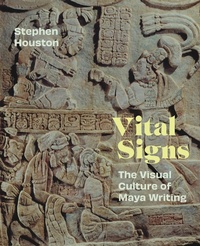
Vital Signs
The Visual Culture of Maya Writing
Will be published approx. on 29. September 2026
Book
Hardback
288 pages
978-0-691-28515-3 (ISBN)
Description
How scribes of the ancient Maya pictured sound and meaning through inventive hieroglyphic writing that pulsed with vitality and wit
For two millennia, the ancestral Maya of Mexico and Central America created a rich legacy of image and text. Vital Signs explains how this graphic system worked, shedding new light on its design, intent, and authorship.
One of the few peoples of the ancient world with hieroglyphic writing, the Maya developed an innovative form of visual representation in which written signs, known as "glyphs," took their shape from pictures. In this groundbreaking book, archaeologist and anthropologist Stephen Houston shows how recent decipherments of this system unveil a world where sacred kings and dynastic courts affirmed the truths that upheld their authority and underpinned the cosmos. He explores how scribes and sculptors created vibrant, sometimes humorous glyphs and images saturated with esoteric messages. Houston covers a host of topics along the way, such as how Maya artists conveyed sound, movement, size, and scale, thus expressing their deepest beliefs about transient things and meaningful space.
Drawing on more than four decades of research by a leading scholar of Maya civilization, Vital Signs reveals larger human histories of how the eyes could be coaxed to hear and static forms brought to life in the visual culture of the Maya.
Published in association with the Center for Advanced Study in the Visual Arts, National Gallery of Art, Washington, DC
For two millennia, the ancestral Maya of Mexico and Central America created a rich legacy of image and text. Vital Signs explains how this graphic system worked, shedding new light on its design, intent, and authorship.
One of the few peoples of the ancient world with hieroglyphic writing, the Maya developed an innovative form of visual representation in which written signs, known as "glyphs," took their shape from pictures. In this groundbreaking book, archaeologist and anthropologist Stephen Houston shows how recent decipherments of this system unveil a world where sacred kings and dynastic courts affirmed the truths that upheld their authority and underpinned the cosmos. He explores how scribes and sculptors created vibrant, sometimes humorous glyphs and images saturated with esoteric messages. Houston covers a host of topics along the way, such as how Maya artists conveyed sound, movement, size, and scale, thus expressing their deepest beliefs about transient things and meaningful space.
Drawing on more than four decades of research by a leading scholar of Maya civilization, Vital Signs reveals larger human histories of how the eyes could be coaxed to hear and static forms brought to life in the visual culture of the Maya.
Published in association with the Center for Advanced Study in the Visual Arts, National Gallery of Art, Washington, DC
More details
Language
English
Place of publication
New Jersey
United States
Target group
College/higher education
Professional and scholarly
Product notice
Trade binding
Illustrations
180 color + 73 b/w illus.
Dimensions
Height: 260 mm
Width: 210 mm
ISBN-13
978-0-691-28515-3 (9780691285153)
Copyright in bibliographic data and cover images is held by Nielsen Book Services Limited or by the publishers or by their respective licensors: all rights reserved.
Schweitzer Classification
Person
Stephen Houston is the Dupee Family Professor of Social Science at Brown University. His books include The Life Within: Classic Maya and the Matter of Permanence, The Gifted Passage: Young Men in Classic Maya Art and Text, and (with Michael D. Coe) The Maya. He is the recipient of a MacArthur Fellowship and Guatemala's highest honor, the Order of the Quetzal.