

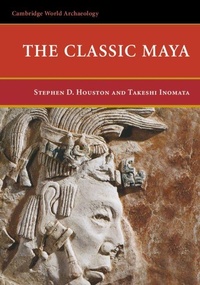
The Classic Maya
Published on 14. September 2009
Book
Hardback
402 pages
978-0-521-66006-8 (ISBN)
Description
In the first millennium AD, the Classic Maya created courtly societies in and around the Yucatan Peninsula that have left some of the most striking intellectual and aesthetic achievements of the ancient world, including large settlements like Tikal, Copan, and Palenque. This book is the first in-depth synthesis of the Classic Maya. It is richly informed by new decipherment of hieroglyphs, decades of intensive excavation and survey. Structured by categories of person in society, it reports on kings, queens, nobles, gods, and ancestors, as well as the many millions of farmers and other figures who lived in societies predicated on sacred kingship and varying political programs. The Classic Maya presents a tandem model of societies bound by moral covenants and convulsed by unavoidable tensions between groups, affected by demographic trends and changing environments. It will serve as the basic source for all readers interested in the civilisation of the Maya.
Reviews / Votes
"...valuable for anyone interested in Mesoamerica, and a major contribution to Maya studies. Essential." -ChoiceMore details
Series
Language
English
Place of publication
Cambridge
United Kingdom
Target group
College/higher education
Illustrations
72 Halftones, unspecified; 66 Line drawings, unspecified
Dimensions
Height: 260 mm
Width: 183 mm
Thickness: 26 mm
Weight
948 gr
ISBN-13
978-0-521-66006-8 (9780521660068)
Copyright in bibliographic data and cover images is held by Nielsen Book Services Limited or by the publishers or by their respective licensors: all rights reserved.
Schweitzer Classification
Persons
Stephen Houston is the Dupee Family Professor of Social Sciences at Brown University. The author of numerous books and articles, he is also an archaeologist who has excavated and mapped Classic Maya cities for more than 25 years. A MacArthur Fellow, Houston is also the recipient of grants from the National Endowment for the Humanities and the National Science Foundation. Takeshi Inomata is Professor in Anthropology at the University of Arizona. He has conducted archaeological investigation at the Maya Center of Aguateca and at Ceibal in Guatemala. His numerous publications examine Maya political organization, warfare, architecture, households, and social change.
Content
Part I. Setting: 1. Introduction; 2. Sociality; 3. Beginnings; 4. The Classic period; Part II. Social Actors: 5. Kings and queens, courts and palaces; 6. Nobles; 7. Gods, supernaturals, and ancestors; 8. Farmers; 9. Craftspeople and traders; 10. End of an era; Epilogue.