

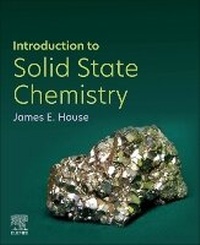
Introduction to Solid State Chemistry
Published on 22. February 2024
Book
Paperback/Softback
352 pages
978-0-443-13426-5 (ISBN)
Description
Introduction to Solid State Chemistry provides a strong background to the structures of solids, along with the factors that determine this structure. The content presented stresses the transformations of solids, both in physical forms and chemical composition. In so doing, topics such as phase transitions, sintering, reactions of coordination compounds, and photovoltaic compounds are described, with kinetics and mechanisms of solid state reactions also covered. This book provides the chemistry of solids, structures of solids, the behavior of solids under applied stresses, the types of reactions that solids undergo, and the phenomenological aspects of reactions in solids.
Kinetics of reactions in solids is very seldom covered in current literature and an understanding of the mechanisms of reactions in solids is necessary for many applications. James E. House provides a balanced treatment of structure, dynamics, and behavior of solids at a level commensurate with upper-level undergraduates or beginning graduate students who wish to obtain an introduction and overview to solid state chemistry.
Kinetics of reactions in solids is very seldom covered in current literature and an understanding of the mechanisms of reactions in solids is necessary for many applications. James E. House provides a balanced treatment of structure, dynamics, and behavior of solids at a level commensurate with upper-level undergraduates or beginning graduate students who wish to obtain an introduction and overview to solid state chemistry.
More details
Language
English
Place of publication
Philadelphia
United States
Target group
College/higher education
Product notice
Paperback (trade)
Dimensions
Height: 232 mm
Width: 191 mm
Thickness: 18 mm
Weight
744 gr
ISBN-13
978-0-443-13426-5 (9780443134265)
Copyright in bibliographic data and cover images is held by Nielsen Book Services Limited or by the publishers or by their respective licensors: all rights reserved.
Schweitzer Classification
Other editions
Additional editions
James E. House
Introduction to Solid State Chemistry
E-Book
02/2024
Elsevier
€130.00
Available for download
Person
James E. House is Emeritus Professor of Chemistry at Illinois State University, USA, and Scholar in Residence at Illinois Wesleyan University, USA. He received B.S. and M.A. degrees from Southern Illinois University and the Ph.D. from the University of Illinois, Urbana. In over 50 years of teaching, he taught numerous courses in inorganic and physical chemistry and several special topics courses. His research resulted in over 150 publications in professional journals, many dealing with reactions of solids. He has authored several books on kinetics, quantum mechanics, and inorganic chemistry for Elsevier. He is the Series Editor for Developments in Physical & Theoretical Chemistry for Elsevier and has also edited volumes in the series. House was elected as a Fellow of the Illinois State Academy of Science and he has done extensive consulting in the chemical industry. He was selected as Professor of the Year in 2011 by the student body at Illinois Wesleyan University and in 2018 he was inducted into the Southern Illinois University Chemistry Alumni Hall of Fame.
Content
1. Ionic Solids
2. Defects in Solids
3. Metals
4. Diffusion and Sintering
5. Phase Transitions and Thermochromism
6. Kinetics and Reaction Mechanisms of Reactions in Solids
7. Reactions of Solid Coordination Compounds
8. Mechanochemistry
9. Photovoltaic Solids
10. Some Interesting and Industrially Important Solids
2. Defects in Solids
3. Metals
4. Diffusion and Sintering
5. Phase Transitions and Thermochromism
6. Kinetics and Reaction Mechanisms of Reactions in Solids
7. Reactions of Solid Coordination Compounds
8. Mechanochemistry
9. Photovoltaic Solids
10. Some Interesting and Industrially Important Solids