

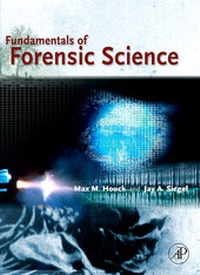
Fundamentals of Forensic Science
Published on 24. April 2006
Book
Hardback
688 pages
978-0-12-356762-8 (ISBN)
Description
Fundamentals of Forensic Science offers a complete look at the core topics of forensic science.
It represents the most realistic view of the field by including areas that, while central to criminal investigation, fall outside the typical definition of criminalistics. These areas include pathology, entomology, anthropology, and other areas of scientific study unique to forensic textbooks.
Organized by the timeline of a real case, the text begins with an introduction and history of forensic science. It then covers the methods of analysis used in most forensic examinations, addressing the biological, chemical and physical elements relevant to the field, and concluding with an examination of how forensic science intersects with law. Feature boxes throughout the text contain online resource listings, historical events in forensic science, practical issues in laboratory analysis, and topics for further reading or interest.
This book is recommended for students in forensic science and professionals in the various forensic disciplines - fire, chemistry, crime scene, trace evidence, law enforcement personnel, lawyers, and defense attorneys.
It represents the most realistic view of the field by including areas that, while central to criminal investigation, fall outside the typical definition of criminalistics. These areas include pathology, entomology, anthropology, and other areas of scientific study unique to forensic textbooks.
Organized by the timeline of a real case, the text begins with an introduction and history of forensic science. It then covers the methods of analysis used in most forensic examinations, addressing the biological, chemical and physical elements relevant to the field, and concluding with an examination of how forensic science intersects with law. Feature boxes throughout the text contain online resource listings, historical events in forensic science, practical issues in laboratory analysis, and topics for further reading or interest.
This book is recommended for students in forensic science and professionals in the various forensic disciplines - fire, chemistry, crime scene, trace evidence, law enforcement personnel, lawyers, and defense attorneys.
Reviews / Votes
"[This book] approaches the field from a truly unique and exciting perspective . . . everything a student or practicing professional needs." --The Journal of Law EnforcementMore details
Language
English
Place of publication
San Diego
United States
Publishing group
Elsevier Science Publishing Co Inc
Target group
College/higher education
Students in forensic science, professionals in the various forensic disciplines - fire, chemistry, crime scene, trace evidence, law enforcment personnel, lawyers and defense attorneys
Dimensions
Height: 246 mm
Width: 189 mm
Weight
1910 gr
ISBN-13
978-0-12-356762-8 (9780123567628)
Copyright in bibliographic data and cover images is held by Nielsen Book Services Limited or by the publishers or by their respective licensors: all rights reserved.
Schweitzer Classification
Other editions
New editions
Max M. Houck | Jay A. Siegel
Fundamentals of Forensic Science
Book
08/2015
3rd Edition
Academic Press
€92.00
Shipment within 15-20 days
Max M. Houck | Jay A. Siegel
Fundamentals of Forensic Science
Book
01/2010
2nd Edition
Academic Press
€85.42
Article exhausted; check for reprint
Additional editions
Max M. Houck | Jay A. Siegel
Fundamentals of Forensic Science
E-Book
04/2006
1st Edition
Academic Press
€74.95
Available for download
Persons
Dr. Max M. Houck is an internationally-recognized forensic expert with research interests in forensic science, education, and the forensic enterprise and its industries. He has worked in all aspects of forensic science, including at the FBI Laboratory. Dr. Houck has published widely in books and peer-reviewed journals. His anthropology and trace evidence casework includes the Branch Davidian Investigation, the September 11 attacks on the Pentagon, the D.B. Cooper case, the US Embassy bombings in Africa, and the West Memphis Three case, among hundreds of others. He served for six years as the Chair of the Forensic Science Educational Program Accreditation Commission (FEPAC). Dr. Houck is a Fellow of the Royal Society of Chemistry and a founding Co-Editor of the journal Forensic Science Policy and Management. Jay Siegel, PhD is retired Director of the Forensic and Investigative Sciences Program and Chair of the Department of Chemistry and Chemical Biology at Indiana University Purdue University Indianapolis. He was Director of the Forensic Science Program at Michigan State University for 25 years from 1980-2004 until his retirement as Professor Emeritus. Dr. Siegel is a Distinguished Member of the American Academy of Forensic Sciences and was named as Distinguished Alumni Scholar by his alma mater, George Washington University in 2011. He is co-editor of Forensic Science Policy and Management: An International Journal. He was a member of the National Academy of Sciences Forensic Science Committee from 2006-09.
Content
1. Introduction
2. Crime Scene Investigation
3. The Nature of Evidence
4. Microscopy
5. Spectroscopic Techniques
6. Separation Methods in Forensic Science
7. Pathology
8. Anthropology and Odontology
9. Entomology
10. Serology and Bloodstain Pattern Analysis
11. DNA Analysis
12. Forensic Hair Examinations
13. Illicit Drugs
14. Forensic Toxicology
15. Textile Fibers
16. Paint Analysis
17. Soil and Glass
18. Fires and Explosions
19. Friction Ridge Examination
20. Questioned Documents
21. Firearms and Tool marks
22. Impression Evidence
23. Legal Aspects of Forensic Science
2. Crime Scene Investigation
3. The Nature of Evidence
4. Microscopy
5. Spectroscopic Techniques
6. Separation Methods in Forensic Science
7. Pathology
8. Anthropology and Odontology
9. Entomology
10. Serology and Bloodstain Pattern Analysis
11. DNA Analysis
12. Forensic Hair Examinations
13. Illicit Drugs
14. Forensic Toxicology
15. Textile Fibers
16. Paint Analysis
17. Soil and Glass
18. Fires and Explosions
19. Friction Ridge Examination
20. Questioned Documents
21. Firearms and Tool marks
22. Impression Evidence
23. Legal Aspects of Forensic Science