

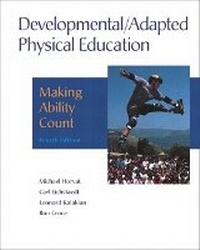
Developmental/Adapted Physical Education
Making Ability Count
4th Edition
Published on 1. March 2002
Book
Hardback
656 pages
978-0-205-31391-4 (ISBN)
Description
The new edition of Developmental/Adapted Physical Education: Making Ability Count takes a developmental approach to special education and physical education, and focuses on the physical functioning and motor functioning that is relevant to both physical education and adapted physical education instructors. The book incorporates the extensive changes in methodology, teaching techniques, and legal requirements for instructors of individuals with disabilities that have occured over the past 15 years. Drawing on the extensive teaching and coaching experience of all four authors, the book encourages teachers to emphasize what students with disabilities can accomplish, and stresses the importance of a collaborative team approach to meet the needs of individuals with disabilities.
More details
Edition
4th edition
Language
English
Place of publication
United States
Publishing group
Pearson Education (US)
Target group
Professional and scholarly
Dimensions
Height: 235 mm
Width: 191 mm
Weight
735 gr
ISBN-13
978-0-205-31391-4 (9780205313914)
Copyright in bibliographic data and cover images is held by Nielsen Book Services Limited or by the publishers or by their respective licensors: all rights reserved.
Schweitzer Classification
Other editions
New editions
Michael Horvat | Leonard H. Kalakian | Ron Croce
Developmental/Adapted Physical Education
Making Ability Count
Book
11/2010
5th Edition
Pearson
€112.83
Article is exhausted; no reprint
Persons
Dr. Leonard Kalakian began his adapted physical education career working as a research associate for Dr. G. Lawrence Rarick. The project involved the longitudinal study of persons with Down Syndrome.
Dr. Kalakian, now professor emeritus, taught at Minnesota State University, Mankato for 36 years. During that time, he was instrumental in advancing the cause of developmental/adapted physical education throughout the state and nation. He played a major role in development and implementation of Minnesota's developmental/adapted physical education licensure law (one of the nation's first) and served as the State's university representative on the Minnesota Statewide Developmental/Adapted Physical Education Leadership Committee for many years. During Dr. Kalakian's university teaching career, he was co-author of 11 texts used variously throughout the United States and abroad.
Presently, Dr. Kalakian lives in Uijeongbu City, South Korea, where his wife, Ginny, serves as Principal in a K-12 international school.
Dr. Kalakian, now professor emeritus, taught at Minnesota State University, Mankato for 36 years. During that time, he was instrumental in advancing the cause of developmental/adapted physical education throughout the state and nation. He played a major role in development and implementation of Minnesota's developmental/adapted physical education licensure law (one of the nation's first) and served as the State's university representative on the Minnesota Statewide Developmental/Adapted Physical Education Leadership Committee for many years. During Dr. Kalakian's university teaching career, he was co-author of 11 texts used variously throughout the United States and abroad.
Presently, Dr. Kalakian lives in Uijeongbu City, South Korea, where his wife, Ginny, serves as Principal in a K-12 international school.
Content
I. INTRODUCTION-PHYSICAL EDUCATION FOR CHILDREN WITH DISABILITIES.
1. But First I Have Some Questions Professor.
2. Legal Mandates.
3. Continuum of Placements and Program Planning.
4. Psychosocial Aspects of Disability.
5. Parents and Collaborative Team Approach.
6. Assessment and Evaluation.
7. Motor Development and Postural Control.
8. Information Processing and Perceptual Development.
9. Physical Fitness Development.
II. TEACHING INDIVIDUALS WITH LEARNING AND BEHAVIOR DISABILITIES.
10. Mental Retardation.
11. Learning Disabilities-Attention Deficit Disorders.
12. Behavior Disorders, Autism and Head Injuries.
III. TEACHING INDIVIDUALS WITH SENSORY IMPAIRMENTS.
13. Visual Impairments.
14. Hearing Impairments.
IV. TEACHING INDIVIDUALS WITH CONGENITAL AND ACQUIRED IMPAIRMENTS.
15. Posture and Orthopedic Impairments.
16. Neurological Disorders (Cerebral Palsy, Seizures and Spina Bifida).
17. Muscular Dystrophy and Arthritis.
V. TEACHING INDIVIDUALS WITH HEALTH IMPAIRMENTS.
18. Respiratory Disorders (Asthma, Cystic Fibrosis).
19. Diabetes.
20. Nutritional Disorders.
21. Cardiovascular Disorders and Hypertension.
VI. Developing and Implementing the Physical Activity Program.
22. Behavior Management.
23. Teaching Physical Fitness.
24. Teaching Motor, Sport and Play Skills.
25. Teaching Aquatic Skills.
1. But First I Have Some Questions Professor.
2. Legal Mandates.
3. Continuum of Placements and Program Planning.
4. Psychosocial Aspects of Disability.
5. Parents and Collaborative Team Approach.
6. Assessment and Evaluation.
7. Motor Development and Postural Control.
8. Information Processing and Perceptual Development.
9. Physical Fitness Development.
II. TEACHING INDIVIDUALS WITH LEARNING AND BEHAVIOR DISABILITIES.
10. Mental Retardation.
11. Learning Disabilities-Attention Deficit Disorders.
12. Behavior Disorders, Autism and Head Injuries.
III. TEACHING INDIVIDUALS WITH SENSORY IMPAIRMENTS.
13. Visual Impairments.
14. Hearing Impairments.
IV. TEACHING INDIVIDUALS WITH CONGENITAL AND ACQUIRED IMPAIRMENTS.
15. Posture and Orthopedic Impairments.
16. Neurological Disorders (Cerebral Palsy, Seizures and Spina Bifida).
17. Muscular Dystrophy and Arthritis.
V. TEACHING INDIVIDUALS WITH HEALTH IMPAIRMENTS.
18. Respiratory Disorders (Asthma, Cystic Fibrosis).
19. Diabetes.
20. Nutritional Disorders.
21. Cardiovascular Disorders and Hypertension.
VI. Developing and Implementing the Physical Activity Program.
22. Behavior Management.
23. Teaching Physical Fitness.
24. Teaching Motor, Sport and Play Skills.
25. Teaching Aquatic Skills.