

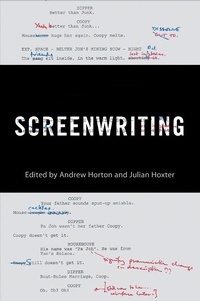
Screenwriting
Published on 23. August 2014
Book
Paperback/Softback
192 pages
978-0-8135-6340-4 (ISBN)
Description
Screenwriters often joke that "no one ever paid a dollar at a movie theater to watch a screenplay." Yet the screenplay is where a movie begins, determining whether a production gets the "green light" from its financial backers and wins approval from its audience. This innovative volume gives readers a comprehensive portrait of the art and business of screenwriting, while showing how the role of the screenwriter has evolved over the years.
Reaching back to the early days of Hollywood, when moonlighting novelists, playwrights, and journalists were first hired to write scenarios and photoplays, Screenwriting illuminates the profound ways that screenwriters have contributed to the films we love. This book explores the social, political, and economic implications of the changing craft of American screenwriting from the silent screen through the classical Hollywood years, the rise of independent cinema, and on to the contemporary global multi-media marketplace. From The Birth of a Nation (1915), Gone With the Wind (1939), and Gentleman's Agreement (1947) to Chinatown (1974), American Beauty (1999), and Lost in Translation (2003), each project began as writers with pen and ink, typewriters, or computers captured the hopes and dreams, the nightmares and concerns of the periods in which they were writing.
As the contributors take us behind the silver screen to chronicle the history of screenwriting, they spotlight a range of key screenplays that changed the game in Hollywood and beyond. With original essays from both distinguished film scholars and accomplished screenwriters, Screenwriting is sure to fascinate anyone with an interest in Hollywood, from movie buffs to industry professionals.
Reaching back to the early days of Hollywood, when moonlighting novelists, playwrights, and journalists were first hired to write scenarios and photoplays, Screenwriting illuminates the profound ways that screenwriters have contributed to the films we love. This book explores the social, political, and economic implications of the changing craft of American screenwriting from the silent screen through the classical Hollywood years, the rise of independent cinema, and on to the contemporary global multi-media marketplace. From The Birth of a Nation (1915), Gone With the Wind (1939), and Gentleman's Agreement (1947) to Chinatown (1974), American Beauty (1999), and Lost in Translation (2003), each project began as writers with pen and ink, typewriters, or computers captured the hopes and dreams, the nightmares and concerns of the periods in which they were writing.
As the contributors take us behind the silver screen to chronicle the history of screenwriting, they spotlight a range of key screenplays that changed the game in Hollywood and beyond. With original essays from both distinguished film scholars and accomplished screenwriters, Screenwriting is sure to fascinate anyone with an interest in Hollywood, from movie buffs to industry professionals.
Reviews / Votes
"Screenwriting does an excellent job combining the larger historical context and specific textual evidence." (Journal of Film and Video) "Six insightful critics turn their collective gaze to Hollywood's least-gratifying field of endeavor and redefine the writer's role in film history. A witty, instructive, and long overdue survey." - Sam Hamm (screenwriter, Batman)More details
Series
Language
English
Place of publication
New Brunswick NJ
United States
Target group
College/higher education
Professional and scholarly
Product notice
Paperback (trade)
Unsewn / adhesive bound
Illustrations
34 photographs
Dimensions
Height: 232 mm
Width: 153 mm
Thickness: 14 mm
Weight
367 gr
ISBN-13
978-0-8135-6340-4 (9780813563404)
Copyright in bibliographic data and cover images is held by Nielsen Book Services Limited or by the publishers or by their respective licensors: all rights reserved.
Schweitzer Classification
Persons
ANDREW HORTON is the Jeanne H. Smith Professor of Film and Video Studies at the University of Oklahoma. He is an award-winning screenwriter and the author of twenty-six books, including Screenwriting for a Global Market.
JULIAN HOXTER is an associate professor of cinema and screenwriting coordinator at San Francisco State University. The author of Write What You Don't Know: An Accessible Manual for Screenwriters, he is also an award-winning filmmaker, a rewrite specialist, and a story consultant for independent features.
JULIAN HOXTER is an associate professor of cinema and screenwriting coordinator at San Francisco State University. The author of Write What You Don't Know: An Accessible Manual for Screenwriters, he is also an award-winning filmmaker, a rewrite specialist, and a story consultant for independent features.
Content
Introduction Julian Hoxter Chapter 1: Machine to Screen: The Evolution toward Story, 1895-1928 J. Madison Davis Chapter 2: Classical Hollywood, 1928-1946 Mark Eaton Chapter 3: Postwar Hollywood, 1947-1967 Jon Lewis Chapter 4: The Auteur Renaissance, 1968-1980 Kevin Alexander Boon Chapter 5: Screenwriting in Another "New Hollywood," 1980-1999 Julian Hoxter Chapter 6: Screenwriting in the Modern Entertainment Marketplace, 2000-present Mark J. Charney Academy Award Winners for Screenwriting Notes Selected Bibliography Notes on Contributors Index