


Metaethics after Moore
Published on 26. January 2006
Book
Hardback
412 pages
978-0-19-926990-7 (ISBN)
Description
Metaethics, understood as a distinct branch of ethics, is often traced to G. E. Moore's 1903 classic, Principia Ethica. Whereas normative ethics is concerned to answer first-order moral questions about what is good and bad, right and wrong, metaethics is concerned to answer second-order non-moral questions about the semantics, metaphysics, and epistemology of moral thought and discourse. Moore has continued to exert a powerful influence, and the sixteen essays here (most of them specially written for the volume) represent the most up-to-date work in metaethics after, and in some cases directly inspired by, the work of Moore.
Contributors include Robert Audi, Stephen Barker, Paul Bloomfield, Panayot Butchvarvov, Jonathan Dancy, Stephen Darwall, Jamie Dreier, Allan Gibbard, Brad Hooker, Terry Horgan, Connie Rosati, Russ Shafer-Landau, Walter Sinnott-Armstrong, Michael Smith, Philip Stratton-Lake, Sigrun Svavarsdottir, Mark Timmons, and Judith Jarvis Thompson.
Contributors include Robert Audi, Stephen Barker, Paul Bloomfield, Panayot Butchvarvov, Jonathan Dancy, Stephen Darwall, Jamie Dreier, Allan Gibbard, Brad Hooker, Terry Horgan, Connie Rosati, Russ Shafer-Landau, Walter Sinnott-Armstrong, Michael Smith, Philip Stratton-Lake, Sigrun Svavarsdottir, Mark Timmons, and Judith Jarvis Thompson.
Reviews / Votes
This substantial collection of sixteen original papers is one of a number of publishing ventures to have recently marked the centenary of the publication of G. E. Moore's Principia Ethica. It is not primarily a historical enterprise. Evidently what the editors have encouraged contributors to provide are cutting edge contributions to contemporary metaethics that engage with Moorean themes and concerns in ways that make the continuing relevance of those themes manifest. And this, to an impressive extent, is precisely what most of them have delivered. . . . This is a rewarding collection of papers, abundantly illustrating the lively state of contemporary metaethics. Anyone interested in moral philosophy could very profitably read it. * James Lenman, Notre Dame Philosophical Reviews *More details
Language
English
Place of publication
Oxford
United Kingdom
Target group
Professional and scholarly
Scholars and students of ethical theory, and of the history of twentieth-century philosophy.
Dimensions
Height: 240 mm
Width: 161 mm
Thickness: 27 mm
Weight
781 gr
ISBN-13
978-0-19-926990-7 (9780199269907)
Copyright in bibliographic data and cover images is held by Nielsen Book Services Limited or by the publishers or by their respective licensors: all rights reserved.
Schweitzer Classification
Other editions
Additional editions
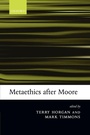
Terry Horgan | Mark Timmons
Metaethics after Moore
Book
01/2006
Oxford University Press
€90.30
Shipment within 15-20 days
Persons
Edited by Terry Horgan, University of Arizona and Mark Timmons, University of Arizona
Contributors: Robert Audi Stephen Barker Paul Bloomfield Panayot Butchvarvov Jonathan Dancy Stephen Darwall Jamie Dreier Allan Gibbard Brad Hooker Terry Horgan Connie Rosati Russ Shafer-Landau Walter Sinnott-Armstrong Michael Smith Philip Stratton-Lake Sigrun Svavarsdottir Mark Timmons Judith Jarvis Thompson
Contributors: Robert Audi Stephen Barker Paul Bloomfield Panayot Butchvarvov Jonathan Dancy Stephen Darwall Jamie Dreier Allan Gibbard Brad Hooker Terry Horgan Connie Rosati Russ Shafer-Landau Walter Sinnott-Armstrong Michael Smith Philip Stratton-Lake Sigrun Svavarsdottir Mark Timmons Judith Jarvis Thompson
Content
Introduction ; 1. How should ethics relate to (the rest of ) philosophy? ; 2. What do reasons do? ; 3. Evaluations of rationality ; 4. Intrinsic value and reasons for action ; 5. Personal good ; 6. Moore on the right, the good, and uncertainty ; 7. Scanlon versus Moore on goodness ; 8. Opening questions, following rules ; 9. Was Moore a Moorean? ; 10. Ethics as philosophy: a defence of ethical nonnaturalism ; 11. The legacy of Principia ; 12. Cognitivist expressivism ; 13. Truth and the expressing in expressivism ; 14. Normative properties ; 15. Moral intuitionism meets empirical psychology ; 16. Ethics dehumanized