

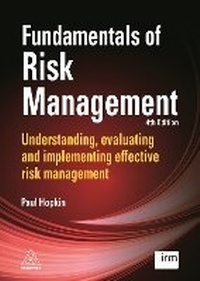
Fundamentals of Risk Management
Understanding, Evaluating and Implementing Effective Risk Management
4th Edition
Published on 3. January 2017
Book
Paperback/Softback
488 pages
978-0-7494-7961-9 (ISBN)
Description
Fundamentals of Risk Management, now in its fourth edition, is a comprehensive introduction to commercial and business risk for students and a broad range of risk professionals. Providing extensive coverage of the core frameworks of business continuity planning, enterprise risk management and project risk management, this is the definitive guide to dealing with the different types of risk an organization faces. With relevant international case examples from both the private and public sectors, this revised edition of Fundamentals of Risk Management is completely aligned to ISO 31000 and provides a full analysis of changes in contemporary risk areas including supply chain, cyber risk, risk culture and improvements in risk management documentation and statutory risk reporting.
This new edition of Fundamentals of Risk Management has been fully updated to reflect the development of risk management standards and practice, in particular business continuity standards, regulatory developments, risks to reputation and the business model, changes in enterprise risk management (ERM), loss control and the value of insurance as a risk management method. Also including a thorough overview of the international risk management standards and frameworks, strategy and policy, this book is the definitive professional text for risk managers.
This new edition of Fundamentals of Risk Management has been fully updated to reflect the development of risk management standards and practice, in particular business continuity standards, regulatory developments, risks to reputation and the business model, changes in enterprise risk management (ERM), loss control and the value of insurance as a risk management method. Also including a thorough overview of the international risk management standards and frameworks, strategy and policy, this book is the definitive professional text for risk managers.
Reviews / Votes
"This will no doubt become a seminal text for anyone involved in the role of corporate risk management. It is truly comprehensive, with a careful explanation of risk theory and numerous tools including frameworks, international standards and models." * Supply Management *More details
Edition
4th Revised edition
Language
English
Place of publication
London
United Kingdom
Target group
College/higher education
Professional and scholarly
Edition type
Revised edition
Product notice
Paperback (trade)
Dimensions
Height: 240 mm
Width: 170 mm
Thickness: 24 mm
Weight
824 gr
ISBN-13
978-0-7494-7961-9 (9780749479619)
Copyright in bibliographic data and cover images is held by Nielsen Book Services Limited or by the publishers or by their respective licensors: all rights reserved.
Schweitzer Classification
Other editions
New editions
Kate Boothroyd | Clive Thompson
Fundamentals of Risk Management
Understanding, Evaluating and Implementing Effective Enterprise Risk Management
Book
12/2024
7th Edition
Kogan Page Ltd
€62.50
Available immediately
Paul Hopkin
Fundamentals of Risk Management
Understanding, Evaluating and Implementing Effective Risk Management
Book
07/2018
5th Edition
Kogan Page Ltd
€69.51
Article exhausted; check for reprint
Additional editions
Paul Hopkin | Institute of Risk Management
Fundamentals of Risk Management
Understanding, Evaluating and Implementing Effective Risk Management
Book
01/2015
3rd Edition
Kogan Page Ltd
€150.16
Article exhausted; check for reprint
Previous edition
Paul Hopkin | Institute of Risk Management
Fundamentals of Risk Management
Understanding, Evaluating and Implementing Effective Risk Management
Book
01/2015
3rd Edition
Kogan Page Ltd
€150.16
Article exhausted; check for reprint
Person
Paul Hopkin is Technical Director at the Institute of Risk Management, having held the same role at the Association of Insurance and Risk Managers (AIRMIC) for nine years. He was previously Director of Risk Management for The Rank Group Plc and prior to that Head of Risk Management at the BBC. He is a Fellow of the Institute of Risk Management.
The Institute of Risk Management (IRM) is the world's leading professional body for risk management. It is an independent, not-for-profit organization that champions excellence in managing risk to improve organizational performance.
The Institute of Risk Management (IRM) is the world's leading professional body for risk management. It is an independent, not-for-profit organization that champions excellence in managing risk to improve organizational performance.
Content
Section - ONE: Introduction to Risk Management;
Chapter - 01: Approaches to Defining Risk;
Chapter - 02: Impact of Risk on Organizations;
Chapter - 03: Types of Risks;
Chapter - 04: Scope of Risk Management;
Chapter - 05: Principles and Aims of Risk Management;
Section - TWO: Approaches to Risk Management;
Chapter - 06: Risk Management Standards;
Chapter - 07: Establishing the Context;
Chapter - 08: Enterprise Risk Management;
Chapter - 09: Alternative Approaches;
Section - THREE: Risk Assessment;
Chapter - 10: Risk Assessment Considerations;
Chapter - 11: Risk Classification Systems;
Chapter - 12: Risk Analysis and Evaluation;
Chapter - 13: Loss Control;
Chapter - 14: Defining the Upside of Risk;
Section - FOUR: Risk Response;
Chapter - 15: Tolerate, Treat, Transfer and terminate;
Chapter - 16: Risk Control Techniques;
Chapter - 17: Insurance and Risk Transfer;
Chapter - 18: Business Continuity;
Section - FIVE: Risk Strategy;
Chapter - 19: Core Business Processes;
Chapter - 20: Reputation and the Business Model;
Chapter - 21: Risk Management Context;
Chapter - 22: Risk Management Responsibilities;
Chapter - 23: Control of Selected Hazard Risks;
Section - SIX: Risk Culture;
Chapter - 24: Risk-Aware Culture;
Chapter - 25: Importance of Risk Appetite;
Chapter - 26: Risk Training and Communication;
Chapter - 27: Risk Practitioner Competencies;
Section - SEVEN: Risk Governance;
Chapter - 28: Corporate Governance Model;
Chapter - 29: Stakeholder Expectations;
Chapter - 30: Operational Risk Management;
Chapter - 31: Project Risk Management;
Chapter - 32: Supply Chain Management;
Section - EIGHT: Risk Assurance;
Chapter - 33: The Control Environment;
Chapter - 34: Risk Assurance Techniques;
Chapter - 35: Internal Audit Activities;
Chapter - 36: Reporting on Risk Management
Chapter - 01: Approaches to Defining Risk;
Chapter - 02: Impact of Risk on Organizations;
Chapter - 03: Types of Risks;
Chapter - 04: Scope of Risk Management;
Chapter - 05: Principles and Aims of Risk Management;
Section - TWO: Approaches to Risk Management;
Chapter - 06: Risk Management Standards;
Chapter - 07: Establishing the Context;
Chapter - 08: Enterprise Risk Management;
Chapter - 09: Alternative Approaches;
Section - THREE: Risk Assessment;
Chapter - 10: Risk Assessment Considerations;
Chapter - 11: Risk Classification Systems;
Chapter - 12: Risk Analysis and Evaluation;
Chapter - 13: Loss Control;
Chapter - 14: Defining the Upside of Risk;
Section - FOUR: Risk Response;
Chapter - 15: Tolerate, Treat, Transfer and terminate;
Chapter - 16: Risk Control Techniques;
Chapter - 17: Insurance and Risk Transfer;
Chapter - 18: Business Continuity;
Section - FIVE: Risk Strategy;
Chapter - 19: Core Business Processes;
Chapter - 20: Reputation and the Business Model;
Chapter - 21: Risk Management Context;
Chapter - 22: Risk Management Responsibilities;
Chapter - 23: Control of Selected Hazard Risks;
Section - SIX: Risk Culture;
Chapter - 24: Risk-Aware Culture;
Chapter - 25: Importance of Risk Appetite;
Chapter - 26: Risk Training and Communication;
Chapter - 27: Risk Practitioner Competencies;
Section - SEVEN: Risk Governance;
Chapter - 28: Corporate Governance Model;
Chapter - 29: Stakeholder Expectations;
Chapter - 30: Operational Risk Management;
Chapter - 31: Project Risk Management;
Chapter - 32: Supply Chain Management;
Section - EIGHT: Risk Assurance;
Chapter - 33: The Control Environment;
Chapter - 34: Risk Assurance Techniques;
Chapter - 35: Internal Audit Activities;
Chapter - 36: Reporting on Risk Management