

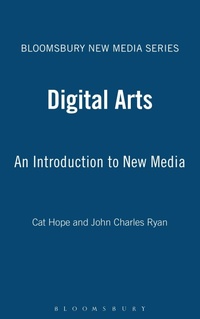
Digital Arts
An Introduction to New Media
Published on 14. August 2014
Book
Hardback
288 pages
978-1-78093-320-7 (ISBN)
Description
Digital Arts presents an introduction to new media art through key debates and theories. The volume begins with the historical contexts of the digital arts, discusses contemporary forms, and concludes with current and future trends in distribution and archival processes. Considering the imperative of artists to adopt new technologies, the chapters of the book progressively present a study of the impact of the digital on art, as well as the exhibition, distribution and archiving of artworks.
Alongside case studies that illustrate contemporary research in the fields of digital arts, reflections and questions provide opportunities for readers to explore relevant terms, theories and examples. Consistent with the other volumes in the New Media series, a bullet-point summary and a further reading section enhance the introductory focus of each chapter.
Alongside case studies that illustrate contemporary research in the fields of digital arts, reflections and questions provide opportunities for readers to explore relevant terms, theories and examples. Consistent with the other volumes in the New Media series, a bullet-point summary and a further reading section enhance the introductory focus of each chapter.
Reviews / Votes
Digital Art tendencies and terms, both contemporary and historical, along with artists' innovations, both visionary and practical, are brought together in this immensely readable and well structured study of those arts of our time that have grown from the digital seeds planted in the previous century. All the branches are there, and many of the fruits they have borne, harvested with critical consideration and presented with scholarly insight. * Roy Ascott, President of the Planetary Collegium, Plymouth University, UK, and DeTao Master of Technoetic Arts, DTMA, Shanghai * This is a good all round text book that covers digital arts in a comprehensive way. It is current and accessible. * Nicola Curtis, Plymouth College of Art, UK *More details
Series
Language
English
Place of publication
London
United Kingdom
Publishing group
Bloomsbury Publishing PLC
Target group
College/higher education
Professional and scholarly
Illustrations
15 illus
Dimensions
Height: 235 mm
Width: 157 mm
Thickness: 20 mm
Weight
571 gr
ISBN-13
978-1-78093-320-7 (9781780933207)
DOI
CBID169310
Copyright in bibliographic data and cover images is held by Nielsen Book Services Limited or by the publishers or by their respective licensors: all rights reserved.
Schweitzer Classification
Other editions
Additional editions
E-Book
06/2014
1st Edition
Bloomsbury Academic
€33.49
Available for download
Persons
Cat Hope is Associate Professor at the Western Australian Academy of Performing Arts at Edith Cowan University. She is an active composer and performer who also works in video art and installation.
John Charles Ryan is Postdoctoral Research Fellow in Communications and Arts at Edith Cowan University, Western Australia. He is an internationally published poet with interests in the digital humanities and ecocriticism.
John Charles Ryan is Postdoctoral Research Fellow in Communications and Arts at Edith Cowan University, Western Australia. He is an internationally published poet with interests in the digital humanities and ecocriticism.
Content
Acknowledgements
Chapter 1: Introduction
What Is Digitality?
What Is Digital Art?
Digital Art And Its Relatives: Understanding The Typologies
New Media Art
Electronic Art
Computer Art
Internet Art
Post-Media Aesthetics
Behaviourist Art
Telematic Art
Virtual Art
Unstable Media Art
Perspectives On Technology, Culture And The Digital Arts
Democratization
Globalization
Interdisciplinarity
An Outline Of The Following Chapters
Summary
Chapter 2: Key Concepts, Artistic Influences And Technological Origins Of The Digital Arts
Interaction, Immersion And Interface: Key Ideas For The Digital Arts
The Digital Arts In Perspective: Influential Art-Historical Contexts
Old And New Media: Technological Contexts For The Digital Arts
Summary
Chapter 3: Dumb Visions And Fabulous Images: Photographic, Drawn And Moving Image Key Concepts
Historical Precedents For Digital Images
The Challenges And Rewards Of Technological Change
What Is A Digital Photograph?
Digital Imagery In All Its Dimensions
The Moving Image: Video Art, Animation And Cinema
Video Art
Animation
Cinema
Installation Art
Summary
Chapter 4:Dancing At The Speed Of Light: The Digital In Performance
Cyberpunks In Cyberspace
Theoretical Terms
Remediation
Abjection
Theoretical Considerations
History
Technology
Case Studies
Dance And Choreography
Theatre And Performance Art
Cyborgs, Robots And Bioartists
Virtual Reality
Summary
Chapter 5: From Scratchy To Glitchy: The Creation, Performance And Installation Of Digital Music
A Drastic Change For The Direction Of Music
What Is A Digital Sound?
The Tools Of Digital Music
Composing And Performing With Digital Sounds
Digital As A Means: Collecting And Producing
Consuming Digital Music
The Future Unfolding: Interactivity And Liveness
The Fragmentation Of Music
Summary
Chapter 6: The Possibilities Of A Web: Internet Art
What Is Internet Art?
Interactivity, Agency And Community: Theoretical Considerations
Performance, Chance And Innovation: A Brief History Of Internet Art
Browsing, Coding And Networking: The Technology Of Internet Art
Summary
Chapter 7: I Want It Now: Finding, Downloading And Distributing Digital Art
Finding And File Sharing: Creative Culture In The Digital Era
Downloading The Commons: The History Of Digital Arts Distribution
Distributing The Digital: The Impact Of Key Technologies
Summary
Chapter 8: Ways Of Belonging: Archiving, Preserving And Remembering Digital Art
The Idea Of Liveness: Preservation As Theory And Contingency
Scoring The Work: Digital Arts Preservation Through Notation Systems
Towards Archival Interoperability: Arts Preservation And Technology
Summary
Chapter 9: Conclusion: Hyperreality And The Digital Art Of The Future
Reality And Hyperreality In Digital Art
Hyperreality And Postdigital Art
New Technological Frontiers And The Future Of Digital Art
Ubiquitous Computing And Wearable Technology
Gaming And Networked Environments
Social Media
Mobile Telecommunications
Open Source And Wiki Projects
Back To Reality: Activism Through Digital Art
Privacy And Surveillance
Political And Social Equity
Environment And Sustainability
Moist Media And Living Interfaces
Final Word: Digital Art Communities
Annotated Guide To Further Reading
Exercises And Questions
Bibliography
Index
Chapter 1: Introduction
What Is Digitality?
What Is Digital Art?
Digital Art And Its Relatives: Understanding The Typologies
New Media Art
Electronic Art
Computer Art
Internet Art
Post-Media Aesthetics
Behaviourist Art
Telematic Art
Virtual Art
Unstable Media Art
Perspectives On Technology, Culture And The Digital Arts
Democratization
Globalization
Interdisciplinarity
An Outline Of The Following Chapters
Summary
Chapter 2: Key Concepts, Artistic Influences And Technological Origins Of The Digital Arts
Interaction, Immersion And Interface: Key Ideas For The Digital Arts
The Digital Arts In Perspective: Influential Art-Historical Contexts
Old And New Media: Technological Contexts For The Digital Arts
Summary
Chapter 3: Dumb Visions And Fabulous Images: Photographic, Drawn And Moving Image Key Concepts
Historical Precedents For Digital Images
The Challenges And Rewards Of Technological Change
What Is A Digital Photograph?
Digital Imagery In All Its Dimensions
The Moving Image: Video Art, Animation And Cinema
Video Art
Animation
Cinema
Installation Art
Summary
Chapter 4:Dancing At The Speed Of Light: The Digital In Performance
Cyberpunks In Cyberspace
Theoretical Terms
Remediation
Abjection
Theoretical Considerations
History
Technology
Case Studies
Dance And Choreography
Theatre And Performance Art
Cyborgs, Robots And Bioartists
Virtual Reality
Summary
Chapter 5: From Scratchy To Glitchy: The Creation, Performance And Installation Of Digital Music
A Drastic Change For The Direction Of Music
What Is A Digital Sound?
The Tools Of Digital Music
Composing And Performing With Digital Sounds
Digital As A Means: Collecting And Producing
Consuming Digital Music
The Future Unfolding: Interactivity And Liveness
The Fragmentation Of Music
Summary
Chapter 6: The Possibilities Of A Web: Internet Art
What Is Internet Art?
Interactivity, Agency And Community: Theoretical Considerations
Performance, Chance And Innovation: A Brief History Of Internet Art
Browsing, Coding And Networking: The Technology Of Internet Art
Summary
Chapter 7: I Want It Now: Finding, Downloading And Distributing Digital Art
Finding And File Sharing: Creative Culture In The Digital Era
Downloading The Commons: The History Of Digital Arts Distribution
Distributing The Digital: The Impact Of Key Technologies
Summary
Chapter 8: Ways Of Belonging: Archiving, Preserving And Remembering Digital Art
The Idea Of Liveness: Preservation As Theory And Contingency
Scoring The Work: Digital Arts Preservation Through Notation Systems
Towards Archival Interoperability: Arts Preservation And Technology
Summary
Chapter 9: Conclusion: Hyperreality And The Digital Art Of The Future
Reality And Hyperreality In Digital Art
Hyperreality And Postdigital Art
New Technological Frontiers And The Future Of Digital Art
Ubiquitous Computing And Wearable Technology
Gaming And Networked Environments
Social Media
Mobile Telecommunications
Open Source And Wiki Projects
Back To Reality: Activism Through Digital Art
Privacy And Surveillance
Political And Social Equity
Environment And Sustainability
Moist Media And Living Interfaces
Final Word: Digital Art Communities
Annotated Guide To Further Reading
Exercises And Questions
Bibliography
Index