

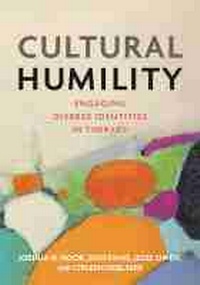
Cultural Humility
Engaging Diverse Identities in Therapy
Will be published approx. on 19. June 2017
Book
Hardback
236 pages
978-1-4338-2777-8 (ISBN)
Description
This book describes how therapists can combine multicultural theory with their own lived experience to meaningfully engage clients in issues of culture.
Many mental health practitioners (MHPs) today recognize and affirm the importance of cultural background-race, ethnicity, gender, sexuality, et al-in their clients amp rsquo lives. But many MHPs struggle to address cultural issues in practice, whether because of unfamiliarity, or fear of giving offense, or because the presence of cultural differences or similarities between client and therapist that can make it difficult to view the client objectively.
The authors of this book recommend that MHPs focus not on what they have learned in previous clinical or educational settings, but on what they don amp rsquo t know about the client who sits across from them. They discuss practical strategies for engaging with clients and their cultural identities, including repairing mistakes that threaten the therapeutic relationship. Through a wide range of case examples and hands-on exercises, the authors demonstrate how therapists can learn to acknowledge their limitations, and view them as opportunities to connect with clients at a deeper level.
Many mental health practitioners (MHPs) today recognize and affirm the importance of cultural background-race, ethnicity, gender, sexuality, et al-in their clients amp rsquo lives. But many MHPs struggle to address cultural issues in practice, whether because of unfamiliarity, or fear of giving offense, or because the presence of cultural differences or similarities between client and therapist that can make it difficult to view the client objectively.
The authors of this book recommend that MHPs focus not on what they have learned in previous clinical or educational settings, but on what they don amp rsquo t know about the client who sits across from them. They discuss practical strategies for engaging with clients and their cultural identities, including repairing mistakes that threaten the therapeutic relationship. Through a wide range of case examples and hands-on exercises, the authors demonstrate how therapists can learn to acknowledge their limitations, and view them as opportunities to connect with clients at a deeper level.
Reviews / Votes
amp ldquo The greatest strength of Cultural Humility is the inclusion of case studies in the concluding chapters and the case vignettes that are shared throughout the text. I found the case vignettes to be realistic and reflective of the complexity and challenge that often characterizes many of the exchanges between a client and clinician. amp rdquo -PsycCRITIQUESamp ldquo As a whole, this is a well-organized and timely text. It includes the authors amp rsquo stories, current research, practical exercises, and case studies. The work is strongly recommended for collections in counseling and other helping professions that engage with diverse cultures. amp rdquo -Choice As a whole, this is a well-organized and timely text. It includes the authors amp rsquo stories, current research, practical exercises, and case studies. The work is strongly recommended for collections in counseling and other helping professions that engage with diverse cultures. (Choice) The greatest strength of Cultural Humility is the inclusion of case studies in the concluding chapters and the case vignettes that are shared throughout the text. I found the case vignettes to be realistic and reflective of the complexity and challenge that often characterizes many of the exchanges between a client and clinician. (PsycCRITIQUES) This work on cultural humility critiques and extends the concept of multicultural competence, and offers theoreticians and practitioners a different and perhaps more effective framework for carrying out meaningful therapy with a broad range of multicultural clients. - William E. Cross, Jr., PhD, Past President, American Psychological Association Division 45, and author of Shades of Black Presenting a compelling case for cultural humility, the authors bring the concept to life through writing that is personally engaging and through many examples, tools, and exercises. They provide readers with numerous opportunities to learn a culturally humble stance in treatment contexts. This is important reading for any counselor or psychotherapist and a great resource for faculty in graduate training programs. - Rodney K. Goodyear, PhD, Professor and Chair, Department of Counseling and Human Services, University of Redlands, Redlands, CA; Emeritus Professor of Education (Counseling Psychology), University of Southern California, Los Angeles As we move from cultural competence to cultural humility, this book provides useful frameworks for therapist self-reflection and for addressing clients' cultural identities in therapeutic work. Case examples, which include the authors' personal experiences, make the information practical and relevant. An excellent resource for multicultural training and practicum courses. - Y. Barry Chung, PhD, Indiana University Bloomington
More details
Language
English
Place of publication
Washington DC
United States
Target group
Professional and scholarly
Dimensions
Height: 229 mm
Width: 152 mm
ISBN-13
978-1-4338-2777-8 (9781433827778)
Copyright in bibliographic data and cover images is held by Nielsen Book Services Limited or by the publishers or by their respective licensors: all rights reserved.
Schweitzer Classification
Other editions
New editions
Book
06/2025
2nd Edition
American Psychological Association
€75.50
Shipment within 10-20 days
Persons
Joshua N. Hook, PhD, received his doctorate in counseling psychology from Virginia Commonwealth University. Currently, he is an associate professor of psychology at the University of North Texas, where he teaches the graduate multicultural counseling course. He is a licensed clinical psychologist in the state of Texas. His professional interests include humility, religion/spirituality, and multicultural counseling.
Don Davis, PhD, received his doctorate in counseling psychology from Virginia Commonwealth University. Currently, he is an assistant professor of counseling psychology and counselor education at Georgia State University. His professional interests include humility, forgiveness, and religion/spirituality. He teaches courses on group counseling as well as on measurement. He also teaches an advanced seminar on humility, drawing on contemplative spiritual practices in counseling.
Jesse Owen, PhD, received his doctorate in counseling psychology from the University of Denver (DU) in 2 5. He is currently an associate professor and chair of the counseling psychology department at DU. He worked at Gannon University and the University of Louisville prior to joining the faculty at DU. He is a licensed psychologist and has had a private practice at times over the past decade. His research focuses on psychotherapy processes and outcomes as well as romantic relationships. More specifically, his work in psychotherapy focuses on therapists' multicultural orientation and expertise.
Cirleen DeBlaere, PhD, received her doctorate in counseling psychology from the University of Florida and is currently an assistant professor of counseling psychology at Georgia State University. Her professional interests include the identity and experiences of individuals with marginalized identities, particularly people with multiple marginalized identities (e.g., LGBTQ people of color, women of color), resilience, cultural humility, and multicultural counseling and supervision. She teaches graduate courses in multicultural issues, personality theory, and clinical supervision.
Don Davis, PhD, received his doctorate in counseling psychology from Virginia Commonwealth University. Currently, he is an assistant professor of counseling psychology and counselor education at Georgia State University. His professional interests include humility, forgiveness, and religion/spirituality. He teaches courses on group counseling as well as on measurement. He also teaches an advanced seminar on humility, drawing on contemplative spiritual practices in counseling.
Jesse Owen, PhD, received his doctorate in counseling psychology from the University of Denver (DU) in 2 5. He is currently an associate professor and chair of the counseling psychology department at DU. He worked at Gannon University and the University of Louisville prior to joining the faculty at DU. He is a licensed psychologist and has had a private practice at times over the past decade. His research focuses on psychotherapy processes and outcomes as well as romantic relationships. More specifically, his work in psychotherapy focuses on therapists' multicultural orientation and expertise.
Cirleen DeBlaere, PhD, received her doctorate in counseling psychology from the University of Florida and is currently an assistant professor of counseling psychology at Georgia State University. Her professional interests include the identity and experiences of individuals with marginalized identities, particularly people with multiple marginalized identities (e.g., LGBTQ people of color, women of color), resilience, cultural humility, and multicultural counseling and supervision. She teaches graduate courses in multicultural issues, personality theory, and clinical supervision.
Content
Preface
Introduction
Part I. Theoretical Foundation and Self-Awareness
Chapter . Multicultural Orientation
Chapter 2. Exploring Your Cultural Identity
Chapter 3. Working on Cultural Biases, Power, and Privilege
Part II. Cultural Humility in the Therapy Context
Chapter 4. Cultural Humility and the Process of Psychotherapy
Chapter 5. Strengthening the Working Alliance
Chapter . Repairing the Relationship After Cultural Ruptures
Chapter 7. Navigating Value Differences and Conflicts
Chapter 8. Working Within Your Limits
Chapter 9. Continuing the Journey of Cultural Humility
References
Index
About the Authors
Introduction
Part I. Theoretical Foundation and Self-Awareness
Chapter . Multicultural Orientation
Chapter 2. Exploring Your Cultural Identity
Chapter 3. Working on Cultural Biases, Power, and Privilege
Part II. Cultural Humility in the Therapy Context
Chapter 4. Cultural Humility and the Process of Psychotherapy
Chapter 5. Strengthening the Working Alliance
Chapter . Repairing the Relationship After Cultural Ruptures
Chapter 7. Navigating Value Differences and Conflicts
Chapter 8. Working Within Your Limits
Chapter 9. Continuing the Journey of Cultural Humility
References
Index
About the Authors