

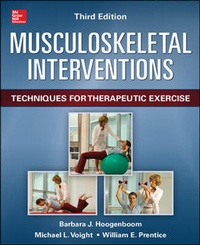
Musculoskeletal Interventions 3/E (Int'l Ed)
2nd Edition
Published on 1. March 2014
Book
Hardback
1168 pages
978-1-259-25143-6 (ISBN)
Unfortunately, price unknown
Available (delivery time upon request)
Not available
Description
The definitive guide to designing and implementing evidence-based rehabilitation programs using therapeutic exercise -- updated in full color
Musculoskeletal Interventions, 3rd Edition, is a comprehensive guide to the system considerations, design, implementation, and progression of rehabilitation programs for musculoskeletal injuries and dysfunction. Encompassing many aspects of musculoskeletal rehabilitation, with contributions from many renowned authors, it focuses on the practical application of theory in a clinical setting, making it valuable to both students and experienced physical therapists. Musculoskeletal Interventions features an easy-to-follow body region and functional approach to intervention strategies and is logically divided into five sections:
Foundations of the Rehabilitation Process
Addresses the important considerations in designing a rehabilitation program for the patient with a musculoskeletal injury
Provides a guide-based overview of the rehabilitation process as well as an introduction to Clinical Reasoning and Algorithmic Thinking in rehabilitation
Treating Physiologic Impairments During Rehabilitation
Presents information on various physical impairments that may need to be addressed as part of the rehabilitation process
The Tools of Rehabilitation
Provides an overview of important rehabilitation tools and strategies
Delivers detailed coverage of how these interventions should be incorporated into a rehabilitation program to achieve the individualized treatment goals for patients with musculoskeletal pathologies
Intervention Strategies for Specific Injuries
Covers specific rehabilitation techniques and interventions applied to the treatment of a wide variety of regional musculoskeletal injuries, dysfunctions, and post-operative conditions
Special Consideration for Specific Patient Populations
Discusses treatment considerations for specific patient populations, such as the geriatric patient, pediatric patient, and physically active female
This edition is enhanced by a new full-color presentation, as well as the inclusion of valuable
learning aids, such as clinical pearls, protocol grids, algorithms, learning objectives at the beginning of each
chapter, and end-of-chapter treatment guidelines and references.
Musculoskeletal Interventions, 3rd Edition, is a comprehensive guide to the system considerations, design, implementation, and progression of rehabilitation programs for musculoskeletal injuries and dysfunction. Encompassing many aspects of musculoskeletal rehabilitation, with contributions from many renowned authors, it focuses on the practical application of theory in a clinical setting, making it valuable to both students and experienced physical therapists. Musculoskeletal Interventions features an easy-to-follow body region and functional approach to intervention strategies and is logically divided into five sections:
Foundations of the Rehabilitation Process
Addresses the important considerations in designing a rehabilitation program for the patient with a musculoskeletal injury
Provides a guide-based overview of the rehabilitation process as well as an introduction to Clinical Reasoning and Algorithmic Thinking in rehabilitation
Treating Physiologic Impairments During Rehabilitation
Presents information on various physical impairments that may need to be addressed as part of the rehabilitation process
The Tools of Rehabilitation
Provides an overview of important rehabilitation tools and strategies
Delivers detailed coverage of how these interventions should be incorporated into a rehabilitation program to achieve the individualized treatment goals for patients with musculoskeletal pathologies
Intervention Strategies for Specific Injuries
Covers specific rehabilitation techniques and interventions applied to the treatment of a wide variety of regional musculoskeletal injuries, dysfunctions, and post-operative conditions
Special Consideration for Specific Patient Populations
Discusses treatment considerations for specific patient populations, such as the geriatric patient, pediatric patient, and physically active female
This edition is enhanced by a new full-color presentation, as well as the inclusion of valuable
learning aids, such as clinical pearls, protocol grids, algorithms, learning objectives at the beginning of each
chapter, and end-of-chapter treatment guidelines and references.
More details
Persons
Barb Hoogenboom, PT (Grand Rapids, MI)
Grand Valley State University,
Cook-DeVos Center for Health Sciences.
Mike Voight, PT (Nashville, TN) is affiliated with
Belmont University.
Bill Prentice, PhD, PT is affiliated with
University of North Carolina, Chapel Hill.
Grand Valley State University,
Cook-DeVos Center for Health Sciences.
Mike Voight, PT (Nashville, TN) is affiliated with
Belmont University.
Bill Prentice, PhD, PT is affiliated with
University of North Carolina, Chapel Hill.
Content
Part I: Foundations of the
Rehabilitation Process
Chapter 1: Introduction to the
Rehabilitation Process: The Guide to
Physical Therapist Practice
Chapter 2: Clinical Decision Making in
Rehabilitation, The Patient-Client
Management Model
Chapter 3: Understanding and Managing
the Healing Process through
Rehabilitation
Chapter 4: The Neuromuscular
Scanning Examination
Chapter 5: Clinical Reasoning: An
Algorithm-based Approach to
Musculoskeletal Rehabilitation
Part II: Treating Physiologic
Impairments During
Rehabilitation
Chapter 6: Impairment Due to Pain:
Managing Pain During the Rehabilitation
Process
Chapter 7: Impaired Posture and
Function
Chapter 8: Impaired Muscle
Performance: Regaining Muscular
Strength and Endurance
Appendix A: ACSM Position Statements on
Strength Training
Chapter 9: Impaired Endurance:
Maintaining Aerobic Capacity and
Endurance
Appendix B: ACSM PositionStatements on Fitness Development
Chapter 10: Impaired Mobility: Restoring
Range of Motion and Improving
Flexibility
Chapter 11: Impaired Neuromuscular
Control: Reactive Neuromuscular
Training
Part III: The Tools of
Rehabilitation
Chapter 12: Isokinetics in Rehabilitation
Chapter 13: Plyometric Exercise in Rehabilitation
Chapter 14: Open- versus
Closed-Kinetic Chain Exercises in
Rehabilitation
Chapter 15: Proprioceptive
Neuromuscular Facilitation Techniques
in Rehabilitation
Chapter 16: Joint Mobilization
Techniques in Rehabilitation
Chapter 17: Strategies for Improving
Balance
Chapter 18: Core Stabilization in
Rehabilitation
Chapter 19: Aquatic Therapy in
Rehabilitation
Chapter 20: Functional Movement
Screening
Chapter 21: Functional Progressions
and Functional Testing in Rehabilitation
Chapter 22: Orthotics in Rehabilitation
Chapter 23: Designing Exercise Programs for Home and Clinical Progressions
Chapter 24: Essentials of Functional
Exercise: A Four-Step Clinical Model for
Therapeutic Exercise Prescription
Part IV: Interventions Strategies
for Specific Regions
Chapter 25: Rehab of the Shoulder
Chapter 26: Rehab of the Elbow
Chapter 27: Rehab of the Wrist, Hand
and Fingers
Chapter 28: Rehab of the Groin, Hip, and
Thigh
Chapter 29: Rehab of the Knee
Chapter 30: Rehab of the Lower Leg
Chapter 31: Rehab of the Ankle and Foot
Chapter 32: Rehab of Injuries to the
Spine
Part V: Special Considerations
for Specific Patient Populations
Chapter 33: Rehabilitation
Considerations with the Geriatric Patient
Chapter 34: Considerations for the
Pediatric Patient
Chapter 35: Considerations for treating
Amputees
Chapter 36: Considerations for the
Active Female
Rehabilitation Process
Chapter 1: Introduction to the
Rehabilitation Process: The Guide to
Physical Therapist Practice
Chapter 2: Clinical Decision Making in
Rehabilitation, The Patient-Client
Management Model
Chapter 3: Understanding and Managing
the Healing Process through
Rehabilitation
Chapter 4: The Neuromuscular
Scanning Examination
Chapter 5: Clinical Reasoning: An
Algorithm-based Approach to
Musculoskeletal Rehabilitation
Part II: Treating Physiologic
Impairments During
Rehabilitation
Chapter 6: Impairment Due to Pain:
Managing Pain During the Rehabilitation
Process
Chapter 7: Impaired Posture and
Function
Chapter 8: Impaired Muscle
Performance: Regaining Muscular
Strength and Endurance
Appendix A: ACSM Position Statements on
Strength Training
Chapter 9: Impaired Endurance:
Maintaining Aerobic Capacity and
Endurance
Appendix B: ACSM PositionStatements on Fitness Development
Chapter 10: Impaired Mobility: Restoring
Range of Motion and Improving
Flexibility
Chapter 11: Impaired Neuromuscular
Control: Reactive Neuromuscular
Training
Part III: The Tools of
Rehabilitation
Chapter 12: Isokinetics in Rehabilitation
Chapter 13: Plyometric Exercise in Rehabilitation
Chapter 14: Open- versus
Closed-Kinetic Chain Exercises in
Rehabilitation
Chapter 15: Proprioceptive
Neuromuscular Facilitation Techniques
in Rehabilitation
Chapter 16: Joint Mobilization
Techniques in Rehabilitation
Chapter 17: Strategies for Improving
Balance
Chapter 18: Core Stabilization in
Rehabilitation
Chapter 19: Aquatic Therapy in
Rehabilitation
Chapter 20: Functional Movement
Screening
Chapter 21: Functional Progressions
and Functional Testing in Rehabilitation
Chapter 22: Orthotics in Rehabilitation
Chapter 23: Designing Exercise Programs for Home and Clinical Progressions
Chapter 24: Essentials of Functional
Exercise: A Four-Step Clinical Model for
Therapeutic Exercise Prescription
Part IV: Interventions Strategies
for Specific Regions
Chapter 25: Rehab of the Shoulder
Chapter 26: Rehab of the Elbow
Chapter 27: Rehab of the Wrist, Hand
and Fingers
Chapter 28: Rehab of the Groin, Hip, and
Thigh
Chapter 29: Rehab of the Knee
Chapter 30: Rehab of the Lower Leg
Chapter 31: Rehab of the Ankle and Foot
Chapter 32: Rehab of Injuries to the
Spine
Part V: Special Considerations
for Specific Patient Populations
Chapter 33: Rehabilitation
Considerations with the Geriatric Patient
Chapter 34: Considerations for the
Pediatric Patient
Chapter 35: Considerations for treating
Amputees
Chapter 36: Considerations for the
Active Female