

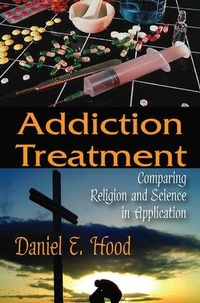
Addiction Treatment
Comparing Religion and Science in Application
1st Edition
Published on 15. May 2011
Book
Hardback
262 pages
978-1-4128-1463-8 (ISBN)
Description
Addiction Treatment is an ethnography that compares two types of residential drug-free treatment programs-religious, faith-based programs and science-based, secular programs. Although these programs have originated from significantly different ideological bases, in examining the day-to-day operations of each, Daniel E. Hood concludes that they are far more alike than they are different.
Drug-free treatment today, whether in secular or religious form, is little more than a remnant of the temperance movement. It is a warning to stop using drugs. At its best, treatment provides practical advice and support for complete abstinence. At its worst, it demeans users for a form of behavior that is not well understood and threatens death if they do not stop. Hood argues that there is no universal agreement on what addiction is and that drug abuse is little more than a catch-all term of no specific meaning used to condemn behavior that is socially unacceptable.
Through extensive participatory observations, intimate life history interviews, and informal conversations with residents and staff, Hood shows how both programs use the same basic techniques of ideological persuasion (mutual witnessing), methods of social control (discourse deprivation), and the same proposed zero tolerance, abstinent lifestyle (Christian living vs. Right living) as they endeavor to transform clients from addicts to citizens or from sinners to disciples.
Drug-free treatment today, whether in secular or religious form, is little more than a remnant of the temperance movement. It is a warning to stop using drugs. At its best, treatment provides practical advice and support for complete abstinence. At its worst, it demeans users for a form of behavior that is not well understood and threatens death if they do not stop. Hood argues that there is no universal agreement on what addiction is and that drug abuse is little more than a catch-all term of no specific meaning used to condemn behavior that is socially unacceptable.
Through extensive participatory observations, intimate life history interviews, and informal conversations with residents and staff, Hood shows how both programs use the same basic techniques of ideological persuasion (mutual witnessing), methods of social control (discourse deprivation), and the same proposed zero tolerance, abstinent lifestyle (Christian living vs. Right living) as they endeavor to transform clients from addicts to citizens or from sinners to disciples.
More details
Language
English
Place of publication
New York
United States
Publishing group
Taylor & Francis Inc
Target group
Professional and scholarly
Academic
Dimensions
Height: 229 mm
Width: 152 mm
Weight
640 gr
ISBN-13
978-1-4128-1463-8 (9781412814638)
Copyright in bibliographic data and cover images is held by Nielsen Book Services Limited or by the publishers or by their respective licensors: all rights reserved.
Schweitzer Classification
Other editions
Additional editions
Book
10/2024
1st Edition
Routledge
€69.51
Shipment within 10-20 days
E-Book
09/2017
Routledge
€55.49
Available for download
E-Book
09/2017
Routledge
€55.49
Available for download
Person
Daniel Hood
Content
Preface and Acknowledgements
Introduction: Redemption and Recovery as Addiction Treatment
1. Two Houses:
People, Places, and Programs
2. Parallels in Redemption and Recovery:
A Prima Facie Case
3. Redemption House:
The Social Construction of a Calling
4. Recovery House:
The Social Construction of Pathology
5. Ritual, Miracle, and Myth:
Reinforcing Faith in Redemption and Recovery
6. Recovery and Redemption:
Conclusions, Previews, and Alternatives
Bibliography
Author Index
Subject Index
Introduction: Redemption and Recovery as Addiction Treatment
1. Two Houses:
People, Places, and Programs
2. Parallels in Redemption and Recovery:
A Prima Facie Case
3. Redemption House:
The Social Construction of a Calling
4. Recovery House:
The Social Construction of Pathology
5. Ritual, Miracle, and Myth:
Reinforcing Faith in Redemption and Recovery
6. Recovery and Redemption:
Conclusions, Previews, and Alternatives
Bibliography
Author Index
Subject Index