


Employee Retention and Turnover
Why Employees Stay or Leave
1st Edition
Published on 13. September 2019
Book
Hardback
328 pages
978-1-138-50379-3 (ISBN)
Description
This exploration of what employee turnover is, why it happens, and what it means for companies and employees draws together contemporary and classic theories and research to present a well-rounded perspective on employee retention and turnover. The book uses models such as job embeddedness theory, proximal withdrawal states, and context-emergent turnover theory, as well as highlights cultural differences affecting global differences in turnover.
Employee Retention and Turnover contextualises the issue of turnover, its causes and its consequences, before discussing underrepresented antecedents of turnover, key aspects of retention and methods for regulating turnover, and future research directions.
Ideal for both academics and advanced students of industrial/organizational psychology, Employee Retention and Turnover is essential for understanding the past, present, and future of turnover and related research.
Employee Retention and Turnover contextualises the issue of turnover, its causes and its consequences, before discussing underrepresented antecedents of turnover, key aspects of retention and methods for regulating turnover, and future research directions.
Ideal for both academics and advanced students of industrial/organizational psychology, Employee Retention and Turnover is essential for understanding the past, present, and future of turnover and related research.
Reviews / Votes
"This book is outstanding in so many ways. First it lays out developmentally how the complexity of this topic has evolved over time. This picture includes how theory has changed, how our results and understanding have expanded over time and how extensions now deal with a much broader phenomenon including the international implications of the findings. Second, it is simply the best scholarly treatment of the turnover topic. The authors are exceptionally well versed in the literature and constructs being tested as well as the complex methods being used to study this phenomenon over time, contexts and samples and the practical implications of these findings. It will serve as the "go to" book for years to come." - Terence Mitchell, University of Washington"This timely book by a team of preeminent scholars in the area of employee turnover will be of benefit to both researchers and managers. Decades of research have demonstrated the high cost of turnover to organizations. Grounded in the accumulated wisdom of thousands of empirical studies, coupled with the latest in practice, this book will guide efforts to develop state-of-the-art retention policies. It also will guide future research on the topic in an era of increasingly smart machines and dynamic labor markets." - Brooks Holtom, Senior Associate Dean, McDonough School of Business, Georgetown University
More details
Series
Language
English
Place of publication
London
United Kingdom
Publishing group
Taylor & Francis Ltd
Target group
College/higher education
Professional and scholarly
Postgraduate and Professional
Illustrations
34 s/w Zeichnungen, 13 s/w Tabellen
13 Tables, black and white; 34 Line drawings, black and white
Dimensions
Height: 235 mm
Width: 157 mm
Thickness: 23 mm
Weight
661 gr
ISBN-13
978-1-138-50379-3 (9781138503793)
Copyright in bibliographic data and cover images is held by Nielsen Book Services Limited or by the publishers or by their respective licensors: all rights reserved.
Schweitzer Classification
Other editions
Additional editions
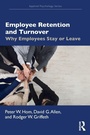
Peter W. Hom | David G. Allen | Rodger W. Griffeth
Employee Retention and Turnover
Why Employees Stay or Leave
Book
09/2019
1st Edition
Routledge
€73.10
Shipment within 10-20 days

Peter W. Hom | David G. Allen | Rodger W. Griffeth
Employee Retention and Turnover
Why Employees Stay or Leave
E-Book
08/2019
1st Edition
Routledge
€65.99
Available for download

Peter W. Hom | David G. Allen | Rodger W. Griffeth
Employee Retention and Turnover
Why Employees Stay or Leave
E-Book
08/2019
1st Edition
Routledge
€65.99
Available for download
Persons
Peter W. Hom is a Management Professor at the WP Carey School of Business, Arizona State University, USA. He has investigated why people quit, how managers react when their subordinates are being poached, and why employees trapped in jobs misbehave.
David G. Allen is Professor in the Neeley School of Business at Texas Christian University, USA. His teaching, research, and consulting on people and work focus on the flow of human capital into and out of organizations.
Rodger W. Griffeth is a Professor Emeritus in the Psychology Department at Ohio University. He has authored many seminal top-tier journal articles on employee turnover, while authoring three books on this topic.
David G. Allen is Professor in the Neeley School of Business at Texas Christian University, USA. His teaching, research, and consulting on people and work focus on the flow of human capital into and out of organizations.
Rodger W. Griffeth is a Professor Emeritus in the Psychology Department at Ohio University. He has authored many seminal top-tier journal articles on employee turnover, while authoring three books on this topic.
Content
Table of Contents
List of Illustrations
Biographies
Series Foreword
Preface
Chapter 1: What Is Turnover, Why Is It Important, and How Is It Measured?
Turnover Significance
Voluntary vs. Involuntary Turnover;
Avoidable vs. Unavoidable Turnover
Functional vs. Dysfunctional Turnover
Withdrawal Behavioral Family
Turnover Destinations
Collective Turnover
Chapter 2: Turnover Consequences
Turnover Effects on Leavers
Turnover Effects on Stayers
Turnover Effects on Organizations
Collective Turnover
Determining Optimal Turnover Rates
Chapter 3: Causes and Correlates of Turnover
Summarize Empirical Findings on Predictors of Individual Turnover from Past and Current Broad-Based Meta-Analyses
Chapter 4: Complex Theories of Employee Turnover
Describe and Review Classic Models
Describe and Review Contemporary Theories, notably, the Unfolding Model
Chapter 5: The Psychology of Staying: Job Embeddedness
Review Original 2001 Model of Job Embeddedness and Its Refinement
Extension of Basic Model to Explain Other Forms of Work Embeddedness
Multifocal Model of Job Embeddedness
Proximal Withdrawal State Theory
Dark Side of Job Embeddedness
Chapter 6: New Perspectives on Classic Turnover Antecedents
Organizational Commitment - Commitment Profiles
Job-Satisfaction - Trajectories Over Time
Job Performance - Complex Dynamics
Movement Ease and the Employment Opportunity Index
Chapter 7: Research Streams on Understudied Turnover Antecedents
Intervening Role of Job Search in Turnover Process
Cybernetic Theory about Job search and Turnover
Leadership Influences on Subordinate Turnover
Leadership Style and Personality
Managerial Attempts to Predict and Prevent Turnover
Leader Departure Effects
Social Networks - Structural Features
Snow Ball Effect
Network Centrality
Network Closure
Personality Influences
Personality Traits
Cognitive-Affective Processing System Theory
Chapter 8: Methodological Approaches in Turnover Research
Standard Research Practice: Critique of Static Cohort Research Design
New Statistical Methods for Predicting Turnover
Modern-Day Statistical Methods for Testing Turnover Theories
Chapter 9: Controlling Employee Turnover
Realistic Job Previews (RJP)
Recruitment Source - Employee Referrals
Hiring Based on Biodata
Hiring Based on Personality
Hiring for Fit
Socializing Newcomers
Work Design
Compensation & Reward Practices
Promising New Approaches
Pre-Quitting Behaviors
Stay Interviews
Predictive Analytics
Chapter 10: Diversity and Global Research on Turnover
Women Corporate Flight
Sexual Harassment
Racial Minority Turnover
Intersectional Discrimination
Double Jeopardy
Subordinate Male Target Hypothesis
International Diversity and Turnover
Expatriate Withdrawal
Turnover among Assembly Workers in Export-Oriented Processing Zones in Emerging Economies
Chapter 11: Future Research Directions
Investigating Change Trajectories of Turnover Predictors
Person-Centered Analyses
Construct Validation
More Research on Shocks, Link Defections and Turnover Destinations
Generalization vs. Contextualization of Theories
Understanding Collective Turnover
Empirical Validation of Methods for Controlling or Predicting Turnover
List of Illustrations
Biographies
Series Foreword
Preface
Chapter 1: What Is Turnover, Why Is It Important, and How Is It Measured?
Turnover Significance
Voluntary vs. Involuntary Turnover;
Avoidable vs. Unavoidable Turnover
Functional vs. Dysfunctional Turnover
Withdrawal Behavioral Family
Turnover Destinations
Collective Turnover
Chapter 2: Turnover Consequences
Turnover Effects on Leavers
Turnover Effects on Stayers
Turnover Effects on Organizations
Collective Turnover
Determining Optimal Turnover Rates
Chapter 3: Causes and Correlates of Turnover
Summarize Empirical Findings on Predictors of Individual Turnover from Past and Current Broad-Based Meta-Analyses
Chapter 4: Complex Theories of Employee Turnover
Describe and Review Classic Models
Describe and Review Contemporary Theories, notably, the Unfolding Model
Chapter 5: The Psychology of Staying: Job Embeddedness
Review Original 2001 Model of Job Embeddedness and Its Refinement
Extension of Basic Model to Explain Other Forms of Work Embeddedness
Multifocal Model of Job Embeddedness
Proximal Withdrawal State Theory
Dark Side of Job Embeddedness
Chapter 6: New Perspectives on Classic Turnover Antecedents
Organizational Commitment - Commitment Profiles
Job-Satisfaction - Trajectories Over Time
Job Performance - Complex Dynamics
Movement Ease and the Employment Opportunity Index
Chapter 7: Research Streams on Understudied Turnover Antecedents
Intervening Role of Job Search in Turnover Process
Cybernetic Theory about Job search and Turnover
Leadership Influences on Subordinate Turnover
Leadership Style and Personality
Managerial Attempts to Predict and Prevent Turnover
Leader Departure Effects
Social Networks - Structural Features
Snow Ball Effect
Network Centrality
Network Closure
Personality Influences
Personality Traits
Cognitive-Affective Processing System Theory
Chapter 8: Methodological Approaches in Turnover Research
Standard Research Practice: Critique of Static Cohort Research Design
New Statistical Methods for Predicting Turnover
Modern-Day Statistical Methods for Testing Turnover Theories
Chapter 9: Controlling Employee Turnover
Realistic Job Previews (RJP)
Recruitment Source - Employee Referrals
Hiring Based on Biodata
Hiring Based on Personality
Hiring for Fit
Socializing Newcomers
Work Design
Compensation & Reward Practices
Promising New Approaches
Pre-Quitting Behaviors
Stay Interviews
Predictive Analytics
Chapter 10: Diversity and Global Research on Turnover
Women Corporate Flight
Sexual Harassment
Racial Minority Turnover
Intersectional Discrimination
Double Jeopardy
Subordinate Male Target Hypothesis
International Diversity and Turnover
Expatriate Withdrawal
Turnover among Assembly Workers in Export-Oriented Processing Zones in Emerging Economies
Chapter 11: Future Research Directions
Investigating Change Trajectories of Turnover Predictors
Person-Centered Analyses
Construct Validation
More Research on Shocks, Link Defections and Turnover Destinations
Generalization vs. Contextualization of Theories
Understanding Collective Turnover
Empirical Validation of Methods for Controlling or Predicting Turnover