

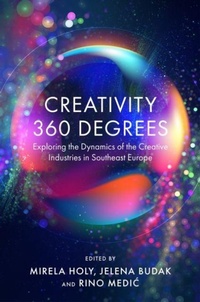
Creativity 360 Degrees
Exploring the Dynamics of the Creative Industries in Southeast Europe
Published on 4. March 2025
Book
Hardback
250 pages
978-1-83662-085-3 (ISBN)
Description
Globally recognised and endorsed by EU policies, creative industries play a pivotal role in fostering cultural diversity, social cohesion, and technological innovation. Further, they play a key role in national and regional economies. Despite this, Southeastern Europe falls behind the rest of Europe in implementing sustainable policies and establishing supportive ecosystems for creative industries. Nevertheless, the region boasts distinctive strengths and opportunities.
Creativity 360 Degrees offers a comprehensive examination of the creative industries sector in Southeast Europe, spanning countries such as Albania, Bosnia and Herzegovina, Bulgaria, Croatia, Greece, Kosovo, Montenegro, North Macedonia, Romania, Serbia, and Slovenia. Through insightful contributions, chapters delve into the way creative industries drive entrepreneurship, attract investment, and stimulate local economies. Authors explore the creative industries' connection to urban development, gentrification, and renewal, while also addressing their cultural impact on shaping identities and values through the production, consumption, and dissemination of various cultural products. This work investigates the integration of creative industries with technology and digital media, alongside education and workforce development.
Delivering comprehensive insights into the multifaceted impacts of creative industries on culture, society, and the economy, this work is relevant for scholars and researchers in fields such as cultural studies, urban development, economics, sociology, and public policy.
Creativity 360 Degrees offers a comprehensive examination of the creative industries sector in Southeast Europe, spanning countries such as Albania, Bosnia and Herzegovina, Bulgaria, Croatia, Greece, Kosovo, Montenegro, North Macedonia, Romania, Serbia, and Slovenia. Through insightful contributions, chapters delve into the way creative industries drive entrepreneurship, attract investment, and stimulate local economies. Authors explore the creative industries' connection to urban development, gentrification, and renewal, while also addressing their cultural impact on shaping identities and values through the production, consumption, and dissemination of various cultural products. This work investigates the integration of creative industries with technology and digital media, alongside education and workforce development.
Delivering comprehensive insights into the multifaceted impacts of creative industries on culture, society, and the economy, this work is relevant for scholars and researchers in fields such as cultural studies, urban development, economics, sociology, and public policy.
More details
Language
English
Place of publication
Bingley
United Kingdom
Target group
Professional and scholarly
Dimensions
Height: 159 mm
Width: 237 mm
Thickness: 20 mm
Weight
526 gr
ISBN-13
978-1-83662-085-3 (9781836620853)
Copyright in bibliographic data and cover images is held by Nielsen Book Services Limited or by the publishers or by their respective licensors: all rights reserved.
Schweitzer Classification
Other editions
Additional editions
Mirela Holy | Jelena Budak | Rino Medic
Creativity 360 Degrees
Exploring the Dynamics of the Creative Industries in Southeast Europe
E-Book
03/2025
1st Edition
Emerald Publishing Limited
€178.99
Available for download
Persons
Mirela Holy is Professor of Ethnology and Comparative Literature, VERN' University, Croatia, following a political career as Minister of the Environmental and Nature Protection and member of Croatian parliament.
Jelena Budak is a Scientific Advisor with tenure with The Institute of Economics, Zagreb, Croatia. Budak successfully led and participated in more than 50 research projects and expert studies commissioned by Croatian and foreign organisations.
Rino Medic started and leads "What can we do for children", educating and supporting teachers in elementary and high schools in Croatia. Medic is a founder and member of the international association Sipan Academy.
Jelena Budak is a Scientific Advisor with tenure with The Institute of Economics, Zagreb, Croatia. Budak successfully led and participated in more than 50 research projects and expert studies commissioned by Croatian and foreign organisations.
Rino Medic started and leads "What can we do for children", educating and supporting teachers in elementary and high schools in Croatia. Medic is a founder and member of the international association Sipan Academy.
Content
Preface: Overcoming Geographic Discrimination in Research; Martina Topic
Introduction: Cultural and Creative Industries Sector in Southeast Europe; Mirela Holy, Jelena Budak, and Rino Medic
Part I. Understanding Cultural Dynamics
Chapter 1. From Everyday Creativity to Collective Development; Daniela Angelina Jelincic
Chapter 2. Cultural and Creative Industries in Croatia: Public Perceptions and Policy; Jelena Budak, Edo Rajh, and Mirela Holy
Chapter 3. Social Exclusivity and Inclusivity of Cultural and Creative Work in Southeastern Europe; Dunja Matic Bencic
Part II. Economic and Social Trends in the Creative Sector
Chapter 4. Trends of Employment in Cultural Industries: The Case Study from European Countries; Jakub Kintler, Katarina Remenova, and Maria Kmety Bartekova
Chapter 5. Innovative Creative Industry Practices in the Context of Social Entrepreneurship: A Case Study of the Oksid Association; Krunoslav Malenica and Vlaho Kovacevic
Part III. Media, Representation, and Perception
Chapter 6. Performers in Croatian and Serbian Media: Analysis of Media Coverage and Public Perception; Davor Cosic, Marija Slijepcevic, and Irena Medvesek
Chapter 7. Students' Perspectives on Media and Communication in Creative Industries; Marina Funduk and Mira Mileusnic Skrtic
Chapter 8. Films on Social Media Sites and Websites of Selected Dalmatian Museums; Mirko Duic
Chapter 9. The Contribution of the Radio Sector to the Development of Cultural and Creative Industries; Silvija Londero Simlesa
Part IV. Social Interactions and Experiences
Chapter 10. Wellbeing and Gender Differences in PR and Communication Sector in Croatia: Descriptive Analysis of Interpersonal Relationships, Work-Life (In)Balance and Experiences of Discrimination; Marija Geiger Zeman, Geran-Marko Miletic, and Martina Topic
Chapter 11. Social Experiences of Online Gaming: Socialization and Cyberbullying; Arijana Marjanovic
Chapter 12. Behaviour of Young Consumers When Buying Branded Clothes; Sara Durkovic, Jadranka Ivankovic, and Diana Plantic Tadic
Chapter 13. Transformational Leadership - Where is it going?; Dino Gieriga
Part V. Cultural Heritage, Tourism, and Ideology
Chapter 14. Croatian Tourism - Adapted to the Future?; Frano Plisic
Chapter 15. The Visual Code and the Hegemonic Ideology of Capitalism and Yugoslav Non-Alignment; Petja Grafenauer and Dasa Tepina
Chapter 16. Place Attachment as Branding Mediator: Leveraging Expat Insights for Bucharest's City Branding Strategy; Anca Anton and Teodora Doroftei
Part VI. Literary and Cultural Analysis
Chapter 17. Modernism in Ernest Hemingway's Works; Ana Gudelj
Chapter 18. Multiple Literacies; Svend Erik Larsen
Conclusion Thoughts; Mirela Holy, Jelena Budak, and Rino Medic
Introduction: Cultural and Creative Industries Sector in Southeast Europe; Mirela Holy, Jelena Budak, and Rino Medic
Part I. Understanding Cultural Dynamics
Chapter 1. From Everyday Creativity to Collective Development; Daniela Angelina Jelincic
Chapter 2. Cultural and Creative Industries in Croatia: Public Perceptions and Policy; Jelena Budak, Edo Rajh, and Mirela Holy
Chapter 3. Social Exclusivity and Inclusivity of Cultural and Creative Work in Southeastern Europe; Dunja Matic Bencic
Part II. Economic and Social Trends in the Creative Sector
Chapter 4. Trends of Employment in Cultural Industries: The Case Study from European Countries; Jakub Kintler, Katarina Remenova, and Maria Kmety Bartekova
Chapter 5. Innovative Creative Industry Practices in the Context of Social Entrepreneurship: A Case Study of the Oksid Association; Krunoslav Malenica and Vlaho Kovacevic
Part III. Media, Representation, and Perception
Chapter 6. Performers in Croatian and Serbian Media: Analysis of Media Coverage and Public Perception; Davor Cosic, Marija Slijepcevic, and Irena Medvesek
Chapter 7. Students' Perspectives on Media and Communication in Creative Industries; Marina Funduk and Mira Mileusnic Skrtic
Chapter 8. Films on Social Media Sites and Websites of Selected Dalmatian Museums; Mirko Duic
Chapter 9. The Contribution of the Radio Sector to the Development of Cultural and Creative Industries; Silvija Londero Simlesa
Part IV. Social Interactions and Experiences
Chapter 10. Wellbeing and Gender Differences in PR and Communication Sector in Croatia: Descriptive Analysis of Interpersonal Relationships, Work-Life (In)Balance and Experiences of Discrimination; Marija Geiger Zeman, Geran-Marko Miletic, and Martina Topic
Chapter 11. Social Experiences of Online Gaming: Socialization and Cyberbullying; Arijana Marjanovic
Chapter 12. Behaviour of Young Consumers When Buying Branded Clothes; Sara Durkovic, Jadranka Ivankovic, and Diana Plantic Tadic
Chapter 13. Transformational Leadership - Where is it going?; Dino Gieriga
Part V. Cultural Heritage, Tourism, and Ideology
Chapter 14. Croatian Tourism - Adapted to the Future?; Frano Plisic
Chapter 15. The Visual Code and the Hegemonic Ideology of Capitalism and Yugoslav Non-Alignment; Petja Grafenauer and Dasa Tepina
Chapter 16. Place Attachment as Branding Mediator: Leveraging Expat Insights for Bucharest's City Branding Strategy; Anca Anton and Teodora Doroftei
Part VI. Literary and Cultural Analysis
Chapter 17. Modernism in Ernest Hemingway's Works; Ana Gudelj
Chapter 18. Multiple Literacies; Svend Erik Larsen
Conclusion Thoughts; Mirela Holy, Jelena Budak, and Rino Medic