

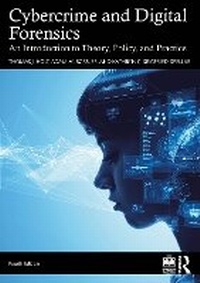
Cybercrime and Digital Forensics
Description
The fourth edition of Cybercrime and Digital Forensics provides a concise, cohesive exploration of all forms of cybercrime, including cyberterrorism and cyberwarfare, in an international context.
This new edition includes:
- A detailed chapter-by-chapter exploration of specific forms of cybercrime, ranging from hacking and malware to fraud to various sexual and interpersonal crimes and even online illicit markets;
- An updated discussion of criminological theories;
- Up-to-date examinations of the laws pertaining to cybercrime across the world, inclusive of Australia, Canada, the EU, India, the UK, and the US;
- Explanations of generative Artificial Intelligence (AI), with examples in each chapter of the ways AI is facilitating cybercrime and transforming the landscape of cybercrime regulation;
- A detailed history of digital forensics, as well as the current processes of evidence collection and analysis;
- Examples of real-life cybercrime, cyberterror, and cyberwarfare incidents from around the world.
This text is essential reading for courses on cybercrime, cyber-deviance, digital forensics, cybercrime investigation, and the sociology of technology.
More details
Other editions
Additional editions
Previous edition
Persons
Thomas J. Holt is a Professor in the School of Criminal Justice at Michigan State University. His research interests lie in all manner of cybercrime and the policy response to these problems.
Adam M. Bossler is a Professor in the Department of Criminal Justice & Criminology at Georgia Southern University. His research focuses on examining the application of traditional criminological theories to various forms of cybercrime offending and victimization and the law enforcement response to cybercrime.
Kathryn C. Seigfried-Spellar is a Professor in the School of Criminal Justice at Michigan State University. She is an expert in the psychosocial and technological factors associated with cybercriminal behavior. Her research intersects the behavioral and social sciences with digital forensics.
Content
1. Technology and Cybercrime 2. Cybercrime and Criminological Theories 3. Computer Hackers and Hacking 4. Malware and Automated Computer Attacks 5. Online Fraud 6. Child Sexual Exploitation Material, Pedophilia, and Image-Based Sexual Abuse 7. Cyberbullying, Online Harassment, and Cyberstalking 8. Online Extremism and Cyberterror 9. Cyberwarfare and Information Operations Online 10. Illicit Market Operations Online 11. Law Enforcement, Privacy, and Security 12. Evolution of Digital Forensics 13. Acquisition and Examination of Forensic Evidence 14. Legal Challenges in Digital Forensic Investigations 15. The Future of Cybercrime, Terror, and Policy