

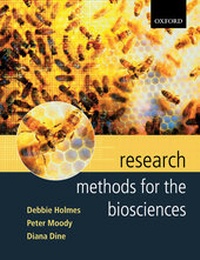
Research Methods for the Biosciences
Published on 19. January 2006
Book
Paperback/Softback
381 pages
978-0-19-927692-9 (ISBN)
Description
Scientific research is the ultimate tool in pushing forward the limit of our understanding. But, as with any tool, research is only powerful if used properly, and to its full effect. Research Methods for the Biosciences demystifies the process of research to equip every biosciences student with the skills they need to get the most out of their investigations. Research isn't solely about experimental design; the book leads them through all the factors that, together, enable effective research. These include planning your experiment; data collection, analysis, interpretation, and reporting; and legal, ethical, and health & safety considerations. Research is about engagement with the subject; with this in mind, Research Methods for the Biosciences includes a fully integrated web site, which motivates the student to fully consider the factors covered in the book, fostering understanding through active learning. Research Methods for the Biosciences brings together as a coherent whole the knowledge and skills required of every good researcher, making it the essential resource for any biosciences student.
Online Resource Centre: A fully interactive online component is an integral part of this resource. It features: * Figures from the book available to download, to facilitate lecture preparation * A totally flexible teaching and learning package, keyed directly to the text, featuring interactive tasks and exercises for both formative and summative assessment, and additional reference materials for both student and lecturer.
Online Resource Centre: A fully interactive online component is an integral part of this resource. It features: * Figures from the book available to download, to facilitate lecture preparation * A totally flexible teaching and learning package, keyed directly to the text, featuring interactive tasks and exercises for both formative and summative assessment, and additional reference materials for both student and lecturer.
Reviews / Votes
Well-organised and easy to read, Research Methods for the Biosciences is a useful tool for undergraduates, not to mention those involved in teaching in this field. David Sotres, Good Clinical Practice Journal, August 2006More details
Language
English
Place of publication
Oxford
United Kingdom
Target group
College/higher education
Intermediate and advanced level undergraduate biosciences students studying a course on research methods, or embarking on a research project. Also an invaluable reference for postgraduates who need a refresher in the essential aspects of planning, conducting, and analysing a research project.
Illustrations
Tables and line drawings throughout
Dimensions
Height: 246 mm
Width: 189 mm
Thickness: 23 mm
Weight
770 gr
ISBN-13
978-0-19-927692-9 (9780199276929)
Copyright in bibliographic data and cover images is held by Nielsen Book Services Limited or by the publishers or by their respective licensors: all rights reserved.
Schweitzer Classification
Other editions
New editions
Debbie Holmes | Peter Moody | Diana Dine
Research Methods for Biosciences
Book
09/2010
2nd Edition
Oxford University Press
€44.56
Article exhausted; check for reprint
Content
INTRODUCTION; 1. Where do I begin?; 2. Experimental design; 3. What to do with raw data; 4. An introduction to hypothesis testing; 5. Hypothesis testing: Do my data fit an expected ratio?; 6. Hypothesis testing: Associations and Relationships; 7. Hypothesis testing: Do my samples come from the same population? Parametric data; 8. Hypothesis testing: Do my samples come from the same population? Non-parametric data; 9. Research, the law and you; 10. Reporting your research; APPENDICES; A. How to choose a research project; B. Which statistcal test should I choose?; C. Maths and statistics; D. Tables of critical values for statistical tests; GLOSSARY; REFERENCES; INDEX