

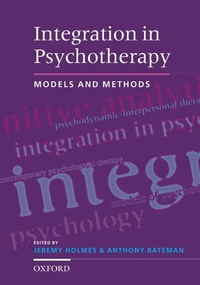
Integration in Psychotherapy
Models and Methods
Published on 10. January 2002
Book
Paperback/Softback
222 pages
978-0-19-263237-1 (ISBN)
Description
Psychotherapy is growing and changing rapidly and much of this development is integrative in nature.
Integration in psychotherapy can mean many things from the sequential or simultaneous use of different established techniques, through the adoption of specific hybrid therapies, to the flexibility which is found in the practice of mature clinicians, who often adopt techniques or theory borrowed from other disciplines. This book explores and expounds upon these integrative currents as they impact on the spectrum of contemporary psychological therapy.
In section one, leading practitioners from within traditional models of psychotherapy, self-critically look outwards towards the limits and links between their own approaches and those of others. Section two provides a showcase for the cutting edge new modalities in psychological therapy (Cognitive analytic therapy, Psychodynamic-interpersonal therapy, etc), as well as covering traditional approaches which are inherently integrative. Throughout, the editors and authors strive to maintain a balanced approach, considering the strengths and weaknesses of the integrative stance.
Bateman and Holmes are experts in this field and have been at the forefront of the integrative agenda, they have assembled a group of distinguished chapter authors to help them in their exploration of these issues.
Integration in psychotherapy can mean many things from the sequential or simultaneous use of different established techniques, through the adoption of specific hybrid therapies, to the flexibility which is found in the practice of mature clinicians, who often adopt techniques or theory borrowed from other disciplines. This book explores and expounds upon these integrative currents as they impact on the spectrum of contemporary psychological therapy.
In section one, leading practitioners from within traditional models of psychotherapy, self-critically look outwards towards the limits and links between their own approaches and those of others. Section two provides a showcase for the cutting edge new modalities in psychological therapy (Cognitive analytic therapy, Psychodynamic-interpersonal therapy, etc), as well as covering traditional approaches which are inherently integrative. Throughout, the editors and authors strive to maintain a balanced approach, considering the strengths and weaknesses of the integrative stance.
Bateman and Holmes are experts in this field and have been at the forefront of the integrative agenda, they have assembled a group of distinguished chapter authors to help them in their exploration of these issues.
Reviews / Votes
. . . this book . . . gets one to think about similiarity and difference of models: between theory and what actually happens in the consulting room; between models in which one has a deep personal investment; and others which one may have consciously or unconsciously denigrated. In relatively few pages, the book conveys the essence of a number of different therapies, and focuses our minds on practical and conceptual similiarities and differences between paradigms. Like other books which are worth reading, it provides new insights, raises (sometimes uncomfortable) questions, and stimulates further reading. * Psychoanalytic Psychotherapy, Volume 17, No 2 * This short book is edited by two of the currently best-known UK psychotherapists, who have a deserved reputation for writing clearly and persuasively about psychotherapy. * Mental Health * This book does succeed on a number of levels. It gets one to think about similarity and difference of models: between theory and what actually happens in the consulting room; between models in which one has a deep personal investment; and others which one may have consciously or unconsciously denigrated. In relatively few pages, the book conveys the essence of a number of different therapies, and focuses our minds on practical and conceptual similarities and differences between paradigms. Like other books which are worth reading, it provides new insights, raises (sometimes uncomfortable) questions, and stimulates further reading. * Psychoanalytic Psychotherapy, Vol 17, No 2 *More details
Language
English
Place of publication
Oxford
United Kingdom
Target group
College/higher education
Professional and scholarly
Illustrations
7 Tabellen
7 tables
Dimensions
Height: 240 mm
Width: 168 mm
Thickness: 12 mm
Weight
372 gr
ISBN-13
978-0-19-263237-1 (9780192632371)
Copyright in bibliographic data and cover images is held by Nielsen Book Services Limited or by the publishers or by their respective licensors: all rights reserved.
Schweitzer Classification
Other editions
Additional editions

E-Book
01/2002
1st Edition
Oxford University Press
€237.86
Available for download
Persons
Content
PART ONE - THEORY; PART TWO - MODELS AND PRACTICE