

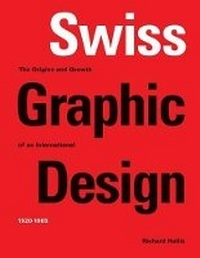
Swiss Graphic Design
The Origins and Growth of an International Style, 1920-1965
Published on 27. March 2006
Book
Hardback
272 pages
978-1-85669-475-9 (ISBN)
Description
Originating in Russia, Germany, and The Netherlands in the 1920s, Modernist graphic design and typography found a firm foothold in Switzerland. By the 1950s, Switzerland had developed a uniquely clear graphic language, evident not just in posters but in pharmaceutical labelling, tourist brochures, train tickets, timetables, passports and bank notes. Abroad, 'Neue Grafik' or 'Swiss' style, as it became known, was admired for its formal discipline. Images and text were organized into geometrical grids used together with sans-serif typefaces such as Helvetica and Univers. These chief components of the Swiss style spread across the world and their influence is still seen today. "Swiss Graphic Design" gives a rich and fascinating account of this key period in graphic design history, setting the stylistic developments into the social and cultural context of the times.
More details
Language
English
Place of publication
United Kingdom
Publishing group
Orion Publishing Co
Target group
College/higher education
Illustrations
750 illustrations, 100 in colour
Dimensions
Height: 270 mm
Width: 210 mm
Weight
1440 gr
ISBN-13
978-1-85669-475-9 (9781856694759)
Copyright in bibliographic data and cover images is held by Nielsen Book Services Limited or by the publishers or by their respective licensors: all rights reserved.
Schweitzer Classification
Person
Richard Hollis is a freelance graphic designer and has worked as a printer, art editor, production manager, teacher and lecturer. His previous books include Graphic Design: A Concise History.
Content
Introduction; 1. The New Typography: Towards a New Graphic Design 1920-1938; The 'New', the Arts and Crafts Tradition and the Werkbund Idea; The Bauhaus and Switzerland; Artists as Designers; Art and the New Typography; Principles of the New Typography; Typefaces and Lettering; New Technology, Politics and Social Issues; Graphics and Architecture; Exhibitions and Their Posters; The New Photography and Photo-Graphic Design; Graphic Techniques and Printing Methods; Walter Cyliax and Typographische Monatsblatter; Advertising and Graphics; Advertising and Functionalism; The Profession: Organization, Competitions, Training; Abstract Art and the Avant-Garde; 2. The Survival of Modernism: Conflicts and Contradictions 1939-1949; The Swiss National Exhibition 1939; Wartime; The Italian Connection; The Magazines; Postwar: Coexistence and Confrontations; Exhibitions; 3. Towards a Swiss Style 1950-1957; 'Individualist' Designers and 'Anonymous' Modernists; Concrete Art, Architecture and Design; The Grid: From Architecture to the Page; The New Generation; Typography and Typefaces; 4. 'New' Graphic Design 1958-1965; From 'Konstruktive Grafik' to Neue Grafik; Basel: Armin Hofmann and Emil Ruder; TM and 'Integral Typography'; Programmes as Solutions: Karl Gerstner; Aesthetics in Commerce; Trademarks, Logotypes and Corporate Styles; Designers' Books; Art, Commercial Art and Graphic Design; 5. An International Style; Exporting the Swiss Style; Dismantling the Constructive Style; Bibliography; Acknowledgements; Index.