


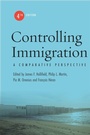
Controlling Immigration
A Comparative Perspective, Fourth Edition
4th Edition
Published on 27. September 2022
Book
Hardback
768 pages
978-1-5036-3138-0 (ISBN)
Description
The fourth edition of this classic work provides a systematic, comparative assessment of the efforts of major immigrant-receiving countries and the European Union to manage migration, paying particular attention to the dilemmas of immigration control and immigrant integration.
Retaining its comprehensive coverage of nations built by immigrants-the so-called settler societies of the United States, Canada, Australia and New Zealand- the new edition explores how former imperial powers-France, Britain and the Netherlands-struggle to cope with the legacies of colonialism, how social democracies like Germany and the Scandinavian countries balance the costs and benefits of migration while maintaining strong welfare states, and how more recent countries of immigration in Southern Europe-Italy, Spain, and Greece-cope with new found diversity and the pressures of border control in a highly integrated European Union.
The fourth edition offers up-to-date analysis of the comparative politics of immigration and citizenship, the rise of reactive populism and a new nativism, and the challenge of managing migration and mobility in an age of pandemic, exploring how countries cope with a surge in asylum seeking and the struggle to integrate large and culturally diverse foreign populations.
Retaining its comprehensive coverage of nations built by immigrants-the so-called settler societies of the United States, Canada, Australia and New Zealand- the new edition explores how former imperial powers-France, Britain and the Netherlands-struggle to cope with the legacies of colonialism, how social democracies like Germany and the Scandinavian countries balance the costs and benefits of migration while maintaining strong welfare states, and how more recent countries of immigration in Southern Europe-Italy, Spain, and Greece-cope with new found diversity and the pressures of border control in a highly integrated European Union.
The fourth edition offers up-to-date analysis of the comparative politics of immigration and citizenship, the rise of reactive populism and a new nativism, and the challenge of managing migration and mobility in an age of pandemic, exploring how countries cope with a surge in asylum seeking and the struggle to integrate large and culturally diverse foreign populations.
Reviews / Votes
"Comprehensively revised, this classic work is still a must read for anyone involved in migration issues. Addressing the dilemmas of migration control, especially the "liberal paradox," a term first coined by James Hollifield, each chapter skillfully discusses how migration states wrestle with these dilemmas and how societies are transformed by immigration."-Pieter Bevelander, Professor at Malmoe University and Director of the Malmoe Institute for Studies of Migration, Diversity and Welfare "Migration is one of the defining issues of the 21st century. The fourth edition of Controlling Immigration surpasses prior ones in scope and content. The book provides a valuable comparative perspective on immigration policies in both emerging and traditional countries of immigration. A must read for academics and policymakers alike."-Susan Martin, Professor Emerita of International Migration at Georgetown University "Updated in light of a rise of populist nationalisms, a global pandemic, and a surge in forced migrations, the fourth edition of Controlling Immigration is more indispensable than ever. Its distinguished contributors provide comprehensive overviews and vital analyses of immigration issues. As the severe gap between immigration policy goals and achievements continues to deepen, scholars, policymakers, and citizens need the knowledge this volume provides."-Rogers M. Smith, Professor of Political Science at the University of Pennsylvania "It is little wonder that parsimony eludes an effort to explain why, how, and with what consequences rich liberal democracies attempt to control immigration. This monumental work remains one of the best starting points to try to answer those vexing questions and to expand them to an even wider range of cases."-David FitzGerald, Contemporary SociologyMore details
Edition
4th New edition
Language
English
Place of publication
Palo Alto
United States
Target group
Professional and scholarly
Edition type
New edition
Product notice
Cloth
Illustrations
29 tables, 60 figures
Dimensions
Height: 262 mm
Width: 189 mm
Thickness: 47 mm
Weight
1533 gr
ISBN-13
978-1-5036-3138-0 (9781503631380)
Copyright in bibliographic data and cover images is held by Nielsen Book Services Limited or by the publishers or by their respective licensors: all rights reserved.
Schweitzer Classification
Other editions
Additional editions
James F. Hollifield | Philip L. Martin | Pia M. Orrenius
Controlling Immigration
A Comparative Perspective, Fourth Edition
E-Book
09/2022
4th Edition
Stanford University Press
€67.99
Available for download

Book
07/2022
Stanford University Press
€91.50
Shipment within 15-20 days

Book
07/2022
Stanford University Press
€30.50
Shipment within 15-20 days

E-Book
07/2022
Stanford Briefs
€19.99
Available for download

Book
12/2020
Stanford University Press
€121.50
Shipment within 15-20 days
Persons
James F. Hollifield is Ora Nixon Arnold Professor of International Political Economy and Director of the Tower Center at Southern Methodist University. His other books include Understanding Global Migration (Stanford, 2022)..Philip L. Martin is Professor Emeritus of Agricultural and Resource Economics and Chair of the University of California Comparative Immigration & Integration Program at the University of California, Davis.Pia M. Orrenius is Vice President and Senior Economist at the Federal Reserve Bank of Dallas.Francois Heran is Professor at the College de France, where he holds the chair in Migrations and Societies.
Content
1. The Dilemmas of Immigration Control in Liberal Democracies
-James F. Hollifield, Philip L. Martin, Pia Orrenius, and Francois Heran, with commentaries by Leo Lucassen and Christian Joppke
2. The United States: Whither the Nation of Immigrants?
-Philip L. Martin and Pia Orrenius, with commentaries by Desmond King and Daniel J. Tichenor
3. Canada: Continuity and Change in Immigration for Nation-Building
-Jeffrey G. Reitz with commentary by Antje Ellermann
4. Australia and New Zealand: Classical Migration States?
-Alan Gamlen and Henry Sherrell, with commentary by Matthew Gibney
5. Immigration and the Republican Tradition in France
-James F. Hollifield and Francois Heran, with commentaries by Catherine Wihtol de Wenden and Jean Beaman
6. UK Immigration and Nationality Policy: Radical and Radically Uninformed Change
-Randall Hansen, with commentary by Desmond King
7. Germany: Managing Migration in the Twenty-first Century
-Philip L. Martin and Dietrich Thraenhardt, with commentaries by Friedrich Heckmann and Ingrid Tucci
8. The Netherlands: From Consensus to Contention in a Migration State
-Willem Maas, with commentaries by Leo Lucassen and Michael Sharpe
9. Governing Immigration in the Scandinavian Welfare States
-Grete Brochmann, with commentaries by Kristof Tamas and Lars Traegardh
10. Immigration and Integration in Switzerland: Shifting Evolutions in a Multicultural Republic
-Gianni d'Amato, with commentary by Christian Joppke
11. Italy: Immigration Policy
-Ted Perlmutter with commentaries by Giuseppe Sciortino and Camille Schmoll
12. Spain: The Uneasy Transition from Labor Exporter to Labor Importer and the New Challenges Ahead
-Miryam Hazan and Rut Bermejo Casado, with commentary by Blanca Garces-Macarenas
13. Greece and Turkey: From State-Building and Developmentalism to Immigration and Crisis Management
-Fiona Adamson and Gerasimos Tsourapas, with commentaries by Helene Thiollet and Riva Kastoryano
14. Japan and South Korea
-Erin Chung, with commentaries by Midori Okabe and Michael Sharpe
15. The European Union: From Politics to Politicization
-Andrew Geddes and Leila Hadj-Abdou, with commentary by Virginie Guiraudon
-James F. Hollifield, Philip L. Martin, Pia Orrenius, and Francois Heran, with commentaries by Leo Lucassen and Christian Joppke
2. The United States: Whither the Nation of Immigrants?
-Philip L. Martin and Pia Orrenius, with commentaries by Desmond King and Daniel J. Tichenor
3. Canada: Continuity and Change in Immigration for Nation-Building
-Jeffrey G. Reitz with commentary by Antje Ellermann
4. Australia and New Zealand: Classical Migration States?
-Alan Gamlen and Henry Sherrell, with commentary by Matthew Gibney
5. Immigration and the Republican Tradition in France
-James F. Hollifield and Francois Heran, with commentaries by Catherine Wihtol de Wenden and Jean Beaman
6. UK Immigration and Nationality Policy: Radical and Radically Uninformed Change
-Randall Hansen, with commentary by Desmond King
7. Germany: Managing Migration in the Twenty-first Century
-Philip L. Martin and Dietrich Thraenhardt, with commentaries by Friedrich Heckmann and Ingrid Tucci
8. The Netherlands: From Consensus to Contention in a Migration State
-Willem Maas, with commentaries by Leo Lucassen and Michael Sharpe
9. Governing Immigration in the Scandinavian Welfare States
-Grete Brochmann, with commentaries by Kristof Tamas and Lars Traegardh
10. Immigration and Integration in Switzerland: Shifting Evolutions in a Multicultural Republic
-Gianni d'Amato, with commentary by Christian Joppke
11. Italy: Immigration Policy
-Ted Perlmutter with commentaries by Giuseppe Sciortino and Camille Schmoll
12. Spain: The Uneasy Transition from Labor Exporter to Labor Importer and the New Challenges Ahead
-Miryam Hazan and Rut Bermejo Casado, with commentary by Blanca Garces-Macarenas
13. Greece and Turkey: From State-Building and Developmentalism to Immigration and Crisis Management
-Fiona Adamson and Gerasimos Tsourapas, with commentaries by Helene Thiollet and Riva Kastoryano
14. Japan and South Korea
-Erin Chung, with commentaries by Midori Okabe and Michael Sharpe
15. The European Union: From Politics to Politicization
-Andrew Geddes and Leila Hadj-Abdou, with commentary by Virginie Guiraudon