


Morality in the Making of Sense and Self
Stanley Milgram's Obedience Experiments and the New Science of Morality
Published on 5. February 2024
Book
Hardback
264 pages
978-0-19-009604-5 (ISBN)
Description
For over half a century, Stanley Milgram's classic and controversial obedience experiments have been a touchstone in the social and behavioral sciences, introducing generations of students to the concept of destructive obedience to authority and the Holocaust. In the last decade, the interdisciplinary Milgram renaissance has led to widespread interest in rethinking and challenging the context and nature of his Obedience Experiment.
In Morality in the Making of Sense and Self, Matthew M. Hollander and Jason Turowetz offer a new explanation of obedience and defiance in Milgram's lab. Examining one of the largest collections of Milgram's original audiotapes, they scrutinize participant behavior in not only the experiments themselves, but also recordings of the subsequent debriefing interviews in which participants were asked to reflect on their actions. Introducing an original theoretical framework in the sociology of morality, they show that, contrary to traditional understandings of Milgram's experiments that highlight obedience, virtually all subjects, both compliant and defiant, mobilized practices to resist the authority's commands, such that all were obedient and disobedient to varying degrees. As Hollander and Turowetz show, the precise ways subjects worked out a definition of the situation shaped the choices open to them, how they responded to the authority's demands, and ultimately whether they would be classified as "obedient" or "defiant."
By illuminating the relationship between concrete moral dilemmas and social interaction, Hollander and Turowetz tell a new, empirically-grounded story about Milgram: one about morality--and immorality--in the making of sense and self.
In Morality in the Making of Sense and Self, Matthew M. Hollander and Jason Turowetz offer a new explanation of obedience and defiance in Milgram's lab. Examining one of the largest collections of Milgram's original audiotapes, they scrutinize participant behavior in not only the experiments themselves, but also recordings of the subsequent debriefing interviews in which participants were asked to reflect on their actions. Introducing an original theoretical framework in the sociology of morality, they show that, contrary to traditional understandings of Milgram's experiments that highlight obedience, virtually all subjects, both compliant and defiant, mobilized practices to resist the authority's commands, such that all were obedient and disobedient to varying degrees. As Hollander and Turowetz show, the precise ways subjects worked out a definition of the situation shaped the choices open to them, how they responded to the authority's demands, and ultimately whether they would be classified as "obedient" or "defiant."
By illuminating the relationship between concrete moral dilemmas and social interaction, Hollander and Turowetz tell a new, empirically-grounded story about Milgram: one about morality--and immorality--in the making of sense and self.
Reviews / Votes
This book makes important contributions to both the sociology of morality and Milgram scholarship. The sociology of morality tends to treat the products of interaction-sense and self-as its antecedents, overlooking the social processes that constitute morality. Through close examination of interaction in Milgram's experiments, Hollander and Turowetz show that his experimental context similarly depends on collaborative orders of sensemaking that were left out of the analysis. Like the sociology of morality, Milgram's account of his experiments erased the practices that comprised them-making it seem as if participants willingly obeyed orders to hurt others when they had actually resisted and made appeals to morality. * Anne Warfield Rawls, Professor of Sociology, Bentley University and University of Siegen * Milgram's obedience experiments juxtaposed the institutional dictates of science with the normal reciprocity of the interactional order. Analysis of numerous experimental transcripts demonstrated that subjects vigorously resisted this violation of expectations. Holland and Turowetz provide a compelling account of compliance and defiance based on the maneuvers that subjects improvised to navigate, repair, and overcome this fundamental dilemma. A seminal work! * Augustine Brannigan, Professor Emeritus of Sociology, University of Calgary * Please forget what you think you may know about the famous Milgram 'obedience' experiments, and especially what they have suggested about the phenomena of genocide and other atrocities understood as resulting from compliant populations bending to authority. This book revolutionizes our understanding of those issues and the more general matter of morality, suggesting that everyday actors may be more oriented to interaction and issues of reciprocity that sustain a sense of ethical selfhood than previously assumed. In superior-subordinate or other hierarchical relationships, such an orientation means that the potential for acts of resistance often becomes more paramount than does the probability for what Milgram called 'obedience.' Read this book and be encouraged! * Douglas W. Maynard, Emeritus Maureen T. Hallinan Professor of Sociology and Emeritus Conway-Bascom Professor of Sociology, University of Wisconsin-Madison * This research is a significant contribution to the sociology of morality and will no doubt spark further interest in this enduring classic of social psychology. * Choice *More details
Language
English
Place of publication
New York
United States
Target group
Professional and scholarly
Product notice
sewn/stitched
Cloth over boards
Illustrations
2 text boxes; 7 tables
Dimensions
Height: 243 mm
Width: 162 mm
Thickness: 24 mm
Weight
494 gr
ISBN-13
978-0-19-009604-5 (9780190096045)
Copyright in bibliographic data and cover images is held by Nielsen Book Services Limited or by the publishers or by their respective licensors: all rights reserved.
Schweitzer Classification
Other editions
Additional editions
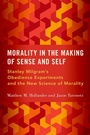
Matthew M. Hollander | Jason Turowetz
Morality in the Making of Sense and Self
Stanley Milgram's Obedience Experiments and the New Science of Morality
E-Book
07/2023
OUP eBook
€53.99
Available for download
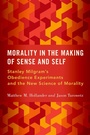
Matthew M. Hollander | Jason Turowetz
Morality in the Making of Sense and Self
Stanley Milgram's Obedience Experiments and the New Science of Morality
E-Book
07/2023
OUP eBook
€53.99
Available for download
Persons
Matthew M. Hollander is Sociology Faculty at Marion Technical College (Marion, Ohio). He has authored or co-authored over 15 academic articles and chapters in social psychology, sociological theory, and health science. His race textbook Racial and Ethnic Diversity: A Sociological Introduction (2021) contributes to diversity education in central Ohio at the high school and two-year college levels.
Jason Turowetz is Sociology Instructor at the University of California, Santa Barbara. He is the co-author (with Douglas W. Maynard) of Autistic Intelligence: Interaction, Individuality, and the Challenges of Diagnosis (2022) and has authored or co-authored over 30 academic articles and chapters on the sociology of medicine and diagnosis, autism, the Milgram experiments, race, social psychology, and social theory.
Jason Turowetz is Sociology Instructor at the University of California, Santa Barbara. He is the co-author (with Douglas W. Maynard) of Autistic Intelligence: Interaction, Individuality, and the Challenges of Diagnosis (2022) and has authored or co-authored over 30 academic articles and chapters on the sociology of medicine and diagnosis, autism, the Milgram experiments, race, social psychology, and social theory.
Content
Preface
Introduction: Morality and Milgram
Part I. The Moral Order of Interaction
Chapter 1. Moral Science and the Milgram Paradigm
Chapter 2. Morality in the Making of Sense and Self
Part II. Morality in Milgram's Lab: Interaction During the Experiment
Chapter 3. Situated Moral Practice: Resistance in Milgram's Lab
Chapter 4. Forms of Milgramesque Resistance
Chapter 5. Self- and Other-Attentive Resistance
Part III. Current Debates: Interaction in the Post-Experiment Interview
Chapter 6. Explaining Milgramesque Behaviors
Chapter 7. Milgram, Science, and Morality
Chapter 8. Conclusion
Appendix 1: Data and Methodology
Appendix 2: Transcription Conventions
References
Index
Introduction: Morality and Milgram
Part I. The Moral Order of Interaction
Chapter 1. Moral Science and the Milgram Paradigm
Chapter 2. Morality in the Making of Sense and Self
Part II. Morality in Milgram's Lab: Interaction During the Experiment
Chapter 3. Situated Moral Practice: Resistance in Milgram's Lab
Chapter 4. Forms of Milgramesque Resistance
Chapter 5. Self- and Other-Attentive Resistance
Part III. Current Debates: Interaction in the Post-Experiment Interview
Chapter 6. Explaining Milgramesque Behaviors
Chapter 7. Milgram, Science, and Morality
Chapter 8. Conclusion
Appendix 1: Data and Methodology
Appendix 2: Transcription Conventions
References
Index