

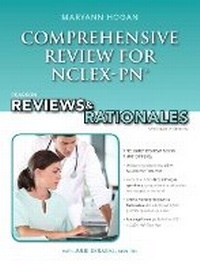
Pearson Reviews & Rationales
Comprehensive Review for NCLEX-PN
2nd Edition
Published on 14. February 2012
Book
Paperback/Softback
1328 pages
978-0-13-262141-0 (ISBN)
Description
PEARSON REVIEWS & RATIONALES: COMPREHENSIVE REVIEW FOR NCLEX-PN (R), 2/e is the ultimate NCLEX-PN (R) exam preparation guide. It provides a comprehensive outline review of the essential content areas tested on the NCLEX-PN (R) exam, including critical areas such as safety, ethics, and reduction of risk. These topics are incorporated throughout, with over 1,500 practice questions in the book simulating the level of difficulty on the actual NCLEX-PN (R) exam, as well as 3,800 more online at Nursing Reviews & Rationales. This book integrates core nursing concepts into categories of client needs as they are found on the actual NCLEX-PN (R) exam, enabling readers to study for specific sections of the test based on the results of any predictor tests they have taken. Coverage includes the four client need categories: safe, effective care environments; health promotion and maintenance; psychosocial and physiological integrity; and all integrated processes on the current NCLEX-PN (R) Test Plan.
More details
Other editions
Previous edition
Mary Ann Hogan | Debra S. McKinney
Prentice Hall's Reviews & Rationales
Comprehensive NCLEX-PN Review
Book
08/2007
Pearson
€39.60
Article exhausted; check for reprint
Persons
MaryAnn Hogan, MSN, RN has been a Professor at the University of Massachusetts, Amherst. She has taught in diploma, associate degree, and baccalaureate nursing programs. A former item writer for the CAT NCLEX-RN (R) exam, Ms. Hogan has been teaching review courses throughout to a number of publications in the areas of adult health, pharmacology, and fundamentals of nursing. She is a member
of the American Nurses Association and Sigma Theta Tau, the International Honor Society for Nursing.
Julie Skrabal, MSN, RN has been an assistant professor at BryanLGH College of Health Sciences in Lincoln, Nebraska since 2002, where she actively serves on curriculum and assessment committees and is the faculty advisor for the local student nurses' association. Ms. Skrabal is a member of the Nu Rho-at-Large chapter of Sigma Theta Tau, the National League for Nursing, and the Nebraska League for Nursing where she serves on the Board of Directors. She is also a member of the American Nurses Association. In addition, Ms. Skrabal is pursuing her doctorate at College of Saint Mary in Omaha, Nebraska.
of the American Nurses Association and Sigma Theta Tau, the International Honor Society for Nursing.
Julie Skrabal, MSN, RN has been an assistant professor at BryanLGH College of Health Sciences in Lincoln, Nebraska since 2002, where she actively serves on curriculum and assessment committees and is the faculty advisor for the local student nurses' association. Ms. Skrabal is a member of the Nu Rho-at-Large chapter of Sigma Theta Tau, the National League for Nursing, and the Nebraska League for Nursing where she serves on the Board of Directors. She is also a member of the American Nurses Association. In addition, Ms. Skrabal is pursuing her doctorate at College of Saint Mary in Omaha, Nebraska.
Content
SECTION 1. Preparing for the NCLEX-PN (R) Exam
1. The NCLEX-PN (R) Licensing Exam
2. Test Preparation and Test-Taking Strategies
3. Test Preparation for International Nurses
4. The NCLEX-PN (R) Examination through the Candidates' Eyes
SECTION 2. Safe Effective Care Environment: Management of Care
5. Legal and Ethical Nursing Practice
6. Leadership and Management
SECTION 3. Safe Effective Care Environment: Safety and Infection Control
7. Injury Prevention, Disaster Planning, and Protecting Client Safety
8. Preventing and Controlling Infection
SECTION 4. Health Promotion and Maintenance
9. Reproduction, Family Planning, and Infertility
10. Uncomplicated Antenatal Assessment and Care
11. Uncomplicated Labor and Delivery Care
12. Uncomplicated Postpartum Assessment and Care
13. Uncomplicated Newborn Care
14. Lifespan Growth and Development
15. Providing Immunizations
16. Health and Physical Assessment
17. Promoting Healthy Lifestyle Choices
18. Age-Related Care of Older Adults
SECTION 5. Psychosocial Integrity
19. Therapeutic Communication and Environment
20. Culturally Competent Care
21. Coping with Stressors
22. Mental Health Disorders
23. Dependency and Addiction
24. Crisis Intervention and Suicide
25. End of Life Care
SECTION 6. Physiological Integrity: Basic Care and Comfort
26. Meeting Nutritional Needs
27. Meeting Basic Human Needs
28. Maintaining Function of Tubes and Drains
29. Alternative and Complementary Therapies
SECTION 7. Physiological Integrity: Pharmacological and Parenteral Therapies
30. Dosage Calculation and Medication Administration
31. Pediatric Dosage Calculation and Medication Administration
32. Intravenous Therapy
33. Blood and Blood Component Therapy
34. Total Parenteral Nutrition
35. Maternal and Newborn Medications
36. Psychiatric Medications
37. Respiratory Medications
38. Cardiovascular Medications
39. Neurological and Musculoskeletal Medications
40. Renal Medications
41. Gastrointestinal Medications
42. Endocrine Medications
43. Integumentary Medications
44. Eye and Ear Medications
45. Antineoplastic Medications
46. Immunological and Anti-Infective Medications
SECTION 8. Physiological Integrity: Reduction of Risk Potential
47. Common Laboratory Tests
48. Common Diagnostic Tests and Procedures
49. Perioperative Care.
SECTION 9. Physiological Integrity: Physiological Adaptation
50. Complicated Antenatal Care
51. Complicated Labor and Delivery Care
52. Complicated Postpartum Care
53. Complicated Newborn Care
54. Fluid and Electrolyte Imbalances
55. Acid-Base Imbalances
56. Respiratory Disorders
57. Cardiovascular Disorders
58. Neurological Disorders
59. Renal or Genitourinary Disorders
60. Gastrointestinal Disorders
61. Endocrine and Metabolic Disorders
62. Musculoskeletal Disorders
63. Integumentary Disorders
64. Eye, Ear, Nose, and Throat Disorders
65. Hematological Disorders
66. Oncological Disorders
67. Immunological Disorders
68. Communicable or Infectious Diseases
69. Basic Life Support
Comprehensive Exam
Comprehensive Exam Answers
Index
1. The NCLEX-PN (R) Licensing Exam
2. Test Preparation and Test-Taking Strategies
3. Test Preparation for International Nurses
4. The NCLEX-PN (R) Examination through the Candidates' Eyes
SECTION 2. Safe Effective Care Environment: Management of Care
5. Legal and Ethical Nursing Practice
6. Leadership and Management
SECTION 3. Safe Effective Care Environment: Safety and Infection Control
7. Injury Prevention, Disaster Planning, and Protecting Client Safety
8. Preventing and Controlling Infection
SECTION 4. Health Promotion and Maintenance
9. Reproduction, Family Planning, and Infertility
10. Uncomplicated Antenatal Assessment and Care
11. Uncomplicated Labor and Delivery Care
12. Uncomplicated Postpartum Assessment and Care
13. Uncomplicated Newborn Care
14. Lifespan Growth and Development
15. Providing Immunizations
16. Health and Physical Assessment
17. Promoting Healthy Lifestyle Choices
18. Age-Related Care of Older Adults
SECTION 5. Psychosocial Integrity
19. Therapeutic Communication and Environment
20. Culturally Competent Care
21. Coping with Stressors
22. Mental Health Disorders
23. Dependency and Addiction
24. Crisis Intervention and Suicide
25. End of Life Care
SECTION 6. Physiological Integrity: Basic Care and Comfort
26. Meeting Nutritional Needs
27. Meeting Basic Human Needs
28. Maintaining Function of Tubes and Drains
29. Alternative and Complementary Therapies
SECTION 7. Physiological Integrity: Pharmacological and Parenteral Therapies
30. Dosage Calculation and Medication Administration
31. Pediatric Dosage Calculation and Medication Administration
32. Intravenous Therapy
33. Blood and Blood Component Therapy
34. Total Parenteral Nutrition
35. Maternal and Newborn Medications
36. Psychiatric Medications
37. Respiratory Medications
38. Cardiovascular Medications
39. Neurological and Musculoskeletal Medications
40. Renal Medications
41. Gastrointestinal Medications
42. Endocrine Medications
43. Integumentary Medications
44. Eye and Ear Medications
45. Antineoplastic Medications
46. Immunological and Anti-Infective Medications
SECTION 8. Physiological Integrity: Reduction of Risk Potential
47. Common Laboratory Tests
48. Common Diagnostic Tests and Procedures
49. Perioperative Care.
SECTION 9. Physiological Integrity: Physiological Adaptation
50. Complicated Antenatal Care
51. Complicated Labor and Delivery Care
52. Complicated Postpartum Care
53. Complicated Newborn Care
54. Fluid and Electrolyte Imbalances
55. Acid-Base Imbalances
56. Respiratory Disorders
57. Cardiovascular Disorders
58. Neurological Disorders
59. Renal or Genitourinary Disorders
60. Gastrointestinal Disorders
61. Endocrine and Metabolic Disorders
62. Musculoskeletal Disorders
63. Integumentary Disorders
64. Eye, Ear, Nose, and Throat Disorders
65. Hematological Disorders
66. Oncological Disorders
67. Immunological Disorders
68. Communicable or Infectious Diseases
69. Basic Life Support
Comprehensive Exam
Comprehensive Exam Answers
Index