


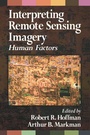
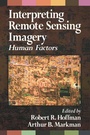
Interpreting Remote Sensing Imagery
Human Factors
1st Edition
Published on 18. December 2019
Book
Paperback/Softback
320 pages
978-0-367-45534-7 (ISBN)
Description
No matter how advanced the technology, there is always the human factor involved - the power behind the technology. Interpreting Remote Sensing Imagery: Human Factors draws together leading psychologists, remote sensing scientists, and government and industry scientists to consider the factors involved in expertise and perceptual skill.
This book covers the cognitive issues of learning, perception, and expertise, the applied issues of display design, interface design, software design, and mental workload issues, and the practitioner's issues of workstation design, human performance, and training. It tackles the intangibles of data interpretation, based on information from experts who do the job. You will learn:
Information and perception
What do experts perceive in remote sensing and cartographic displays?
Reasoning and perception
How do experts "see through" the data display to understand its meaning and significance?
Human-computer interaction
How do experts work with their displays and what happens when the "fiddle" with them?
Learning and training
What are the milestones in training development from novice to expert image interpreter?
Interpreting Remote Sensing Imagery: Human Factors breaks down the mystery of what experts do when they interpret data, how they learn, and what individual factors speed or impede training. Even more importantly, it gives you the tools to train efficiently and understand how the human factor impacts data interpretation.
This book covers the cognitive issues of learning, perception, and expertise, the applied issues of display design, interface design, software design, and mental workload issues, and the practitioner's issues of workstation design, human performance, and training. It tackles the intangibles of data interpretation, based on information from experts who do the job. You will learn:
Information and perception
What do experts perceive in remote sensing and cartographic displays?
Reasoning and perception
How do experts "see through" the data display to understand its meaning and significance?
Human-computer interaction
How do experts work with their displays and what happens when the "fiddle" with them?
Learning and training
What are the milestones in training development from novice to expert image interpreter?
Interpreting Remote Sensing Imagery: Human Factors breaks down the mystery of what experts do when they interpret data, how they learn, and what individual factors speed or impede training. Even more importantly, it gives you the tools to train efficiently and understand how the human factor impacts data interpretation.
More details
Language
English
Place of publication
London
United Kingdom
Publishing group
Taylor & Francis Ltd
Target group
Professional and scholarly
Professional Practice & Development
Dimensions
Height: 234 mm
Width: 156 mm
Weight
590 gr
ISBN-13
978-0-367-45534-7 (9780367455347)
Copyright in bibliographic data and cover images is held by Nielsen Book Services Limited or by the publishers or by their respective licensors: all rights reserved.
Schweitzer Classification
Other editions
Additional editions
E-Book
06/2019
1st Edition
CRC Press
€88.49
Available for download
E-Book
06/2019
1st Edition
CRC Press
€88.49
Available for download

Robert R. Hoffman | Arthur B. Markman
Human Factors in the Interpretation of Remote Sensing Imagery
Human Factors
Book
02/2001
1st Edition
CRC Press
€275.29
Article not available at the moment
Persons
Robert R. Hoffman earned his B.A., M.A., and Ph.D. in experimental psychology at the University of Cincinnati, where he was awarded McMicken Scholar, Psi Chi, and Delta Tau Kappa Honors. After a postdoctoral associateship at the Center for Research on Human Learning at the University of Minnesota, Hoffman joined the faculty of Adelphi University. There, he received awards for outstanding research and service, and also served as Chair of the Institutional Review Board and the University Grants Officer. He joined the Institute for Human and Machine Cognition of the University of West Florida in 1999, as a Research Associate.
Content
Introduction. The Communication of Topographic Perspectives and Forms. Seeing the Invisible. Seeing the Dynamics.