


Molecular Modeling
Basic Principles and Applications
2nd Edition
Published on 30. July 2003
Book
Paperback/Softback
XII, 228 pages
978-3-527-30589-6 (ISBN)
Description
A textbook for beginners as well as an invaluable reference for all those dealing with molecular modeling in their daily work. Without unnecessary overhead it leads the reader from simple calculations on small molecules to the modeling of proteins and other relevant biomolecules.
"If the currently popular 'Dummies' series of computer books were to publish a volume on molecular modeling this would be it" (Journal of the American Chemical Society)
"If the currently popular 'Dummies' series of computer books were to publish a volume on molecular modeling this would be it" (Journal of the American Chemical Society)
Reviews / Votes
"...detailed analysis of the steps involved in the molecular modeling process without delving too deeply into the complicated mathematical parameters that often seem to weigh down other texts." (Journal of Chemical Education, June 2006)More details
Edition
2., vollst. überarb. u. aktualis. Aufl.
Language
English
Place of publication
Weinheim
Germany
Target group
Professional and scholarly
Edition type
Revised edition
Illustrations
20
19 s/w Abbildungen, 47 farbige Abbildungen, 20 s/w Tabellen
Illustrations (some col.)
Dimensions
Height: 24 cm
Width: 17 cm
Weight
476 gr
ISBN-13
978-3-527-30589-6 (9783527305896)
Schweitzer Classification
Other editions
New editions
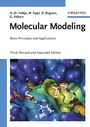
Hans-Dieter Höltje | Wolfgang Sippl | Didier Rognan
Molecular Modeling
Basic Principles and Applications
Book
01/2008
3rd Edition
Wiley-VCH
€89.90
Shipment within 5-7 days
Previous edition
Book
10/1996
Wiley-VCH
€139.00
Article exhausted; check for reprint
Persons
Hans-Dieter Höltje is director of the Institute of Pharmaceutical Chemistry at the Heinrich-Heine-Universität Düsseldorf (Germany) where he also holds the chair of Medicinal Chemistry.
His main interest is the molecular mechanism of drug action. He is especially interested in modeling G-Protein-coupled receptors, cytochromes, enzymes of therapeutic importance and phospholipid membranes.
******
Wolfgang Sippl is Professor of Pharmaceutical Chemistry at the Martin-Luther-University of Halle-Wittenberg (Germany). He is interested in 3D QSAR, molecular docking and molecular dynamics, and their applications in drug design and pharmacokinetics.
******
Didier Rognan leads the Drug Bioinformatics Group at the Laboratory for Molecular Pharmacochemistry in Illkirch (France). He is mainly interested in all aspects (method development, applications) of protein-based drug design and virtual screening.
******
Gerd Folkers is Professor of Pharmaceutical Chemistry at the ETH Zürich (Switzerland).
The focus of his research is the molecular interation between drugs and their binding sites. Besides his work on the molecular mechanism of "conventional" nucleoside therapeutics against virus infections and cancer, is special interest has shifted to immuno-therapeutics.
His main interest is the molecular mechanism of drug action. He is especially interested in modeling G-Protein-coupled receptors, cytochromes, enzymes of therapeutic importance and phospholipid membranes.
******
Wolfgang Sippl is Professor of Pharmaceutical Chemistry at the Martin-Luther-University of Halle-Wittenberg (Germany). He is interested in 3D QSAR, molecular docking and molecular dynamics, and their applications in drug design and pharmacokinetics.
******
Didier Rognan leads the Drug Bioinformatics Group at the Laboratory for Molecular Pharmacochemistry in Illkirch (France). He is mainly interested in all aspects (method development, applications) of protein-based drug design and virtual screening.
******
Gerd Folkers is Professor of Pharmaceutical Chemistry at the ETH Zürich (Switzerland).
The focus of his research is the molecular interation between drugs and their binding sites. Besides his work on the molecular mechanism of "conventional" nucleoside therapeutics against virus infections and cancer, is special interest has shifted to immuno-therapeutics.
Content
Preface.1. Introduction.2. Small Molecules.3. A Case Study for Small Molecule Modeling: Dopamine D3 Receptor Antagonists.4. Introduction to Comparative Protein Modeling.5. Protein-based Virtual Screening.6. Scope and Limits of Molecular Docking.7. Example for the Modeling of Protein Ligand Complexes: Antigen Presentation by MHC Class I.Index.