

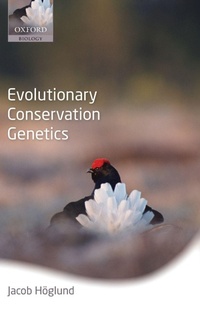
Evolutionary Conservation Genetics
Published on 19. March 2009
Book
Hardback
200 pages
978-0-19-921421-1 (ISBN)
Description
Conservation genetics focuses on understanding the role and requirement of genetic variation for population persistence. However, considerable debate now surrounds the role of genetic factors (as opposed to non-genetic factors such as habitat destruction etc.) in population extinction, and a comprehensive synthesis is now timely. Can extinction be explained by habitat destruction alone or is lack of genetic variation a part of the explanation? The book thoroughly reviews the arguments for a role of genetics in the present biodiversity crisis. It describes the methods used to study genetic variation in endangered species and examines the influence of genetic variation in the extinction of species.
To date, conservation genetics has predominantly utilized neutral genetic markers e.g. microsatellites. However, with the recent advances in molecular genetics and genomics it will soon be possible to study 'direct gene action', following the fate of genetic variation at the level of DNA, through expression, to proteins in order to determine how such phenotypes fare in populations of free living organisms. Evolutionary Conservation Genetics explores these exciting avenues of future research potential, integrating ecological quantitative genetics with the new genome science. It is now more important than ever that we ask relevant questions about the evolutionary fate of endangered populations throughout the globe and incorporate our knowledge of evolutionary processes and the distribution of genetic diversity into effective conservation planning and action.
To date, conservation genetics has predominantly utilized neutral genetic markers e.g. microsatellites. However, with the recent advances in molecular genetics and genomics it will soon be possible to study 'direct gene action', following the fate of genetic variation at the level of DNA, through expression, to proteins in order to determine how such phenotypes fare in populations of free living organisms. Evolutionary Conservation Genetics explores these exciting avenues of future research potential, integrating ecological quantitative genetics with the new genome science. It is now more important than ever that we ask relevant questions about the evolutionary fate of endangered populations throughout the globe and incorporate our knowledge of evolutionary processes and the distribution of genetic diversity into effective conservation planning and action.
Reviews / Votes
Those in the fields of ecology, evolutionary biology, and conservation biology will find this book very helpful, as the author explains the often-confusing but central parts of conservation genetics in a straightforward manner. This book would be an excellent seminar course textbook for students. Overall, I like this book, for (a) its clear and concise presentation of material, (b) its thorough review of genetic studies pertaining to conservation of species, and (c) its choice of genetic studies presented. * Ecological Society of America *More details
Language
English
Place of publication
Oxford
United Kingdom
Target group
College/higher education
Illustrations
43 line and 6 halftone illustrations
Dimensions
Height: 240 mm
Width: 161 mm
Thickness: 15 mm
Weight
470 gr
ISBN-13
978-0-19-921421-1 (9780199214211)
Copyright in bibliographic data and cover images is held by Nielsen Book Services Limited or by the publishers or by their respective licensors: all rights reserved.
Schweitzer Classification
Other editions
Additional editions
Jacob Hoeglund
Evolutionary Conservation Genetics
Book
03/2009
Oxford University Press
€103.00
Shipment within 15-20 days
Person
Professor Jacob Hoeglund was born in Uppsala, Sweden in 1958. He received his BSc (1983), PhD (1989) and DrSci (1992) from the Uppsala University in Sweden. He completed his post doctoral studies in the UK (1990). He has been a Professor at the Uppsala University since 2000 lecturing mainly in Conservation Genetics.
Content
Preface ; 1. The Extinction Vortex - is Genetic Variation Related to Extinction? ; 2. How to Measure Genetic Variation ; 3. Inbreeding, Geographic Subdivision and Gene Flow ; 4. Genetic Diversity in Changing Environments ; 5. Genes Under Selection: Mhc and Others ; 6. Local Adaptation ; 7. Ecological Genomics ; 8. An Evolutionary Conservation Biology ; References ; Index