

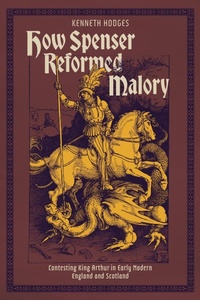
How Spenser Reformed Malory
Contesting King Arthur in Early Modern England and Scotland
Will be published approx. on 27. October 2026
Book
Hardback
224 pages
978-1-84384-762-5 (ISBN)
Description
A major contribution to Spenser studies, Arthurian scholarship, and early modern medievalism, revealing Spenser's The Faerie Queene as a sustained Protestant response to Malory.
King Arthur remained a potent figure in early modern Britain, thanks in part to the continued popularity of Sir Thomas Malory's Le Morte Darthur (1485). Writers in England and Scotland competed to adapt Arthur for new purposes. Edmund Spenser's The Faerie Queene (1590; 1596) offers a reformed and purified legend. While it has long seemed remarkably independent of Malory, Kenneth Hodges shows that The Faerie Queene is structured as a sustained and detailed response to Le Morte Darthur.
For Protestant writers, Malory's enduring vision of the Arthurian past posed urgent problems, shaped as it was by Catholic devotion and marked by adultery and sexual violence. Through detailed comparative readings, the study shows how Spenser systematically rewrote these elements in the 1590 poem, before returning more selectively and sympathetically to Malory in 1596. In doing so, it reveals how Arthurian tradition became a site of religious, political, and national contestation in Reformation Britain.
Bridging medieval and early modern literary cultures, this book offers a major new account of how literary tradition is reshaped under ideological pressure.
More details
Person
Content
Introduction: King Arthur Amongst the Protestants
1.Redcrosse Knight as a Response to Sir Galahad
2. Sir Guyon as a Response to Sir Launcelot
3. Britomart as a Response to Ygerna
4. How King Arthur Invented Christmas
5. Sir Calidore as a Response to Sir Gawain
Conclusion: Merlin and the Poets