

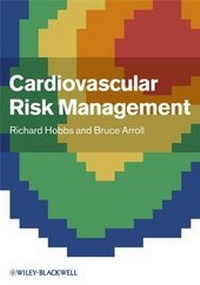
Cardiovascular Risk Management
1st Edition
Published on 27. November 2008
Book
Paperback/Softback
100 pages
978-1-4051-5575-5 (ISBN)
Description
* Practical ABC style
* Enables doctors to prioritise treatment using risk-scoring systems and holistic recommendations for reducing cardiovascular risk
* Includes treatment plans for individuals with diabetes, who are at high risk of developing cardiovascular disease
* How to reduce cardiovascular risk in other specific patient groups
* Developed by expert groups in different regions of the world
Reviews / Votes
"An updated text, which has the merit of taking stock of the situation in a field, the management of cardiovascular risk, where the fast and sudden classification of the patient is essential. In conclusion, the work is properly addressed to all those who wish to have an overview of the management of patients at risk for cardiovascular disease, including nuclear physicians involved in nuclear cardiology." (Eur J Nucl Med Mol Imaging, 2010)"This is an extremely valuable book for practicing physicians and researchers of cardiovascular disease. I highly recommend it for every medical library." (Doody's Reviews, May 2009)More details
Product info
PB
Edition
1., Auflage
Language
English
Place of publication
Hoboken
United Kingdom
Publishing group
John Wiley and Sons Ltd
Target group
Professional and scholarly
Product notice
Paperback (trade)
Unsewn / adhesive bound
Dimensions
Height: 269 mm
Width: 216 mm
Thickness: 8 mm
Weight
340 gr
ISBN-13
978-1-4051-5575-5 (9781405155755)
Schweitzer Classification
Other editions
Additional editions
Richard Hobbs | Bruce Arroll
Cardiovascular Risk Management
E-Book
01/2009
Wiley-Blackwell
€44.99
Available for download
Persons
Prof Richard Hobbs, Professor and Head of Primary Care and General Practice, Primary Care, University of Birmingham.
Prof Bruce Arroll, Dept of General Practice and Primary Care, University of Auckland, Auckland, New Zealand.
The chapter authors are members of a group of global experts on metabolic and vascular disease called the Future Forum. This group brings together specialists and primary care physicians to debate current issues via a closed website and at twice yearly conferences.
Content
1. Epidemiology of cardiovascular disease.
2. Using guidelines as a framework for holistic risk management.
3. Screening & identifying at-risk patients.
4. Moderate- to low-risk patients - management recommendations.
5. High-risk patients - management recommendations.
6. Type 2 diabetes and metabolic syndrome patients - management recommendations for reducing cardiovascular risk.
7. Lifestyle changes to reduce cardiovascular risk.
8. Pharmacotherapy - improving the lipid profile.
9. Pharmacotherapy - lowering blood pressure.
10. Pharmacotherapy - lowering blood glucose.
11. Long-term management of cardiovascular disease.
12 Managing cardiovascular risk in the future - developments in the pipeline